The Dollar’s Dovish Drift and Its Disconnect from Crude
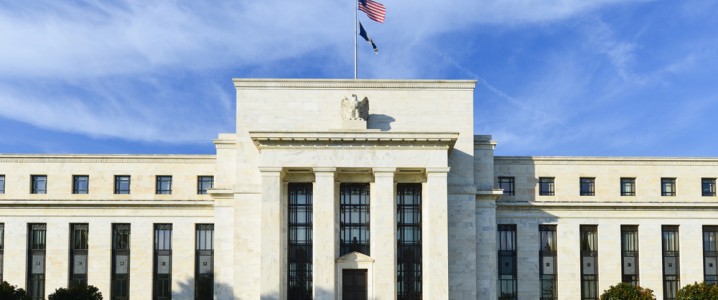
While a weakening dollar traditionally offers a tailwind to dollar-denominated commodities like crude oil, today’s trading action presents a fascinating divergence. Federal Reserve Chair Jerome Powell’s recent dovish signals from the Jackson Hole symposium have certainly put pressure on the greenback, a trend that fundamentally underscores a bullish potential for crude. Powell’s explicit warning of “rising downside risks to employment” and his openness to a rate cut at the September 17 policy meeting have solidified market expectations, with LSEG data now pricing an 80% probability of a quarter-point cut next month and nearly half a percentage point in reductions by year-end. Such a monetary policy pivot typically makes oil cheaper for foreign buyers, boosting demand and supporting prices.
However, oil markets are currently grappling with other powerful forces. As of today, Brent crude trades at $90.38 per barrel, a notable 9.07% decline, with WTI not far behind at $82.59, down 9.41%. These sharp drops, observed across a wide daily range (Brent $86.08-$98.97, WTI $78.97-$90.34), starkly contrast with the dollar’s retreat and the theoretical bullish impulse it should provide. This immediate bearish sentiment indicates that despite the dollar’s persistent weakness, other macroeconomic and supply-side concerns are currently outweighing this supportive factor. Our proprietary data further illustrates this recent downturn, showing Brent crude has shed over 18.5% in just the last 14 days, falling from $112.78 on March 30th to $91.87 on April 17th, setting a clear precedent for today’s accelerated decline. This sustained bearish momentum suggests investors are prioritizing potential demand destruction over the currency’s impact in the short term.
The Fed’s Tightrope Walk: Economic Headwinds and Investor Outlook
The Federal Reserve’s shift toward potential rate cuts is not simply a dovish impulse; it’s a response to mixed economic signals that carry significant implications for global oil demand. Powell’s comments, alongside a soft payrolls report earlier this month, suggest the central bank is increasingly concerned about the health of the U.S. economy, even as inflation and business activity data have shown unexpected strength. Goldman Sachs analysts have noted that the “pace and depth of cuts” will be determined by incoming data, highlighting the critical importance of upcoming economic releases.
Investors are keenly observing this broader economic trajectory, with many of our readers asking about the long-term price outlook for oil. Our proprietary reader intent data indicates a strong interest in questions such as “what do you predict the price of oil per barrel will be by end of 2026?” The answer to such questions is inextricably linked to whether the Fed’s policy pivot can engineer a ‘soft landing’ – stabilizing growth without tipping into recession – or if it merely confirms an underlying economic deceleration. Key readings ahead, including the Fed’s preferred inflation gauge, the PCE deflator on Wednesday, and August payrolls next Friday, will be crucial. If these reports confirm sustained economic weakness, the demand-side concerns for oil could deepen, potentially overriding any bullish boost from a weaker dollar. Furthermore, political pressures, with President Trump stepping up attacks on Fed policymakers, add another layer of uncertainty to the central bank’s independence and decision-making process, complicating forecasts for energy markets.
OPEC+ in the Spotlight: Upcoming Catalysts and Production Quotas
The immediate horizon for crude markets is packed with potential catalysts, particularly on the supply side, which could either exacerbate or counteract the current bearish sentiment. This weekend, the market’s attention will be squarely on the OPEC+ Joint Ministerial Monitoring Committee (JMMC) meeting on April 18th, followed by the full Ministerial Meeting on April 19th. These gatherings are of paramount importance, especially given the significant price declines observed recently.
A key question from our investor base this week revolves around “OPEC+ current production quotas.” With crude prices having shed significant value – our proprietary data shows Brent has fallen by over 18% in the past 14 days, from $112.78 to $91.87 – the pressure on the cartel to potentially re-evaluate supply strategies will be immense. While the weakening dollar theoretically aids demand, a sustained price drop like we’ve seen could prompt the group to consider maintaining current cuts, or even deepening them, to stabilize the market. Any indication from OPEC+ that they are prepared to defend price levels could provide a much-needed bullish jolt, momentarily overshadowing demand fears. Conversely, a decision to maintain existing quotas, or even hint at future increases, could signal a lack of concern over current price levels, further pressuring the market. Beyond OPEC+, investors will also be tracking the API Weekly Crude Inventory reports on April 21st and 28th, the EIA Weekly Petroleum Status Reports on April 22nd and 29th, and the Baker Hughes Rig Count on April 24th and May 1st, all of which provide crucial insights into short-term supply and demand balances.
Navigating Volatility: The Investor’s Playbook in a Conflicted Market
For sophisticated investors, the current environment demands a nuanced approach, balancing the underlying bullish potential of a weakening dollar with the immediate headwinds of demand concerns and market volatility. The dollar’s trajectory, influenced by the Fed’s dovish leanings and political pressures, offers a theoretical floor for oil prices, making energy investments more attractive to non-dollar holders. However, this floor is currently being tested by potent demand concerns and a recent flurry of selling that has driven Brent down by nearly 10% today alone. The critical challenge for investors lies in distinguishing between short-term market noise and fundamental shifts.
Our proprietary insights suggest that while the immediate price action is bearish, the confluence of potential Fed rate cuts and upcoming OPEC+ decisions creates a highly dynamic scenario. Investors should closely monitor the actual impact of rate cuts on economic activity versus their initial rationale for implementation. If rate cuts successfully stabilize growth and avert a deeper economic downturn, the dollar’s weakness could then fully assert its supportive role for crude prices. Furthermore, any proactive response from OPEC+ to recent price declines could quickly shift market sentiment, providing a supply-side counterweight to demand anxieties. Success in this market will depend on a diligent assessment of macro-economic indicators, central bank policy, and the strategic maneuvers of key producers, all while recognizing the enduring, albeit currently overshadowed, bullish undercurrent provided by a softer dollar.


