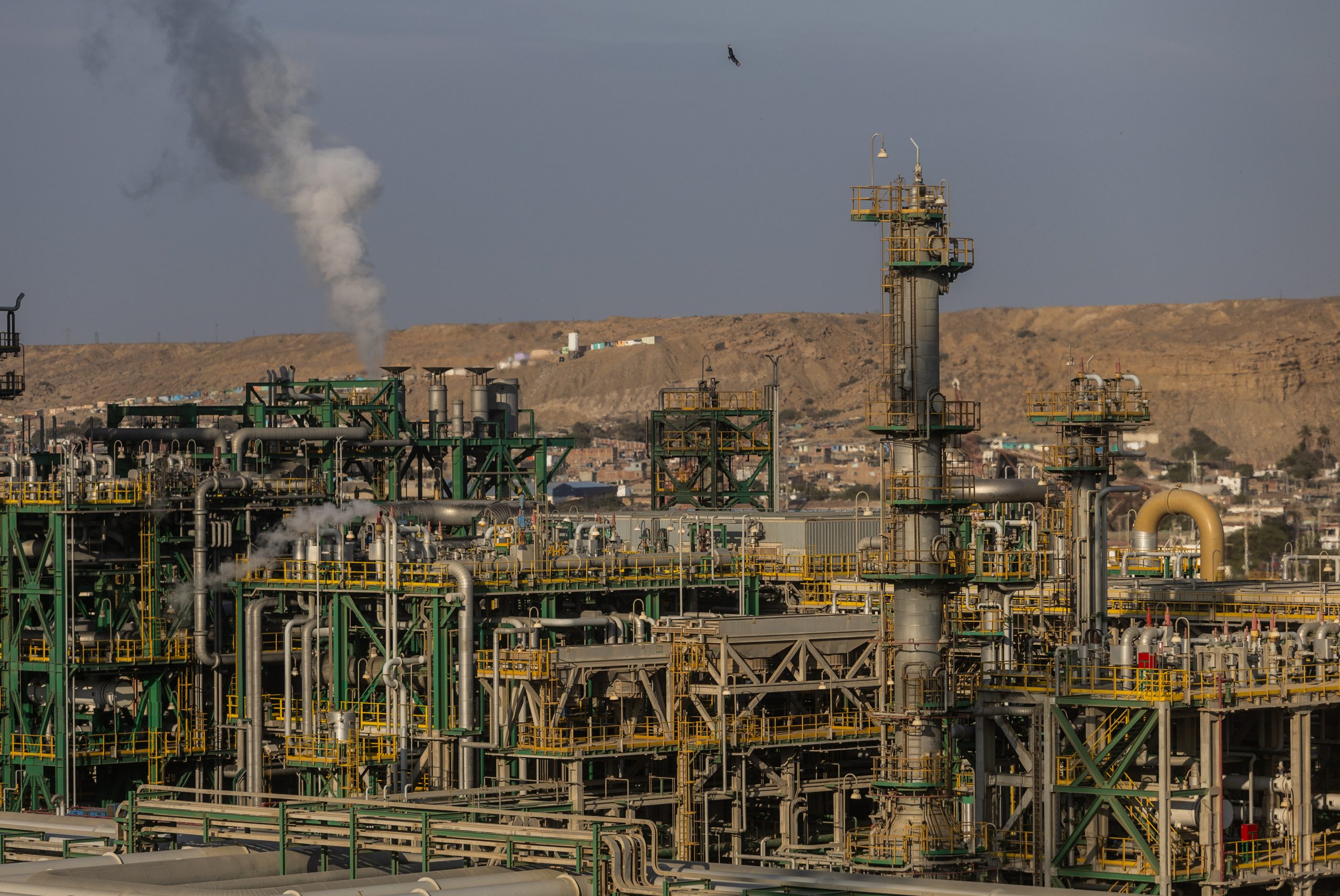
Peru’s Strategic Pivot: Unlocking Gas Reserves Amidst Market Volatility
Peru stands at a critical juncture, with its state-owned energy agency, Perupetro, unveiling an ambitious strategy aimed at significantly bolstering domestic natural gas reserves through renewed exploration. This proactive stance is a direct response to a worrying trend of declining exploratory activities in recent years, which has led to a depletion of existing reserves without adequate replacement. For investors tracking long-term energy security and growth opportunities in Latin America, Peru’s pivot represents a compelling narrative against a backdrop of fluctuating global energy prices and an increasing demand for stable, domestically sourced power.
The Urgency of Reserve Replacement: A Strategic Imperative for Peru
The core of Perupetro’s new strategy is a clear recognition of an impending energy challenge. Without significant new discoveries, Peru faces the real prospect of becoming a net importer of natural gas between 2037 and 2040. Such a scenario would inevitably drive up electricity generation costs, directly impacting the competitiveness of vital sectors including industry, transport, and, ultimately, domestic consumers. Currently, national natural gas production hovers around 1,300 MMcf/d, a robust figure, yet the lack of active exploration contracts means this production is not being underpinned by new discoveries. Perupetro’s President, Pedro Chira, has underscored the urgency, emphasizing the need to integrate new reserves rapidly to avert energy dependence within the next 15 years. This timeline provides a clear investment horizon for companies capable of executing complex exploration projects with long lead times, offering a counter-cyclical opportunity for those looking beyond short-term market swings.
Navigating Investment: Market Realities and Global Dynamics
As investors evaluate opportunities like Peru’s gas exploration drive, the broader energy market provides a crucial context. As of today, Brent crude trades at $90.38, reflecting a significant daily drop of 9.07%, with WTI crude similarly down 9.41% at $82.59. Gasoline prices have also seen a substantial decline, currently at $2.93, down 5.18%. This recent volatility is part of a broader trend, with Brent having fallen from $112.78 just 14 days ago to its current level. Such sharp price movements often lead to caution in capital allocation. However, for natural gas projects like those proposed in Peru, the investment thesis often hinges less on immediate crude price fluctuations and more on long-term domestic energy security and regional demand. The entry of major players like Chevron, following approved license contract modifications that position it alongside Anadarko, signals a strong vote of confidence in Peru’s resource potential and regulatory framework, even amidst global market turbulence. This suggests that while crude markets are experiencing a downdraft, strategic, long-term gas plays continue to attract serious consideration.
Strategic Exploration Zones and Upcoming Catalysts
Perupetro, in collaboration with the Ministry of Energy and Mines (MINEM), is actively working to reactivate natural gas exploration across key regions, specifically targeting the south-central and northwest areas of Peru. This geographical focus aims to capitalize on known potential, but crucially, Perupetro is seeking experienced companies that adhere to robust socio-environmental standards, particularly for operations in sensitive areas like Madre de Dios and offshore. The emphasis on ESG compliance is a significant factor for modern investors and underscores Peru’s commitment to responsible resource development. Further illustrating the potential, exploratory activities in the Candamo field, situated within a national park, are awaiting crucial government approval, despite prior estimates suggesting substantial natural gas reserves. While specific Peruvian regulatory approvals don’t appear on our immediate event calendar, the broader energy market is poised for several key announcements in the coming days. The OPEC+ Joint Ministerial Monitoring Committee (JMMC) meets today, followed by the Full Ministerial Meeting tomorrow, April 19th. Their decisions on production quotas will undoubtedly influence global supply perceptions and crude pricing, indirectly shaping investor sentiment towards all hydrocarbon ventures. Additionally, the upcoming API and EIA Weekly Petroleum Status Reports on April 21st-22nd and 28th-29th, alongside the Baker Hughes Rig Count reports on April 24th and May 1st, will provide critical insights into supply-demand dynamics and industry activity, further informing the backdrop against which Perupetro seeks to attract major companies for offshore and jungle exploration in the months ahead.
Investor Sentiment and Long-Term Value Creation
Our proprietary reader intent data reveals a keen focus among investors on future market direction, with common queries including predictions for the price of oil per barrel by the end of 2026. This reflects a desire for stability and predictability, elements that Peru’s natural gas strategy aims to secure for its domestic economy. While crude oil markets remain inherently volatile, as evidenced by the recent significant daily price drops, Peru’s push for gas exploration offers a different kind of long-term value proposition. It’s a play on national energy security, industrial competitiveness, and the avoidance of future import costs, rather than solely on export revenues tied to global commodity prices. The interest in specific company performance, even for regional players not directly linked to this announcement, indicates that investors are actively seeking well-managed opportunities in the broader Latin American energy sector. Perupetro’s stated goal of attracting more large, experienced companies aligns perfectly with this investor appetite for substantial, well-backed projects. By focusing on incorporating new reserves by 2037, Peru is presenting a clear, strategic objective that can appeal to institutional investors with long-term capital horizons, looking to fund projects that offer both financial returns and contribute to national energy resilience.