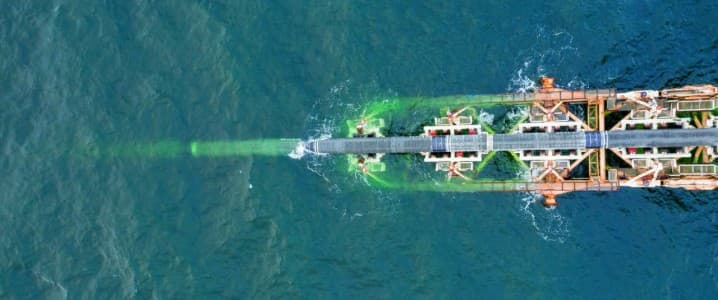
The recent confirmation by German prosecutors regarding the arrest of a Ukrainian national, Serhii K., in Italy on suspicion of coordinating the 2022 Nord Stream pipeline sabotage sends a chilling reminder of the persistent geopolitical risks embedded within global energy markets. This development, nearly two years after the initial blasts crippled vital European energy infrastructure, reignites a critical discussion for investors: how do such acts of sabotage and the subsequent investigations reshape energy security paradigms, influence commodity prices, and dictate long-term investment strategies? At OilMarketCap.com, we view this as more than just a legal development; it’s a significant marker of ongoing instability that demands a re-evaluation of risk premiums and strategic allocations in the oil and gas sector.
The Enduring Shadow of Geopolitical Sabotage on Gas Markets
The alleged coordinated attack on the Nord Stream pipelines in September 2022 was an unprecedented act against critical energy infrastructure, immediately disrupting the flow of 55 billion cubic meters of Russian gas annually via Nord Stream 1 and preventing Nord Stream 2 from ever commencing operations. The arrest of Serhii K. in Italy, under a European arrest warrant, highlights the meticulous nature of the alleged plot, involving the rental of a yacht in Rostock using forged documents and the placement of explosive charges near Bornholm. While the investigation remains active only in Germany, with Denmark and Sweden having closed their probes, this breakthrough underscores the severity and sophistication of the incident. For Europe, the immediate aftermath was a scramble for alternative supplies, leading to a surge in LNG imports from the United States, Qatar, and West Africa. Spot prices for natural gas soared, and governments accelerated storage programs, fundamentally reshaping Europe’s energy balance. This event solidified a long-term policy shift, with German officials, as recently as late May, pledging to block any revival of Nord Stream, cementing LNG and other pipeline supplies as the new backbone of the continent’s energy mix. The investment implication is clear: the premium on diversified, secure supply routes and robust energy infrastructure has never been higher.
Crude Volatility Amid Heightened Risk Perception
While the Nord Stream incident directly impacted gas flows, its geopolitical implications inevitably ripple through the broader energy complex, affecting crude oil markets. As of today, Brent crude trades at $90.38 per barrel, marking a significant 9.07% decline from its daily high. Similarly, WTI crude sits at $82.59, down 9.41% within the day. This intraday volatility is not an isolated event; it follows a broader trend where Brent has fallen over 18% from $112.78 on March 30th to $91.87 just yesterday. The renewed focus on geopolitical sabotage, even if centered on gas infrastructure, contributes to this heightened risk perception across energy assets. Investors are grappling with the potential for further disruptions, not just to supply but also to demand if such tensions escalate into wider economic or military conflicts. A clear understanding of these intertwined risks is crucial, as even perceived threats to energy security can introduce a significant risk premium or, conversely, trigger selling pressure if global demand forecasts darken.
Forward Implications and Upcoming Catalysts for Energy Investors
The Nord Stream arrest comes at a critical juncture for the global energy market, with several pivotal events on the horizon that could be influenced by renewed geopolitical concerns. With the OPEC+ Joint Ministerial Monitoring Committee (JMMC) meeting scheduled for April 18th, followed by the full Ministerial meeting on April 19th, crude oil investors will be keenly watching for any shifts in production strategy. The re-emergence of significant geopolitical risk in Europe, even if centered on gas infrastructure, adds a layer of complexity to these deliberations. Will OPEC+ perceive this as a potential demand dampener, warranting a cautious approach to supply, or will they maintain tighter quotas to support prices amidst perceived global instability? Beyond OPEC+, the upcoming API and EIA weekly inventory reports (April 21st, 22nd, 28th, 29th) will provide critical snapshots of market fundamentals, but their interpretation will now carry an added geopolitical lens. Any unexpected build-ups or drawdowns could be amplified by market anxiety. Furthermore, the Baker Hughes Rig Count reports on April 24th and May 1st will offer insights into future supply trends, which will be weighed against this backdrop of persistent geopolitical uncertainty and Europe’s evolving energy security strategy.
Addressing Investor Concerns: Geopolitical Risk and Long-Term Price Outlook
OilMarketCap.com’s reader intent data reveals that many investors are keenly asking about the long-term price trajectory, specifically “what do you predict the price of oil per barrel will be by the end of 2026?” and “What are OPEC+ current production quotas?” The Nord Stream arrest provides a stark reminder that geopolitical risk is not merely a short-term market mover but a fundamental input into long-term price outlooks and investment strategies. This ongoing risk contributes to a “geopolitical risk premium” embedded in energy prices, reflecting the potential for supply disruptions or increased demand for strategic reserves. Europe’s accelerated diversification away from Russian pipeline gas, now cemented by Germany’s pledge to block any Nord Stream revival, has a lasting impact on global LNG markets, fostering increased demand for shipping and regasification infrastructure. This structural shift, combined with OPEC+’s ongoing efforts to manage supply, suggests a complex interplay of forces. While specific price predictions are inherently challenging, the persistence of significant geopolitical threats, exemplified by the Nord Stream sabotage, argues for a sustained focus on energy security, which could keep a floor under prices even amidst broader economic fluctuations. Investors must account for this enduring uncertainty, prioritizing companies with resilient supply chains, diversified asset bases, and strong balance sheets capable of navigating a volatile and politically charged energy landscape.


