The recent financial results from SQM, the world’s second-largest lithium producer, offer a potent reminder of the inherent volatility within commodity markets and the critical need for strategic agility among investors. The company reported a substantial 59% decline in quarterly net profit to $88.4 million, significantly missing analyst expectations of $143.01 million. While revenue of $1.04 billion broadly aligned with estimates, the dramatic profit plunge underscores how quickly market dynamics can shift, even for commodities deemed essential for the energy transition. This situation highlights a broader risk profile that oil and gas investors must carefully consider, as similar price pressures and demand fluctuations can profoundly impact the profitability of energy sector giants.
The Lithium Price Plunge: A Cautionary Tale for Commodity Investors
SQM’s stark profit decline is directly attributable to a severe contraction in global lithium prices, which have plummeted nearly 90% from their late-2022 peak. The company itself noted a 34% year-on-year drop in lithium prices, a critical component for electric vehicle batteries. This dramatic downturn has forced producers worldwide to scale back operations, including SQM’s decision to lay off 5% of its Chilean workforce. CEO Ricardo Ramos acknowledged navigating “a period of lower lithium market prices,” noting that some contracts hit their lower limits, impacting agreed volumes. This scenario is a powerful case study for any commodity-focused investor: even robust demand narratives for “future-proof” materials are susceptible to oversupply, inventory adjustments, and shifts in market sentiment. For oil and gas, where geopolitical factors, economic cycles, and technological advancements constantly reshape supply and demand, understanding such rapid value erosion in another key energy-transition commodity is paramount.
Navigating Volatility in the Broader Energy Complex
While lithium faces its own unique demand and supply dynamics, the broader energy complex is no stranger to significant price swings. As of today, Brent crude trades at $90.38 per barrel, marking a sharp 9.07% decline in a single day, with its range fluctuating between $86.08 and $98.97. Similarly, WTI crude is at $82.59, down 9.41%, within a daily range of $78.97 to $90.34. This immediate snapshot reveals considerable intraday and day-over-day volatility. Looking at the recent past, Brent crude has experienced a significant pullback, dropping from $112.78 just two weeks ago on March 30th to $91.87 yesterday, April 17th, representing an 18.5% decline. This sharp correction, mirroring the dramatic fall in lithium, emphasizes that no commodity market is immune to rapid price adjustments driven by macroeconomic shifts, supply-demand rebalances, or investor sentiment. Gasoline prices have also dipped, currently at $2.93, down 5.18% today. For investors, understanding these interconnected volatilities and the underlying drivers is crucial for portfolio protection and opportunity identification. The dramatic swings across different energy commodities underscore the need for a nuanced approach to sector-specific and broader market analysis.
Strategic Responses and Forward-Looking Catalysts
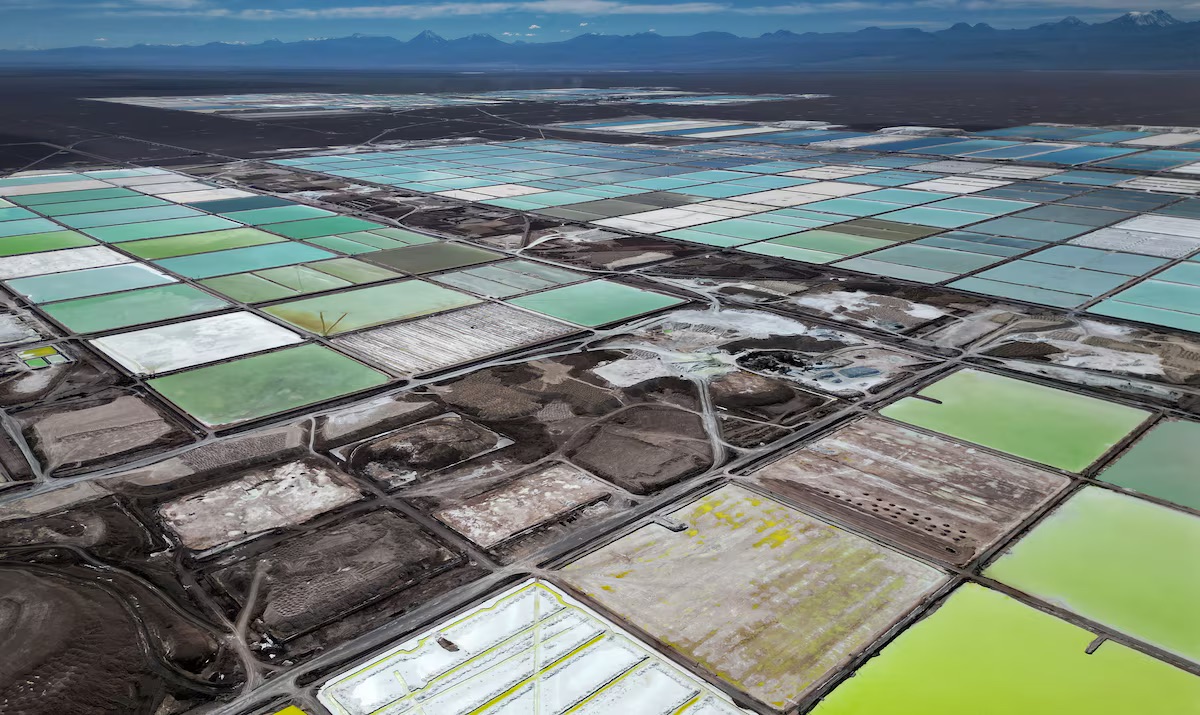
SQM’s response to the lithium downturn offers insights into how commodity producers adapt. Beyond workforce reductions, the company is finalizing a partnership with Chile’s state-run copper producer Codelco to produce lithium in the Atacama salt flat, a move that could reshape its long-term cost structure and market position. Moody’s recent downgrade of SQM’s outlook to “negative” from “stable” due to lithium revenue uncertainty further highlights the immediate challenges, even as its credit rating was affirmed. For oil and gas investors, such strategic maneuvers and credit assessments are equally vital. Looking ahead, the immediate future for crude markets is punctuated by several critical calendar events. Investors will be keenly watching the OPEC+ Joint Ministerial Monitoring Committee (JMMC) meeting tomorrow, April 18th, followed by the full Ministerial meeting on Sunday, April 19th. These gatherings are pivotal for understanding future production quotas and potential market interventions, which could significantly influence crude price trajectories. Additionally, the upcoming API Weekly Crude Inventory report on April 21st and the EIA Weekly Petroleum Status Report on April 22nd will provide crucial insights into immediate supply-demand balances in the United States. Further inventory data on April 28th and 29th, alongside the Baker Hughes Rig Count reports on April 24th and May 1st, will offer a comprehensive picture of market activity and drilling trends. These events, particularly the OPEC+ decisions, represent significant forward-looking catalysts that could either exacerbate or alleviate the current price pressures seen in the crude markets.
Investor Sentiment and Diversification Imperatives
The challenges faced by SQM resonate deeply with broader investor concerns across the energy sector. Our proprietary intent data reveals that investors are keenly focused on future price trajectories, with many asking about the projected price of oil per barrel by the end of 2026. This reflects a desire to understand long-term market fundamentals amidst short-term volatility. Questions regarding OPEC+’s current production quotas and their potential impact on global supply also dominate investor queries, underscoring the perceived influence of cartel decisions on market stability and price discovery. Furthermore, investor interest extends to the performance of specific players, with questions surfacing about companies like Repsol and their outlook for April 2026. This indicates a granular focus on individual company resilience and strategic positioning within a dynamic market. The lithium market’s dramatic shift, and SQM’s subsequent profit plunge, serve as a powerful reminder of the importance of diversification and rigorous due diligence. Investing in energy requires not only an understanding of macroeconomic forces and geopolitical risks but also a deep dive into company-specific strategies, cost structures, and market exposures. While the core business of oil and gas differs from lithium extraction, the underlying principles of commodity market investment — managing price risk, adapting to demand shifts, and leveraging strategic partnerships — remain universally applicable. Proactive analysis, leveraging comprehensive market data and forward-looking event calendars, is essential for navigating these complex and often unpredictable markets.