China, the world’s largest energy consumer, has delivered a complex signal to global oil and gas markets in the first half of 2025. While record clean energy deployment is driving a significant reduction in carbon dioxide emissions, particularly from its power sector, underlying trends suggest a more nuanced and challenging outlook for fossil fuel demand. For oil and gas investors, understanding this evolving dynamic is crucial for navigating future market volatility and identifying long-term structural shifts. This analysis delves into the proprietary data and market signals to unpack the implications of China’s energy transition.
China’s Unprecedented Solar Surge Dampens Demand Narratives
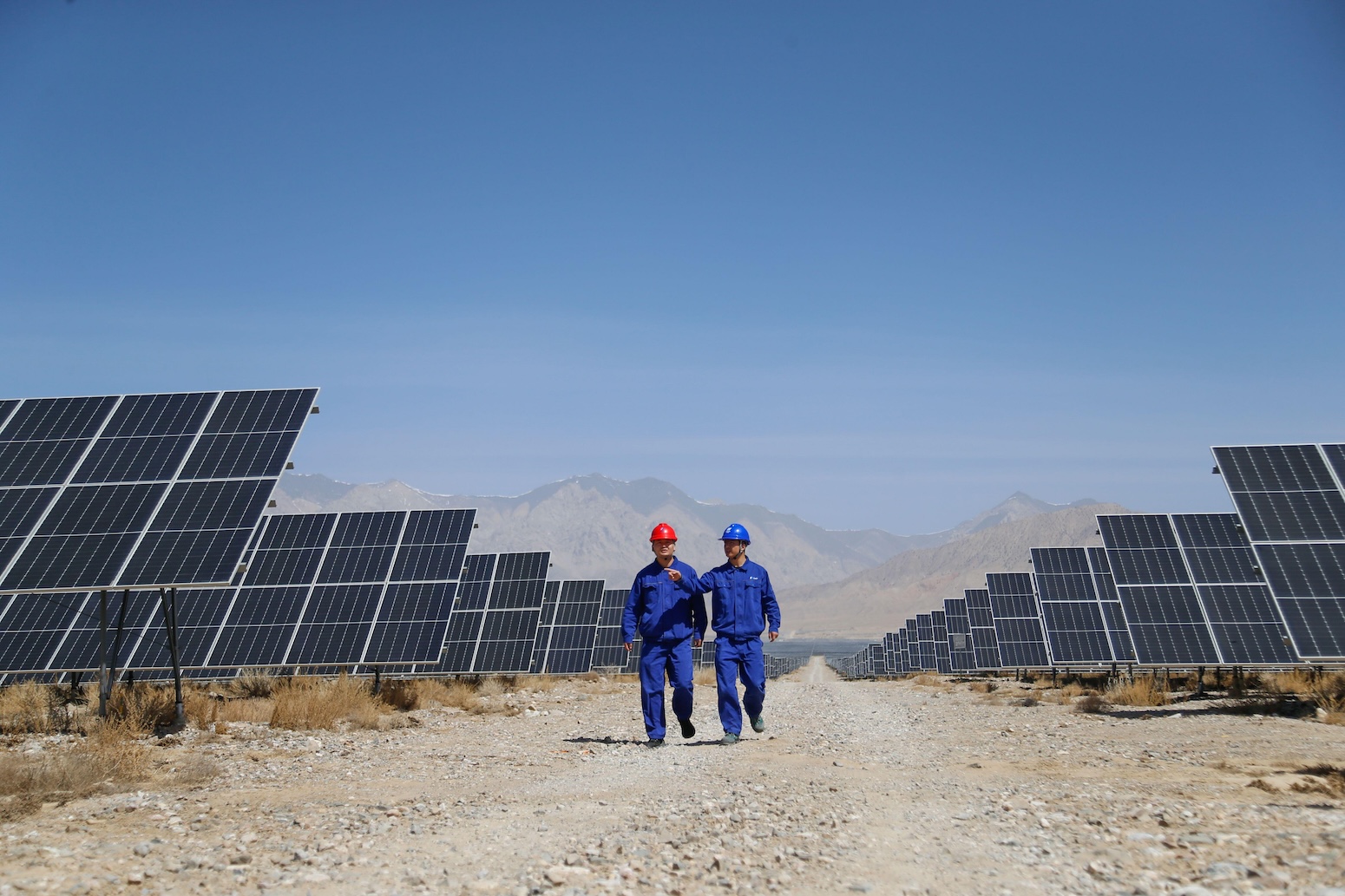
In a development that has captured significant market attention, China’s CO2 emissions fell by a notable 1% year-on-year in the first half of 2025, extending a declining trend observed since March 2024. The primary catalyst for this shift was the nation’s power sector, where emissions dropped by 3%. This reduction was largely attributed to an unprecedented solar capacity boom. China added a staggering 212 gigawatts (GW) of solar capacity in H1 2025, primarily driven by a rush before a June policy change. This surge meant that clean power generation, excluding hydro, outpaced demand growth by a significant margin of 270 terawatt hours (TWh) against 170 TWh. This record-setting pace puts solar on track to become China’s single largest source of clean power in 2025.
The immediate market reaction to such demand-side signals, even if indirect, can be profound. As of today, Brent Crude trades at $90.38, reflecting a significant -9.07% decline, while WTI Crude stands at $82.59, down -9.41%. This sharp correction follows a broader trend over the past two weeks, where Brent has fallen from $112.78 on March 30th to $91.87 just yesterday, April 17th. While multiple factors influence daily price movements, the narrative of slowing demand growth from the world’s largest energy consumer, underscored by these clean energy statistics, undoubtedly contributes to bearish sentiment and amplifies market apprehension among investors. The efficiency gains from solar directly displace thermal generation, chipping away at the demand floor for fuels like natural gas and, indirectly, crude oil.
The Persistent Undercurrent: Coal and Industrial Demand
While the headlines celebrate China’s solar achievements, a closer look reveals a more complex picture for fossil fuel consumption. Despite the decline in coal-fired electricity generation, China is still on track to add an astounding 80-100 GW of new coal-power capacity in 2025, potentially setting a new annual record. This apparent paradox highlights China’s strategic focus on energy security and grid stability, even as it decarbonizes its power mix. New coal plants might serve as backup or peak load capacity, rather than base-load power, but their construction still represents a significant investment in fossil fuel infrastructure.
More critically for oil and gas investors, the growth in coal used for synthetic fuels and chemicals is accelerating. This sector saw a 20% increase in the first half of 2025 alone, contributing 3% to China’s overall CO2 emissions since 2020. Furthermore, planned expansions in the coal-chemical industry could add another 2% to China’s CO2 footprint by 2029. This trend represents a direct competitive threat to petroleum-derived products in various industrial applications and underscores the persistent, evolving demand for carbon-intensive feedstocks outside of the electricity sector. Meanwhile, natural gas use in the power industry actually increased by 6%, suggesting a strategic shift towards lower-carbon fossil fuels within the power generation mix, offering a potential silver lining for gas producers.
Forward Outlook: Policy Decisions and Upcoming Market Catalysts
China’s ambitious clean energy drive, while impressive, has not put the nation on track to meet several key climate targets for 2025, including reducing carbon intensity, controlling coal consumption growth, and increasing cleaner steel production. This shortfall creates significant pressure on policymakers ahead of crucial deadlines. The country’s next “nationally determined contribution” (NDC) for 2035 and its 15th five-year plan for 2026-30 are both due to be finalized in the coming months. These policy documents will provide invaluable insight into China’s long-term energy strategy and its commitment to decarbonization.
The sustained fall in CO2 emissions and the remarkable growth in clean energy generation could, paradoxically, embolden policymakers to set even more ambitious targets in these upcoming plans. For investors, monitoring these policy announcements will be paramount, as stricter environmental mandates could further accelerate the shift away from fossil fuels. In the immediate future, market participants must also keep a close eye on the calendar. The upcoming OPEC+ Ministerial Meeting on April 19th will be critical for assessing global supply management against this backdrop of evolving demand narratives. Additionally, the EIA Weekly Petroleum Status Reports on April 22nd and April 29th, alongside API inventory data, will offer real-time insights into consumption trends, which will undoubtedly reflect the impact of China’s shifting energy landscape.
Investor Focus: Navigating the Complexities of China’s Energy Transition
Our proprietary reader intent data from the past week highlights investor preoccupation with future oil prices and OPEC+ strategies. Specifically, a top question posed to our AI assistant is “what do you predict the price of oil per barrel will be by end of 2026?” and “What are OPEC+ current production quotas?”. These inquiries underscore the intense focus on factors that will shape crude markets in the near-to-medium term. The rapid energy transition occurring in China directly impacts these predictions, creating both headwinds for traditional oil demand and potential opportunities in other segments.
For oil and gas investors, China’s H1 2025 data presents a nuanced challenge. While the solar boom signals a clear long-term headwind for fossil fuel demand, particularly in the power sector, the continued strategic investment in coal capacity and the rapid growth of the coal-chemical industry suggest a more gradual and complex transition for industrial feedstocks. The key takeaway is that China’s energy trajectory is not a simple binary switch from fossil fuels to renewables. Investors must look beyond headline CO2 figures and delve into sector-specific trends, policy signals, and the broader global supply-demand dynamics. The market’s current volatility, epitomized by today’s significant crude price drop, serves as a stark reminder that proactive, data-driven analysis is essential for navigating the evolving energy landscape.