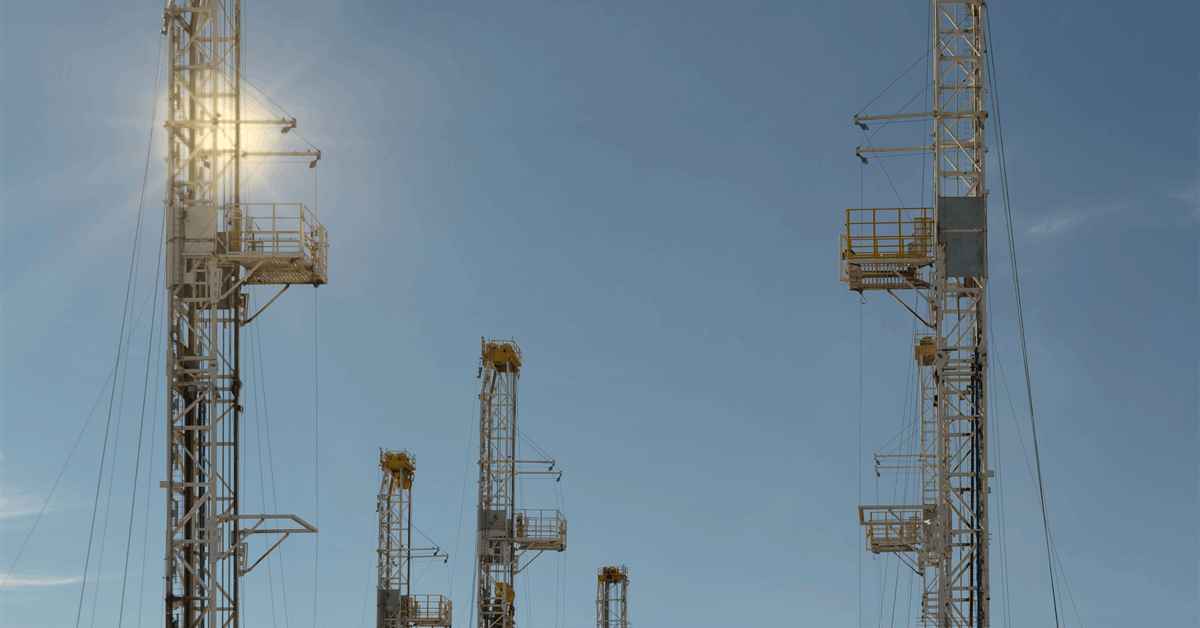
The global oil and gas landscape presents a fascinating paradox for investors: while 2024 saw significant production of 30.1 billion barrels, the world’s discovered, recoverable oil resources actually grew by a net five billion barrels. This unexpected increase signals pockets of robust growth within a broader environment of evolving supply dynamics and uncertain long-term demand. The key drivers? Aggressive delineation of upside potential within Argentina’s Vaca Muerta play and the prolific Permian Delaware basin in Texas and New Mexico. Understanding these specific growth engines alongside global resource trends and immediate market signals is crucial for navigating investment decisions in a volatile energy market.
The Permian-Vaca Muerta Growth Engine vs. Global Resource Erosion
While the headline figure of a net five-billion-barrel increase in recoverable oil is positive, it masks a more complex underlying reality. This growth is highly concentrated in specific unconventional plays, notably the Permian Delaware and Vaca Muerta. These regions continue to demonstrate significant potential, with operators leveraging advanced drilling and completion technologies to unlock substantial reserves. However, this localized success stands in stark contrast to the broader global picture. Over the past decade, projections for “yet-to-find” resources have been dramatically reduced by 456 billion barrels. This decline stems from a combination of factors: a steep drop in frontier exploration activity, largely unsuccessful shale developments outside the Americas, and a doubling of offshore development costs over the last five years. While the Permian and Vaca Muerta offer a lifeline for near-term supply, the shrinking pool of new large-scale conventional discoveries and the economic challenges of other unconventional plays highlight an increasing reliance on a few concentrated, technologically advanced basins to meet future demand.
Navigating Volatility: Market Signals and Investor Focus
Against this backdrop of concentrated resource growth and broader depletion concerns, the crude oil market remains highly dynamic. As of today, Brent crude trades at $90.38 per barrel, marking a significant 9.07% decline on the day, with its daily range spanning from $86.08 to $98.97. Similarly, WTI crude has fallen 9.41% to $82.59, trading between $78.97 and $90.34. This sharp daily drop extends a recent trend, with Brent having shed approximately 18.5% over the past 14 days, falling from $112.78 on March 30th to $91.87 yesterday. Such pronounced volatility underscores the sensitivity of prices to macroeconomic shifts, geopolitical events, and demand outlooks.
Our proprietary reader intent data reveals that investors are keenly focused on these price movements, frequently asking questions like, “What do you predict the price of oil per barrel will be by end of 2026?” and inquiring about the performance of individual companies like Repsol. This demonstrates a clear desire for clarity amidst uncertainty. The current proven oil reserves, estimated to last only 14 years at current production rates, further fuels these questions. If global oil demand were to increase as some forecasts suggest, the market could face a significant supply crunch, even at attractive prices for producers. This tension between finite proven reserves and the potential for demand growth keeps investors on edge, constantly re-evaluating their positions in light of new data and market shifts.
The Demand Dilemma and the Super-Cycle Question
The long-term outlook for oil demand remains a pivotal, and often contentious, debate. On one hand, certain forecasts, including those from OPEC, project continued increases in global oil demand. Should this materialize, the challenges of meeting supply would intensify, requiring a substantial increase in capital expenditure, which could lead to skyrocketing service prices and potentially limit the appetite for innovation in high-emission extraction methods. This scenario, as some analysts suggest, would necessitate another “oil super-cycle,” demanding a significant resurgence in frontier exploration, higher drilling success rates, accelerated deployment of secondary recovery techniques, and full-scale development of non-core shale plays globally.
Conversely, the pervasive influence of the energy transition, particularly the accelerating electrification of transport vehicles in regions like China, suggests a potential decline in future oil demand. Industry analysis indicates that steep oil demand growth towards 2050 is unlikely, and the most severe warming scenarios from the IPCC may not materialize. This outlook suggests a more constrained future for fossil fuel emissions, with oil contributing approximately 600 gigatons of CO2. For investors, this bifurcated demand outlook necessitates a dual strategy: identifying companies resilient to demand shifts through cost efficiency and low-carbon initiatives, while also recognizing the potential for short-term demand surges to drive profitability in highly efficient producers.
Strategic Moves: Upcoming Events Shaping the Investment Landscape
The immediate future for oil and gas investors will be heavily influenced by a series of critical events over the next two weeks, offering crucial insights into both supply management and market fundamentals. Investors are actively seeking information on “OPEC+ current production quotas,” a question directly addressed by the upcoming OPEC+ Joint Ministerial Monitoring Committee (JMMC) meeting on April 18th, followed by the Full Ministerial Meeting on April 19th. These gatherings will be instrumental in dictating collective production policies, directly impacting global supply levels and potentially introducing significant price volatility. Any adjustments to quotas or statements regarding future production strategy will be closely scrutinized.
Domestically, the weekly API and EIA crude inventory reports, scheduled for April 21st and 22nd, and again on April 28th and 29th, will provide vital, granular data on US supply and demand balances. These reports often serve as immediate catalysts for price movements, reflecting storage levels, refinery activity, and import/export dynamics. Furthermore, the Baker Hughes Rig Count, due on April 24th and May 1st, will offer a leading indicator of future production activity, especially in critical regions like the Permian. For investors, monitoring these events is not merely about tracking headlines; it’s about anticipating shifts in supply-demand equilibrium, understanding the strategic responses of major producers, and adjusting investment theses in real-time to capitalize on emerging opportunities or mitigate potential risks.


