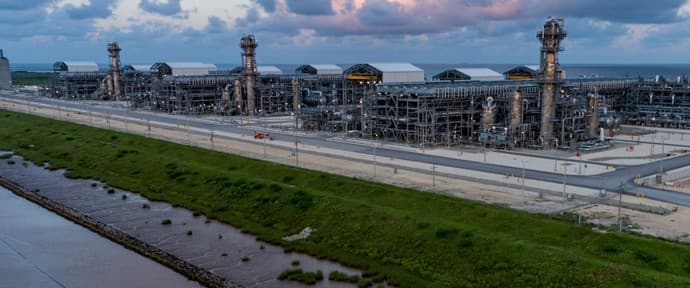
The global natural gas market, particularly the crucial U.S. LNG export sector, is once again focused on Freeport LNG as the facility navigates another operational challenge. Following an outage that commenced on Sunday, the Texas-based liquefaction terminal is showing clear signs of recovery, with natural gas intake volumes surging and plans to restart one of its three liquefaction units. This development is more than just a logistical update; it represents a critical pulse check on the reliability of a key infrastructure asset that significantly influences global energy prices and supply security. For investors, Freeport’s performance is a bellwether for the broader stability of the LNG export landscape, impacting everything from European energy independence to the profitability of U.S. gas producers.
Freeport’s Operational Resilience Amidst Market Volatility
Freeport LNG’s journey has been marked by a series of operational disruptions, creating a pattern of volatility that energy investors closely monitor. From the significant fire in 2022 that idled the plant for an extended period, to a lightning strike in March of this year that temporarily halted gas deliveries via the Gulf South Pipeline, and even a shutdown ahead of Hurricane Beryl last year, the facility has faced numerous hurdles. Each incident underscores the inherent risks in large-scale energy infrastructure. Despite these challenges, Freeport LNG has consistently demonstrated a capacity for recovery. As of Tuesday, the facility was on track to receive 2.0 billion cubic feet per day (bcfd) of natural gas, a substantial increase from Monday’s 1.2 bcfd and nearing its recent seven-day average of 1.9 bcfd. With all three trains having a liquefaction capacity of approximately 2.1 bcfd, the quick bounce-back in gas intake is a positive signal for supply stability.
This localized recovery unfolds against a backdrop of broader energy market shifts. Our proprietary data indicates significant movements in crude prices, which often set the tone for the wider energy complex. As of today, Brent crude trades at $90.38, marking a notable decline of 9.07% within the day, with a range spanning from $86.08 to $98.97. Similarly, WTI crude is at $82.59, down 9.41% for the day. This recent volatility follows a two-week trend where Brent prices softened from $112.78 on March 30th to $91.87 on April 17th, representing an 18.5% drop. While distinct from natural gas, these crude movements highlight an overarching sensitivity to supply shocks, geopolitical developments, and demand fluctuations across the entire energy sector. The operational stability of a facility like Freeport LNG, therefore, contributes to a more predictable supply environment, crucial for mitigating such market swings.
Restoring Capacity: Implications for Global LNG Supply
The impending restart of Train 1, following issues with its compressor system, is a critical step towards fully restoring Freeport LNG’s export capabilities. This particular train is one of three crucial liquefaction units, and its full reinstatement means the facility can once again move closer to its total processing capacity of 2.1 bcfd. Before the 2022 fire, Freeport was a major player, accounting for a fifth of all U.S. LNG shipments to Europe. Reaffirming this export potential is vital, especially as Europe continues to diversify its energy sources away from traditional suppliers and relies heavily on U.S. LNG to bolster its energy security. A fully operational Freeport LNG means a more consistent flow of natural gas into the global market, potentially easing price pressures and reinforcing the United States’ role as a pivotal LNG exporter. The prompt resolution of the compressor issue and the increased gas intake suggest robust internal protocols for managing operational incidents, a key factor for long-term reliability.
Investor Focus: Stability, Forecasts, and Upcoming Catalysts
Our proprietary reader intent data reveals a consistent investor focus on long-term price predictions and the stability of global energy supply, directly linking to the reliability of key infrastructure like Freeport LNG. Many are actively seeking insights into the trajectory of crude prices by late 2026, a forecast inherently sensitive to global energy infrastructure stability and geopolitical factors. The questions posed by our audience underscore a broad desire for predictability in a market often characterized by sudden shifts. Answering these questions requires analyzing not just production quotas but also the operational health of major export hubs.
Looking ahead, several calendar events will undoubtedly influence investor sentiment across the energy sector. The upcoming OPEC+ Joint Ministerial Monitoring Committee (JMMC) and full Ministerial meetings on April 18th and 19th, respectively, will be closely watched for any adjustments to crude production policies. While directly impacting oil, these decisions reverberate through the entire energy complex, influencing investor perception of overall supply management. Furthermore, weekly inventory reports from the API on April 21st and 28th, followed by the EIA Weekly Petroleum Status Report on April 22nd and 29th, will provide crucial updates on U.S. crude and product stockpiles. A fully operational Freeport LNG plays a significant role in balancing the supply side of the natural gas equation, complementing efforts to stabilize crude markets. The consistent flow of U.S. LNG ensures that global demand, particularly from Europe, can be met reliably, reducing the potential for price spikes that could otherwise disrupt broader energy market stability.
Strategic Implications of U.S. LNG Reliability
The narrative surrounding Freeport LNG’s operational challenges is not just about a single facility; it’s a testament to the strategic importance of U.S. LNG exports on the global stage. As geopolitical tensions persist and the imperative for energy diversification grows, particularly in Europe, the consistent and reliable supply of American natural gas becomes a critical component of global energy security. Recurrent outages, even if quickly resolved, can raise questions about long-term reliability and potentially influence future investment decisions in other LNG projects. Investors are increasingly evaluating the robustness of supply chains and the operational integrity of export terminals when assessing the long-term viability of their energy portfolios. The ability of facilities like Freeport to quickly recover from disruptions reinforces confidence in the sector, but the frequency of such events also highlights the need for continuous investment in maintenance, redundancy, and advanced operational technologies to ensure uninterrupted supply in an ever-demanding market.


