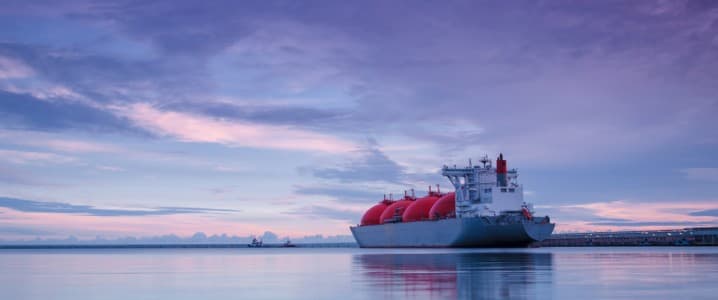
Russia’s sanctioned Arctic LNG 2 project, a cornerstone of its ambitious liquefied natural gas expansion, is once again attempting to find buyers in Asia after a year of near-dormancy. This renewed push isn’t merely a logistical challenge; it represents a direct test of Western sanctions and a significant geopolitical gambit that could ripple across global energy markets. For investors, understanding the motivations behind this move, the market context, and the potential outcomes is crucial for navigating the evolving landscape of global energy supply and demand.
Arctic LNG 2’s Resurgent Bid for Asian Markets
After being effectively frozen by U.S. and EU sanctions, the Arctic LNG 2 export facility on the Gydan Peninsula is showing signs of life. Recent vessel-tracking data indicates at least four tankers carrying LNG have departed the facility via the Northern Route, heading for Asian markets. Among these are the Voskhod and Iris, both of which are blacklisted by the U.S., underscoring the direct challenge Russia is posing to the efficacy of these economic measures. This effort follows an earlier, unsuccessful attempt last year to monetize cargoes from the project. In one notable instance, a sanctioned LNG carrier loaded in August 2024 spent four months traversing Northern Europe, the Mediterranean, the Suez Canal, and the Indian Ocean, eventually reaching Russia’s Far East, all without securing a buyer for its cargo. This historical difficulty highlights the immense hurdles Russia faces, suggesting that while the tankers are on their way, finding willing and capable end-buyers remains the critical test.
Market Volatility and the Sanctions Premium
The timing of Russia’s renewed sales push coincides with a period of significant volatility in crude markets, which inevitably influences the broader energy complex, including LNG. As of today, Brent crude trades at $90.38 per barrel, a notable decline of 9.07% from its daily open, having fluctuated between $86.08 and $98.97. Similarly, WTI crude is priced at $82.59, down 9.41% within a range of $78.97 to $90.34. This sharp daily pullback is part of a broader trend: over the past two weeks, Brent has shed over $20, falling from $112.78 on March 30th to $91.87 yesterday, marking an 18.5% drop. This heightened market uncertainty exacerbates the challenges for sanctioned cargoes. Buyers are typically seeking stability and competitive pricing; introducing the substantial risk premium associated with U.S.-blacklisted energy makes these cargoes significantly less attractive, even with steep discounts. The fundamental market dynamics of supply and demand are being overlaid with complex geopolitical risk, creating a difficult environment for transparent price discovery and stable trade flows.
Investor Scrutiny: Geopolitics, Supply, and Price Outlook
Our proprietary reader intent data reveals that investors are keenly focused on the future trajectory of energy prices and the stability of global supply chains. A prevalent question among our audience this week is, “what do you predict the price of oil per barrel will be by end of 2026?” This long-term outlook underscores the significance of projects like Arctic LNG 2. Should Russia successfully circumvent sanctions and establish consistent sales channels for its LNG, it could introduce new, albeit politically charged, supply into the market. This scenario has the potential to influence global LNG prices, particularly in Asia, and impact the profitability outlook for other LNG producers. Conversely, if sanctions hold firm and these cargoes remain unsold or are diverted, it reinforces a tighter market, potentially supporting higher prices for non-sanctioned LNG. Investors are also actively inquiring about “OPEC+ current production quotas,” indicating a strong focus on managed supply from traditional producers. This contrasts sharply with Russia’s independent, sanction-defying efforts, highlighting the divergence in approaches to global energy supply management and adding another layer of complexity to investment decisions. The success or failure of Arctic LNG 2’s current gambit will offer significant clues regarding the enduring impact of sanctions on energy flows and the risk appetite of global buyers.
Upcoming Catalysts and Strategic Implications
The next two weeks are packed with critical events that will significantly shape the broader energy market, providing context for Russia’s Arctic LNG 2 endeavors. Tomorrow, April 18th, the OPEC+ Joint Ministerial Monitoring Committee (JMMC) meets, followed by the full Ministerial Meeting on April 19th. These gatherings are pivotal, as any decisions on production levels will directly influence crude oil prices and, by extension, the economic viability of all energy projects, including sanctioned ones. A tightening of conventional supply by OPEC+ could, theoretically, create a marginal incentive for some buyers to consider riskier Russian volumes if the price discount is sufficiently attractive, though the compliance risk remains high. Furthermore, the API and EIA weekly inventory reports, scheduled for April 21st/22nd and April 28th/29th, will offer crucial insights into current demand and storage levels in key markets. A build in inventories could exert downward pressure on prices, making it even harder for Russia to find buyers for its sanctioned LNG. Conversely, significant drawdowns could signal stronger demand, potentially giving Russia a sliver of leverage. The Baker Hughes Rig Count on April 24th and May 1st will also provide clarity on North American production trends, adding another variable to the global supply equation. For investors, closely monitoring these events is essential to gauge the evolving supply-demand balance and assess the long-term strategic implications of Russia’s persistent efforts to bring its Arctic LNG to market.


