BlackRock’s $11 Billion Bet on Saudi Gas: A Strategic Imperative for Global Energy Investors
In a significant move reshaping the landscape of global energy infrastructure investment, a consortium led by Global Infrastructure Partners (GIP), a firm acquired by BlackRock last year, has finalized an $11 billion deal with Saudi Aramco. This substantial capital injection targets the lease and subsequent leaseback of natural gas processing facilities within Saudi Arabia’s prolific Jafurah basin. For investors, this transaction represents more than just a headline figure; it underscores a calculated strategic play by BlackRock in essential energy infrastructure and a critical step in Saudi Arabia’s long-term economic diversification, especially as the world grapples with evolving energy demands and volatile commodity markets.
The Jafurah Initiative: Powering Saudi Ambitions and Global Energy Shifts
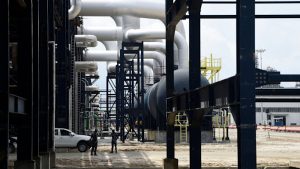
The core of this landmark agreement involves a 20-year arrangement where the GIP-led consortium will lease gas processing plants in the Jafurah basin, then lease them back to Saudi Aramco. This structure allows Aramco to immediately unlock significant capital while retaining operational control. A newly formed Aramco subsidiary, Jafurah Midstream Gas Company, will hold these assets, with Saudi Aramco maintaining a 51 percent stake and the GIP consortium holding the remaining 49 percent. The Jafurah basin is a cornerstone of Saudi Arabia’s natural gas strategy, boasting an estimated 229 trillion standard cubic feet of raw gas reserves. According to Aramco’s chief executive, Amin Nasser, production from Jafurah is on track to commence later this year. The strategic intent is clear: to utilize domestic natural gas for the kingdom’s energy needs, thereby freeing up more valuable crude oil for export to international markets. This is not BlackRock’s first foray into Saudi energy infrastructure; the firm previously led a consortium in a $15.5 billion leaseback deal involving Aramco’s gas pipeline network in late 2021, signaling a sustained commitment to the region’s long-term energy vision.
Navigating Volatile Markets: Gas as a Strategic Hedge
The timing of such a substantial natural gas investment warrants close attention from energy investors. As of today, Brent crude trades at $98.2 per barrel, marking a 3.44% increase over the day, with WTI crude at $90.14 per barrel, up 2.28%. However, this daily uptick comes after a notable decline, with Brent having trended down by $13.43, or 12.4%, from $108.01 on March 26 to $94.58 yesterday. This volatility in crude markets, especially over the past fortnight, highlights the strategic value of diversifying energy revenue streams. Investors are keenly asking about future price trajectories, with a common inquiry revolving around building a base-case Brent price forecast for the next quarter and consensus 2026 forecasts. Amidst these questions, natural gas infrastructure offers a different risk profile. For Saudi Arabia, investing in Jafurah allows for a more stable domestic energy supply, insulating a portion of its economy from the direct swings of international oil prices. For BlackRock, such an infrastructure deal provides long-term, predictable revenue streams, appealing in an environment where capital appreciation is often sought alongside yield and stability. This move represents a strategic commitment to a critical energy asset that supports both national energy security and export optimization.
Saudi Arabia’s Diversification Challenge and FDI Dynamics
The Jafurah deal is a powerful signal of Saudi Arabia’s ongoing efforts to attract foreign direct investment (FDI) and diversify its economy away from an overwhelming reliance on crude oil revenues. Official preliminary data indicates a positive trend in early 2026, with Saudi Arabia reporting $6.4 billion in FDI inflows during the first quarter, representing a 24 percent increase from the previous year. This suggests a growing appeal for select, strategic investments within the kingdom. However, the broader picture reveals persistent challenges. Total inbound FDI for the full year 2025 was down 19 percent year-on-year to $20.7 billion, marking the lowest level since 2020. This stark contrast underscores the critical importance of mega-deals like the Jafurah gas project, particularly within the energy sector, which continues to be the primary magnet for foreign capital. While the kingdom strives to develop non-oil sectors, large-scale energy infrastructure projects remain the most effective conduits for attracting the significant foreign capital needed to fuel its ambitious economic transformation plans. The participation of global financial giants like BlackRock lends credibility and momentum to these efforts, even as the broader diversification outside of energy sectors continues to mature.
Forward Outlook: Jafurah, OPEC+ and Market Catalysts
Looking ahead, the successful launch of production from the Jafurah basin later this year will be a key operational milestone for Saudi Aramco and a validation of this significant investment. For investors, this project’s progression should be monitored closely for its impact on Saudi Arabia’s domestic energy mix and crude export capacity. The broader energy market, however, will face several near-term catalysts. The upcoming OPEC+ Joint Ministerial Monitoring Committee (JMMC) meeting on April 18, followed by the Full Ministerial meeting on April 20, will be crucial in shaping crude supply expectations and global oil prices. These meetings, along with the regular Baker Hughes Rig Count reports (April 17, April 24) and the EIA Weekly Petroleum Status Reports (April 22, April 29), provide ongoing insights into supply-demand dynamics. While Jafurah specifically targets natural gas, its successful integration into Saudi Arabia’s energy strategy could indirectly influence the kingdom’s stance in future OPEC+ discussions by providing greater flexibility to meet domestic energy needs without drawing as heavily on crude. This long-term bet on natural gas infrastructure signals a strategic resilience and a proactive approach to securing future energy value in an ever-evolving global market.