Centrica’s Strategic Expansion: De-Risking European Gas Supply and Unlocking US Producer Value
The recently announced 10-year agreement between Centrica Plc and Devon Energy Corp. to supply natural gas, commencing in 2028, marks a significant strategic maneuver in the evolving global energy landscape. For Centrica, this deal is not merely about securing additional volumes; it represents a calculated step to fortify its European gas supply, mitigate price volatility, and expand its growing transatlantic energy footprint. For Devon Energy, the agreement provides invaluable exposure to robust international markets, capitalizing on persistent pricing differentials. This transaction underscores the continued relevance of natural gas as a critical transition fuel and offers a compelling case study for energy investors navigating complex supply dynamics and volatile commodity markets.
Centrica’s Calculated Move to Secure European Supply and Manage Risk
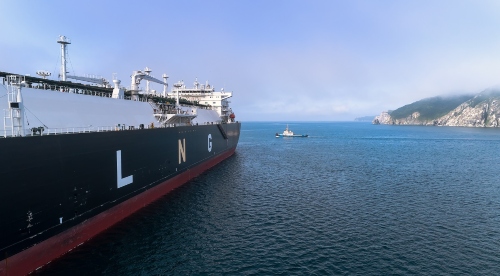
Centrica Energy, the company’s trading arm, will receive 50,000 million British thermal units (MMBtu) per day of natural gas, equating to approximately five liquefied natural gas (LNG) cargoes annually, with volumes indexed to TTF, Europe’s benchmark price. This forward-looking agreement, active from 2028, is a clear extension of Centrica’s proactive strategy to bolster its global gas business, following the establishment of a New York office and previous supply agreements, such as the 15-year deal to supply American LNG to Petroleo Brasileiro SA and a gas supply deal with Coterra Energy Inc. last year. From an investment perspective, the TTF indexation is crucial. It directly aligns Centrica’s feed gas rates with European futures, thereby enabling effective price risk management within its broader LNG portfolio. This strategic alignment helps insulate the company from potential future disconnects between procurement costs and sales prices, enhancing profitability predictability in a notoriously volatile market. As Centrica CEO Chris O’Shea highlighted, such long-term agreements ensure “competitively-indexed gas supply,” a testament to natural gas’s enduring role as an essential transition fuel.
Devon Energy’s International Playbook: Capitalizing on Global Arbitrage
For Devon Energy, a prominent U.S. natural gas producer, this agreement represents a strategic entry point into the lucrative international gas markets. The incentive for U.S. producers to secure overseas long-term agreements is starkly evident in current market dynamics. European and Asian benchmarks for natural gas frequently trade at significant premiums, often four times the price seen at Henry Hub in Louisiana, the U.S. benchmark. This substantial arbitrage opportunity provides a powerful economic driver for U.S. firms to lock in sales abroad, diversifying their revenue streams and de-risking their exposure solely to domestic pricing. By committing to supply Centrica from 2028, Devon secures a long-term buyer for a portion of its production, gaining predictable revenue streams indexed to a premium market. This trend of U.S. producers increasingly seeking international buyers highlights a structural shift in global gas trade, driven by liquefaction capacity expansion and the persistent demand for energy security in Europe and Asia. Investors are keenly observing how U.S. shale producers are leveraging these price differentials, often asking about the factors driving Asian LNG spot prices this week, which remain robust, underscoring the sustained global demand.
Navigating Macro Energy Shifts: Crude Volatility and Gas Resilience
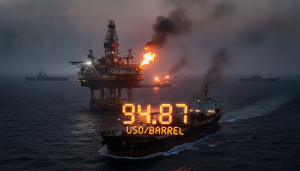
The Centrica-Devon deal takes place within a broader energy market characterized by significant crude oil price fluctuations, yet highlighting the resilience and strategic value of natural gas. As of today, Brent crude trades at $98.69 per barrel, reflecting a notable 3.96% gain on the day, with WTI crude similarly up 2.75% at $90.55. However, this daily uptick follows a recent bearish trend, with Brent having declined by 12.4% over the past 14 days, from $108.01 on March 26th to $94.58 on April 15th. This volatility in crude prices, while not directly impacting TTF-indexed gas contracts, influences overall energy sentiment and investment flows.
Investors are actively seeking clarity on the future, frequently asking for a base-case Brent price forecast for the next quarter and the consensus 2026 Brent forecast. While crude’s trajectory remains a key concern, the strategic importance of natural gas, as evidenced by Centrica’s long-term commitments, solidifies its position as a reliable component of the energy mix, particularly in regions prioritizing energy security and decarbonization efforts. Companies with diversified portfolios, encompassing both crude and gas assets, or those strategically hedging against commodity price swings through long-term contracts, are better positioned to weather these market shifts.
Forward-Looking Catalysts: Upcoming Events Shaping the Energy Outlook
Looking ahead, the energy market will be influenced by several key events in the coming weeks, which, while primarily focused on crude, offer critical insights into the broader supply-demand dynamics underpinning the value of long-term gas deals. This Friday, April 17th, brings the latest Baker Hughes Rig Count, providing an immediate pulse on North American drilling activity. More significantly, the OPEC+ Joint Ministerial Monitoring Committee (JMMC) meeting on April 18th, followed by the Full Ministerial Meeting on April 20th, will be closely watched. Any decisions by OPEC+ regarding production levels could impact global crude supply and prices, indirectly influencing demand for alternative fuels like natural gas. Higher crude prices, for instance, could accelerate gas-to-power switching in some regions or affect industrial energy consumption patterns.
Subsequent API and EIA Weekly Crude Inventory reports on April 21st/22nd and April 28th/29th will offer further granularity on U.S. supply and demand balances. These data points collectively provide investors with a real-time understanding of market fundamentals, helping to contextualize the strategic value of long-term gas agreements. Companies like Centrica, securing stable, competitively-indexed gas supply years in advance, are positioning themselves robustly against an backdrop of ongoing market uncertainty and geopolitical shifts, reinforcing the investment thesis for resilient energy infrastructure and supply chains.