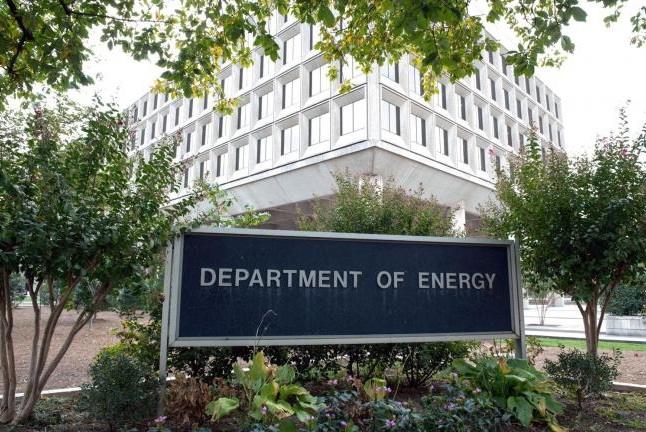
The U.S. Department of Energy’s recent announcement of nearly $1 billion in funding, with a significant $500 million tranche dedicated to battery materials processing, manufacturing, and recycling, signals a profound, albeit often underappreciated, pivot in America’s energy strategy. While headlines frequently focus on the immediate volatility of crude markets, this substantial investment underscores a long-term commitment to securing domestic supply chains for critical minerals, essential for both national security and the burgeoning energy transition. For astute oil and gas investors, this isn’t just a side story; it’s an evolving narrative demanding strategic consideration for portfolio diversification and future growth opportunities.
The Strategic Imperative: Domesticating Critical Minerals
At the heart of the DOE’s initiative is the goal of fortifying America’s critical minerals supply chain, reducing its reliance on foreign actors for materials vital to modern life and national security. The $500 million specifically targets the expansion of U.S. critical mineral and materials processing, derivative battery manufacturing, and recycling capabilities. This encompasses traditional battery minerals such such as lithium, graphite, nickel, copper, and aluminum, alongside vital rare earth elements. This move aligns with broader “Unleashing American Energy” directives, demonstrating that energy independence is now understood to extend beyond fossil fuels to the foundational components of future energy systems. The long-term implications for supply chain resilience and industrial growth within the U.S. are significant, creating a domestic ecosystem capable of supporting advanced manufacturing and clean technologies.
Navigating the Energy Transition Amidst Oil Market Volatility
Investors are currently navigating a complex energy landscape, where short-term crude market dynamics often overshadow long-term strategic shifts. As of today, Brent crude trades at $98.87, marking a robust +4.15% gain, while WTI sits at $90.76, up nearly 3%. This recent upward swing follows a significant 14-day decline, where Brent shed over 12%, falling from $108.01 to $94.58. Many investors are rightly focused on building a base-case Brent price forecast for the next quarter, or closely monitoring drivers like Chinese tea-pot refinery runs and Asian LNG spot prices. However, the DOE’s substantial commitment to battery materials underscores a long-term strategic pivot that complements, rather than competes with, traditional energy plays in a diversified portfolio. While the consensus 2026 Brent forecast remains a key metric for traditional energy stakeholders, the critical minerals investment highlights that the energy sector’s future will increasingly be defined by a broader array of resources and technologies.
The Broader Funding Landscape and Future Catalysts
Beyond the headline $500 million for battery materials, the DOE has outlined additional significant funding opportunities that collectively aim to build a comprehensive domestic critical materials ecosystem. These include $250 million for industrial facilities capable of producing valuable mineral byproducts from existing processes, up to $135 million to enhance domestic supply chains for rare earth elements, and $50 million for the Critical Minerals and Materials (CMM) Accelerator program, designed to fast-track processing technologies towards commercialization. Additionally, $40 million has been earmarked for developing technologies to recover critical minerals from industrial wastewater. While traditional energy investors will keenly watch the upcoming OPEC+ Ministerial Meeting on April 20th for supply signals, and the weekly API and EIA inventory reports for demand insights, the implications of these critical mineral investments unfold over a different, yet equally impactful, timeline. The success of these programs will hinge on future policy continuity and the speed of commercialization, with key milestones expected over the next 12-24 months in project announcements and facility groundbreakings. These initiatives are laying the groundwork for substantial industrial growth and technological innovation, creating new avenues for capital deployment.
Investment Implications: Positioning for the New Energy Paradigm
For forward-thinking oil and gas investors, this strategic federal investment in critical minerals presents compelling opportunities to diversify and de-risk portfolios in an evolving energy landscape. Companies involved in the upstream extraction of lithium, graphite, nickel, and rare earth elements, as well as those in midstream processing, refining, and recycling, stand to benefit significantly. Furthermore, firms developing advanced materials science, battery component manufacturing, and even industrial wastewater treatment technologies could see accelerated growth. While the immediate concerns around crude oil prices and the outcomes of upcoming events like the Baker Hughes Rig Count on April 17th remain pertinent for short-term trading, the long-term secular trend towards electrification and domestic supply chain security offers a powerful investment thesis. Investors should evaluate companies with robust intellectual property, established operational capabilities in mineral processing, or those with significant recycling potential. Risks include the typical challenges of large-scale industrial projects such as permitting delays, technological hurdles, and potential shifts in political support, but the underlying strategic imperative for national security and energy independence suggests sustained federal backing. This isn’t just about ‘green’ investing; it’s about investing in the foundational elements of the next industrial era, creating a new layer of resilience within the broader energy sector.


