China’s Refining Sector: A Deep Dive into Eroding Profits and Structural Headwinds
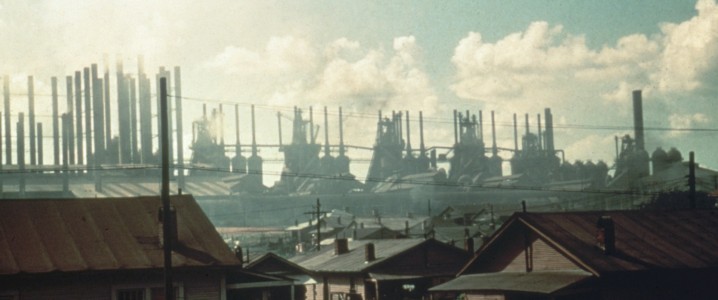
China’s refining and petrochemicals sector is grappling with a severe profitability crisis, signaling a challenging investment landscape for the foreseeable future. The industry is deep in the throes of what local observers term “involution”—a self-defeating spiral of excessive competition for limited opportunities. This phenomenon, marked by rampant overcapacity and destructive price wars, has significantly eroded earnings and forced a re-evaluation of long-term strategies for major players. For oil and gas investors, understanding the unique pressures on Chinese refiners is paramount, especially as global energy markets navigate volatility and a burgeoning energy transition.
The Crucible of Overcapacity and Destructive Price Wars
The financial fallout from China’s “involution” is stark and undeniable. Across the refining and chemicals sector, losses surged by a staggering 8.3% in the first half of 2025 compared to the same period in the prior year. The refining industry alone bore the brunt of this pain, witnessing losses jump by more than $1.25 billion (9 billion Chinese yuan) over the same comparative period. This severe financial bleed underscores the extent to which overproduction has saturated the domestic market, leading to a relentless race to the bottom on pricing. Even state-controlled energy giants are not immune, with their earnings performance among the worst across industrial companies, a clear indicator that market forces are overpowering traditional competitive advantages. Investors in this space must recognize that these are not merely cyclical downturns but structural challenges rooted in a fundamental supply-demand imbalance within the world’s largest energy consumer.
Structural Shifts: The EV Revolution’s Bite on Fuel Demand
Compounding the overcapacity issue is a profound shift in domestic fuel demand, driven primarily by China’s undisputed leadership in new energy vehicles (NEVs). The rapid adoption of electric vehicles and the expansion of renewable energy capacity have begun to structurally erode demand for traditional refined petroleum products. China National Petroleum Corporation (CNPC), a dominant force in the country’s energy landscape, explicitly acknowledged this trend in its outlook earlier this year, stating that domestic road fuel demand has already peaked. This admission from a state-controlled entity is a powerful signal that the decline in fuel consumption is not temporary but a long-term consequence of the energy transition. For refining investors, this means the demand side of the equation will likely offer little relief, forcing companies to either consolidate, innovate, or face continued margin compression as the market for their core products shrinks domestically.
Navigating a Volatile Crude Landscape Amidst Domestic Pressures
While internal market dynamics are the primary drivers of China’s refining woes, the global crude market provides an important external layer of complexity. As of today, Brent crude trades at $90.38, reflecting a significant 9.07% drop within the day’s range of $86.08 to $98.97. Similarly, WTI crude is down 9.41% to $82.59, moving between $78.97 and $90.34. This sharp daily decline follows a broader trend, with Brent having fallen over 18.5% from $112.78 just two weeks ago on March 30th to $91.87 yesterday. While lower crude input costs might, at first glance, appear to offer some relief to refiners, the reality is more nuanced. With gasoline prices also down 5.18% today to $2.93, indicating product market weakness, the core problem of overcapacity and price wars in China likely means that any savings on crude inputs are quickly passed on to consumers, further eroding already thin refining margins. The intense competition ensures that refiners are caught in a vicious cycle where lower input costs do little to improve overall profitability against a backdrop of weak domestic product demand.
Ahead on the Calendar: OPEC+ Decisions and the Global Supply Tap
Looking forward, upcoming global energy events will undoubtedly influence the cost structure for Chinese refiners, even as they battle domestic issues. Investors are keenly watching the imminent OPEC+ meetings, with the Joint Ministerial Monitoring Committee (JMMC) scheduled for tomorrow, April 18th, followed by the Full Ministerial meeting on April 19th. These meetings are crucial for determining global crude supply levels and, consequently, price stability. Any decision by OPEC+ to adjust production quotas could significantly impact the benchmark crude prices that Chinese refiners pay for their feedstock. A tightening of supply could push crude prices higher, further squeezing margins for refiners already struggling with weak product demand and fierce internal competition. Conversely, a loosening of quotas might provide some relief on input costs, but could also signal broader global demand concerns, potentially leading to even lower product prices.
Investor Pulse: Crude Prices, Quotas, and the Road Ahead
Our proprietary data reveals that investors are actively asking about OPEC+ current production quotas and seeking predictions for crude oil prices by the end of 2026. This focus on macro crude dynamics highlights the dual challenge for investors evaluating China’s refining sector. While the “involution” and the structural shift in domestic fuel demand are critical internal factors, the profitability of these refiners remains inextricably linked to the global crude market. For example, if OPEC+ maintains tight supply, potentially supporting crude prices at elevated levels, it makes the cost of feedstock higher for Chinese refiners already struggling with weak product demand and margins. Conversely, should global demand falter and OPEC+ loosen its supply taps, potentially lowering crude prices, it might alleviate input cost pressure but could also signal further erosion of global product prices. Navigating the intersection of these intense domestic competitive pressures and the volatility of the global crude market, influenced by decisions from bodies like OPEC+, demands a sophisticated and forward-looking analytical approach from investors. The coming months will be critical in assessing how these forces will shape the future of China’s refining industry.