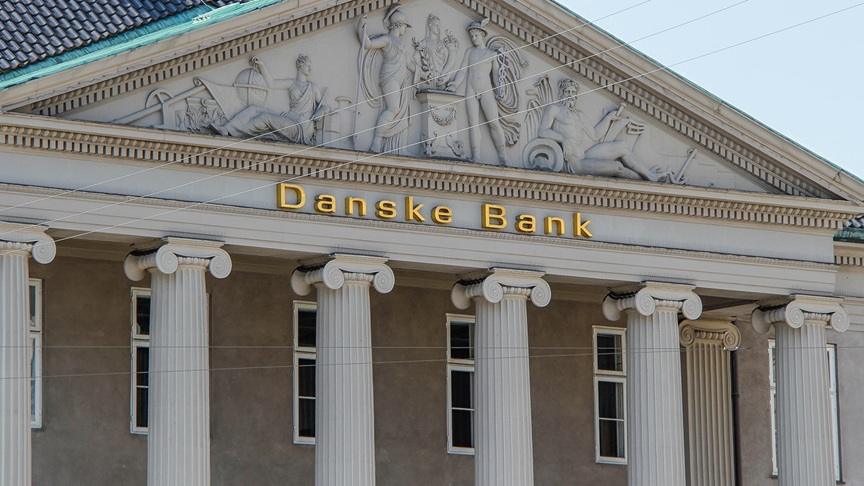
The institutional investment landscape for oil and gas is undergoing a profound transformation, and the recent announcement from Danske Bank Group serves as a powerful testament to this shift. Through its Danske Invest and Danica units, the Copenhagen-based financial giant has dramatically altered its exposure to the fossil fuel sector, shedding investments in a staggering 85% of companies previously held. This strategic pivot, driven by a new “Net-Zero Pathway Framework” and customer preferences, signals a critical inflection point for energy companies vying for capital in an increasingly ESG-conscious world. For investors, understanding the nuances of this move — which is more about selective re-engagement than outright abandonment — is crucial for navigating the evolving dynamics of energy markets.
Selective Re-Weighting: The Nuance of Institutional “Divestment”
While headlines might suggest a mass exodus, Danske Bank’s actions reveal a more sophisticated strategy: a rigorous re-weighting of its fossil fuel portfolio rather than a complete divestment. The bank has reduced its investment universe from approximately 2,000 fossil fuel-involved companies to a highly concentrated list of around 270. This substantial reduction, however, has not led to a corresponding drop in overall financial exposure to the sector. Instead, Danske Bank explicitly states that its total exposure has remained “relatively unchanged,” indicating increased investments in the remaining 270 companies deemed aligned with its new methodology.
This approach highlights a critical distinction for energy investors: institutional capital isn’t necessarily abandoning the sector entirely, but it is becoming far more discerning. The new Net-Zero Pathway Framework, based on the Transition Pathway Initiative (TPI) and companies’ own climate targets, assesses management quality and carbon performance. This means capital is flowing preferentially towards firms demonstrating credible low-carbon transition plans and robust emission reduction targets aligned with Paris Agreement goals. Companies that fail to meet these elevated standards face a shrinking pool of institutional funding, signaling significant long-term capital allocation risks.
ESG Pressure Meets Market Volatility: A Timely Reassessment
This significant portfolio restructuring by Danske Bank arrives at a fascinating juncture for energy markets. As of today, Brent Crude trades at $90.38, marking a sharp 9.07% decline within the day’s range of $86.08 to $98.97. Similarly, WTI Crude has fallen to $82.59, down 9.41% from its daily high. This intraday volatility follows a more extended downtrend, with Brent having shed $20.91, or 18.5%, from $112.78 on March 30th to $91.87 yesterday. Gasoline prices mirror this trend, currently at $2.93, down 5.18%.
Such market conditions often prompt re-evaluation. While Danske Bank’s policy was implemented early last year, its full operationalization now coincides with a period of significant price softening. This begs the question: does a falling market make “responsible investing” more palatable, or does it amplify the perceived long-term risks for companies not adapting to the energy transition? For investors grappling with questions like “what do you predict the price of oil per barrel will be by end of 2026?”, the actions of major financial institutions like Danske Bank offer a powerful signal. Their selective re-weighting suggests a belief that future value in the energy sector will increasingly accrue to companies demonstrating a clear path to decarbonization, even amidst short-term price fluctuations.
Investor Focus: Identifying the “Future-Proof” Energy Players
Our proprietary reader intent data reveals a consistent theme among investors: a keen interest in understanding which energy companies are best positioned for the future. Questions like “How well do you think Repsol will end in April 2026?” underscore the desire for specific company-level insights within the broader energy transition narrative. Danske Bank’s strategy offers a blueprint for what institutional investors are now prioritizing. They are actively seeking out companies that are “working to future-proof their business to address the challenges and needs of the future,” as the bank itself stated.
This means investors should be scrutinizing energy companies not just on their current production metrics or quarterly earnings, but critically on their climate targets, capital allocation to lower-carbon initiatives, and the robustness of their transition plans. Companies that articulate clear strategies for managing emissions, investing in renewables or carbon capture, and diversifying their energy portfolios are likely to attract the increasingly selective capital of institutions like Danske Bank. Conversely, those perceived as lagging in their transition efforts may find themselves increasingly marginalized by a growing segment of the investment community.
Navigating Upcoming Catalysts Amidst Evolving Capital Flows
The coming weeks present a series of critical energy market catalysts that will further test the evolving investment landscape. Investors are keenly awaiting the OPEC+ Joint Ministerial Monitoring Committee (JMMC) meeting tomorrow, April 18th, followed by the full Ministerial Meeting on April 19th. Our reader questions about “OPEC+ current production quotas” highlight the market’s focus on supply-side decisions. Any adjustments to output could significantly impact crude prices and the profitability of the remaining fossil fuel companies in portfolios like Danske Bank’s.
Further insights will come from the API Weekly Crude Inventory reports on April 21st and 28th, and the EIA Weekly Petroleum Status Reports on April 22nd and 29th, which provide crucial supply-demand indicators. The Baker Hughes Rig Count on April 24th and May 1st will offer a pulse on upstream activity. These events will unfold against a backdrop of institutions increasingly scrutinizing the ESG credentials of energy investments. For the 270 companies that remain in Danske Bank’s universe, their performance in a potentially volatile market, influenced by OPEC+ decisions and inventory data, will be critical. Their ability to deliver competitive returns while advancing credible transition plans will solidify their position as the preferred recipients of institutional capital in this new era of energy investing.


