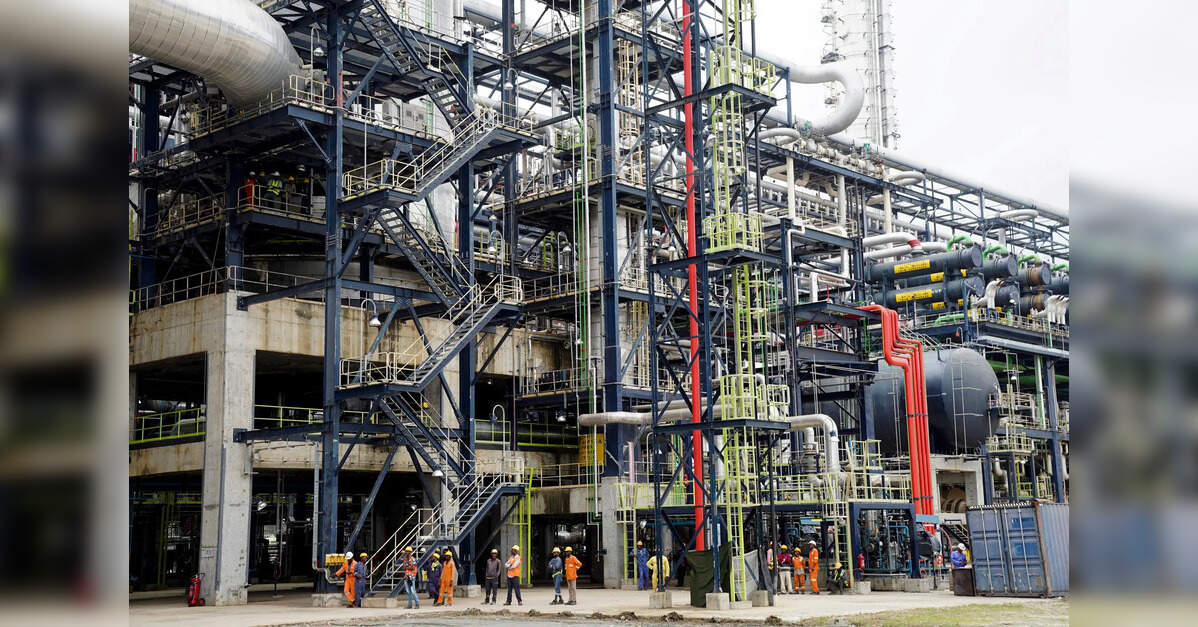
In a strategic move set to redefine the distribution landscape of refined petroleum products across Nigeria, the Dangote Refinery is making a substantial investment in its logistical capabilities. The company announced plans to import 4,000 natural-gas powered trucks, a significant fleet expansion valued at 720 billion naira, or approximately $469.89 million. This bold initiative, slated for a rollout on August 15, marks a pivotal step in the refinery’s strategy to directly supply fuel to a broad spectrum of end-users, from retail stations and manufacturers to telecoms firms, thereby directly competing with established local fuel traders. For investors eyeing the burgeoning African energy sector, this development underscores a powerful play for market control and efficiency in the continent’s largest economy.
Dangote’s Direct Distribution Offensive: A Vertical Integration Masterclass
The acquisition of 4,000 gas-powered trucks is more than just a logistical upgrade; it’s a profound statement of intent from the Dangote Refinery. With its massive 650,000 barrels per day capacity, Africa’s largest refinery is now actively pursuing vertical integration to capture greater value within the supply chain. By directly distributing refined products, the company aims to circumvent intermediaries, dramatically cutting logistics costs and ensuring a more reliable supply to its diverse customer base. This strategy is designed to enhance profitability by improving margins and securing market share against existing fuel traders. For investors, this move signals a mature operational approach, where efficiency and direct market access are prioritized to unlock the full potential of such a colossal refining asset. The August 15 launch date provides a clear timeline for market participants to monitor the initial impact of this enhanced distribution network, which promises to reshape the competitive dynamics of Nigeria’s downstream sector.
Navigating Nigeria’s Gas Transition and Subsidy Reforms
The decision to invest specifically in natural-gas powered trucks aligns with Nigeria’s broader energy policy shifts, particularly following the removal of costly petrol subsidies. This policy change led to a sharp increase in pump prices, prompting a national push towards alternative, more affordable fuels like natural gas. While the adoption of gas as a transport fuel has been gradual, Dangote’s substantial investment could act as a significant catalyst. By deploying such a large fleet, the refinery not only optimizes its own fuel costs but also signals confidence in the viability and future of gas as a primary energy source for transport within the country. Investors should watch closely how this move influences the broader gas infrastructure development and consumer adoption rates, as it holds implications for long-term demand dynamics for both refined products and natural gas within Nigeria, potentially accelerating the country’s energy transition goals in the transport sector.
Crude Volatility Meets Strategic Refining in a Shifting Market
The timing of Dangote’s logistical expansion occurs against a backdrop of notable volatility in the global crude oil markets. As of today, Brent crude trades at $90.38 per barrel, marking a significant daily decline of 9.07%, with WTI crude similarly affected at $82.59, down 9.41%. This sharp correction follows a challenging two-week period where Brent plummeted from $112.78 on March 30 to $91.87 just yesterday, representing an 18.5% drop. Such price movements directly impact refining margins and the broader sentiment around oil and gas investments. Looking forward, the next 14 days are packed with critical market catalysts. The imminent OPEC+ Joint Ministerial Monitoring Committee (JMMC) and full Ministerial meetings on April 18 and 19 will be scrutinized for any signals regarding production quotas, which could further influence crude prices. Additionally, the API and EIA weekly inventory reports on April 21 and 22, respectively, will provide crucial insights into short-term supply and demand dynamics. These events are paramount for investors tracking the profitability outlook for major refining operations like Dangote, as they directly affect feedstock costs and product pricing.
Investor Outlook: De-risking and Long-Term Value Creation
For investors keenly observing the African energy space, the Dangote Refinery’s latest move presents a compelling narrative of de-risking and long-term value creation. Questions from our readership, such as predictions for oil prices by the end of 2026, underscore the constant search for clarity on future market conditions and their impact on specific company performance. Dangote’s investment in direct distribution addresses several key investor concerns: it enhances operational control, reduces reliance on third-party logistics, and positions the refinery to better withstand market fluctuations by internalizing a critical part of the value chain. This strategy is not merely about cost reduction; it’s about building resilience and ensuring consistent cash flow. The ability to guarantee supply directly to a vast market segment strengthens the refinery’s competitive moat and improves its attractiveness as a foundational asset in Africa’s energy future. While challenges like slow gas adoption persist, this proactive investment signals a commitment to overcoming them and securing a dominant position in the regional refined products market, ultimately bolstering its long-term investment thesis.


