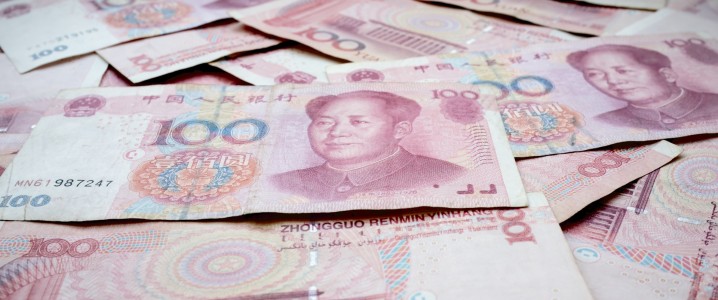
Fortescue, a major player in the global resources sector, has signaled a profound strategic pivot, redirecting its ambitious green energy initiatives squarely towards China. This move, underscored by a landmark yuan-denominated syndicated loan of approximately $2 billion (14.2 billion yuan), follows the company’s decision to halt significant clean energy projects in the United States and Australia. For investors, this reorientation is not merely a geographic shift but a clear statement on the evolving global landscape for green industrial development, capital allocation, and the critical role of policy stability in attracting long-term investment in the energy transition.
Fortescue’s Strategic Re-evaluation: Seeking “Love” in Green Energy
The decision by Fortescue to pause or cancel key green hydrogen projects, specifically the Arizona Hydrogen Project in the United States and the PEM50 green hydrogen project in Gladstone, Australia, marks a significant re-evaluation of its clean energy portfolio. Fortescue’s founder and executive chairman, Andrew Forrest, articulated the company’s philosophy: “We are big investors who always go where we’re loved.” This sentiment directly points to the impact of policy environments on large-scale capital deployment. The recent legislation in the U.S. to phase out certain renewable energy incentives evidently cooled Fortescue’s enthusiasm, prompting a reassessment of timelines and ultimately, project termination. The Arizona project, initially slated for production by mid-2026, became a casualty of this perceived lack of “love.” This strategic shift highlights that for capital-intensive, long-duration green energy projects, a predictable and supportive policy framework is often more critical than immediate market conditions or even geographical proximity to existing operations. Investors are increasingly asking about the long-term viability of green projects amidst shifting policy tides, and Fortescue’s actions provide a tangible example of capital migrating to perceived friendlier shores.
The Yuan’s Growing Influence in Green Finance and China’s Green Ambition
The securing of a $2 billion yuan-denominated syndicated term loan is a groundbreaking financial maneuver with significant implications beyond Fortescue’s balance sheet. This transaction, involving Chinese, Australian, and international lenders, represents the first yuan-denominated syndicated term loan of its kind by an Australian corporate. It underscores the deepening financial ties between Australia’s resource sector and China, and more broadly, the increasing internationalization of the Chinese yuan in green finance. For Fortescue, financing its China-centric green initiatives in local currency naturally hedges against foreign exchange risks and signals a long-term commitment to operating within China’s economic framework. This move is a powerful “signal of what is possible when partners are aligned in ambition,” as Forrest stated. As China continues to lead in green technology and manufacturing, its financial infrastructure is evolving to support these ambitions, providing a stable and attractive environment for green industrial investment. This alignment directly answers investor curiosity about the direction of global green capital flows and the emergence of new financing mechanisms for the energy transition.
Navigating Volatile Energy Markets and Investor Sentiment
Fortescue’s strategic pivot unfolds against a backdrop of dynamic and often volatile global energy markets. As of today, Brent Crude trades at $99.46 per barrel, marking a significant 4.77% gain for the day, with WTI Crude also climbing 3.52% to $91.23 per barrel. These daily swings, coupled with a broader trend that saw Brent drop from $108.01 on March 26 to $94.58 on April 15, highlight the inherent unpredictability of fossil fuel prices. While investors are actively seeking a base-case Brent price forecast for the next quarter and consensus 2026 Brent forecasts, Fortescue’s move suggests a strategic detachment from short-term commodity price speculation for its green ventures. Instead, the company prioritizes long-term policy stability and market demand for green products. This decision illustrates how large energy companies are balancing their traditional revenue streams with future-proof investments. For investors, it underscores the need to differentiate between commodity trading plays and long-term industrial shifts. The strong performance in traditional crude markets today could be seen as an opportunity for some companies, but for Fortescue, the focus remains on securing a foothold in what it believes will be the world’s next great industry in a supportive environment.
Forward Outlook: China’s Green Leadership and Upcoming Catalysts
Fortescue’s deepened commitment to China positions it at the forefront of the global green industrial revolution, directly contrasting with its perception of U.S. policy. “As the United States steps back from investing in what will be the world’s greatest industry, China and Fortescue are advancing the green technology needed to lead the global green industrial revolution,” Forrest emphasized. This bold statement sets the stage for Fortescue to potentially leverage China’s vast industrial capacity, supply chains, and domestic demand for green products. Looking ahead, the broader energy market will continue to be shaped by critical events. The upcoming OPEC+ Joint Ministerial Monitoring Committee (JMMC) meeting on April 18, followed by the Full Ministerial meeting on April 20, will be closely watched for any shifts in production policy that could impact global crude supply and prices. Similarly, the API and EIA weekly inventory reports on April 21/22 and April 28/29 will provide crucial insights into demand signals, particularly from major consumers like China. While these events directly influence traditional oil and gas markets, their outcomes indirectly affect the competitive landscape for green energy, shaping the perceived urgency and economic viability of the transition. Investors are also keen on understanding how Chinese demand, including the operational rates of “tea-pot refineries,” will evolve, providing a dual perspective on China’s role as both a traditional energy consumer and a burgeoning green energy leader. Fortescue’s strategy demonstrates a clear bet on China’s long-term green vision, setting a precedent for how global energy giants might navigate the complex geopolitics of the energy transition in the coming years.


