A $300 Million Bet on Grid Stability: How Energy Vault’s Strategic Shift Reshapes the Energy Investment Landscape
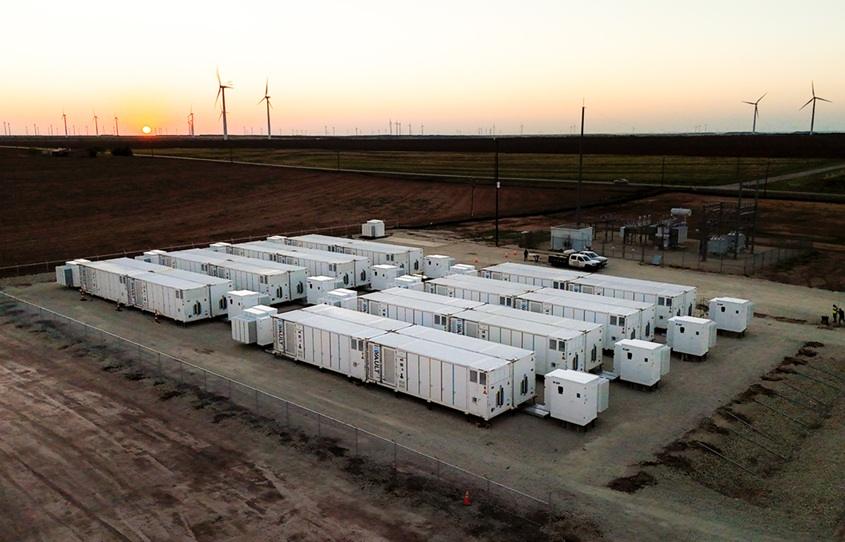
The energy sector is in constant flux, a dynamic environment where traditional fossil fuel investments increasingly intersect with the burgeoning opportunities in renewables and enabling technologies. A recent development demanding the attention of oil and gas investors is Energy Vault’s successful agreement for a $300 million preferred equity investment. This capital infusion is not merely a funding round; it marks a pivotal strategic shift for the company, establishing Asset Vault, a new subsidiary designed to build, own, and operate grid-scale energy storage assets globally. For investors accustomed to the upstream and downstream cycles of hydrocarbons, this move by a key player in energy storage highlights the accelerating capital flow into infrastructure critical for the evolving energy mix, signaling both opportunities and potential competitive shifts that warrant close examination.
Asset Vault: A New IPP Model for Energy Storage and Its Financial Implications
Energy Vault’s creation of Asset Vault represents a decisive pivot towards an Independent Power Producer (IPP) model within the energy storage domain. This strategy, common and highly valued in traditional power generation and renewable energy sectors, involves owning and operating assets to generate long-term, contracted revenue streams. The $300 million investment, sourced from a leading multi-billion-dollar infrastructure fund, is poised to unlock over $1 billion in capital expenditures, accelerating the deployment of an impressive 1.5 gigawatts (GW) of energy storage projects across the U.S., Europe, and Australia. This significant scale underscores the market’s confidence in the IPP model for storage. By consolidating its existing 3 GW pipeline of battery energy storage systems (BESS) projects under Asset Vault, Energy Vault is moving to capture more of the value chain, shifting from primarily a technology provider to a full-lifecycle energy infrastructure owner. The company projects Asset Vault will generate more than $100 million in recurring annual EBITDA within the next 3-4 years, a substantial addition to its existing Energy Storage Solutions business. This move towards predictable, recurring earnings is a strong signal to long-term infrastructure investors and could redefine how energy storage companies are valued, potentially attracting capital that traditionally flows into stable, dividend-yielding energy infrastructure.
Navigating Volatility: Capital Flows Amidst Shifting Crude Dynamics
This substantial investment in energy storage occurs against a backdrop of persistent volatility and shifting dynamics in the crude oil markets. As of today, April 16th, Brent Crude trades at $99.62, reflecting a notable 4.94% jump from its opening, with a daily range between $94.42 and $99.65. WTI Crude mirrors this upward movement, currently at $91.18, up 3.46% for the day. While these figures represent a strong daily recovery, it’s crucial to contextualize them within the broader trend: Brent crude has seen a significant decline from $108.01 on March 26th to $94.58 as recently as April 15th, a drop of over 12%. This ongoing price fluctuation underscores the inherent unpredictability in traditional energy markets. The significant capital flowing into stable, long-term energy storage assets, even as crude prices swing, highlights a divergence in investment priorities. Investors are actively seeking avenues for growth and stability beyond the immediate commodity price cycles. Our proprietary reader intent data reveals a consistent focus on future energy demand, with many investors actively seeking a base-case Brent price forecast for the next quarter. Understanding where capital is deploying in the ‘new energy’ landscape, such as this $300 million for Energy Vault, is vital for traditional oil and gas investors to gauge broader market sentiment and anticipate the structural shifts impacting future energy demand and supply dynamics.
The AI-Driven Energy Demand Surge and Investor Inquiries
Energy Vault’s CEO, Robert Piconi, explicitly linked the new investment and strategy to “massive increases in energy demand driven by data center AI infrastructure,” alongside the penetration of renewable energy. This statement resonates strongly with the evolving questions we see from our readers. Beyond the immediate crude forecasts, our internal analytics show a significant uptick in inquiries regarding the long-term drivers of energy consumption. Investors are increasingly asking about the impact of emerging technologies like artificial intelligence on global power grids and, by extension, on fossil fuel demand. While many questions still center on traditional metrics like “How are Chinese tea-pot refineries running this quarter?” or “What’s driving Asian LNG spot prices this week?”, there’s a clear recognition that new demand vectors are emerging. The need for stable, reliable, and dispatchable power for energy-intensive AI data centers is undeniable, and energy storage solutions like those advanced by Energy Vault are critical enablers. For oil and gas investors, this signifies that growth in electricity demand, previously assumed to be met by a mix of fossil fuels and renewables, will increasingly rely on sophisticated storage solutions to integrate intermittent sources. This creates both a challenge and an opportunity: understanding the energy transition means recognizing the new infrastructure layers that are being built, and where significant capital is flowing to support this new demand.
Upcoming Market Catalysts and the Broadening Energy Horizon
While Energy Vault charts its course with this strategic capital infusion and asset acquisition, the broader energy market awaits crucial signals that will continue to shape the investment landscape for all energy sectors. Looking ahead, the next 14 days are packed with events that will influence market sentiment and potentially redirect capital flows. The OPEC+ Joint Ministerial Monitoring Committee (JMMC) meeting on April 18th, followed by the Full Ministerial meeting on April 20th, will provide critical insights into supply-side management. Any adjustments to production quotas or forward guidance from OPEC+ can significantly impact crude prices and, by extension, the economic viability and investment appeal of alternative energy projects. Furthermore, the recurring Baker Hughes Rig Count reports on April 17th and 24th, along with the API and EIA Weekly Crude Inventory reports on April 21st/22nd and 28th/29th, will offer granular data on North American production activity and storage levels. These macroeconomic indicators, while focused on traditional oil and gas, create the overarching investment environment. For astute investors, understanding Energy Vault’s move in the context of these upcoming market catalysts is essential. It highlights the growing bifurcation of capital allocation: stable, long-term infrastructure investment in renewables and storage, contrasted with the more volatile, geopolitically influenced cycles of traditional hydrocarbons. The continued evolution of the global energy mix demands a holistic view, integrating insights from both established and emerging energy sectors to identify where true long-term value is being created.


