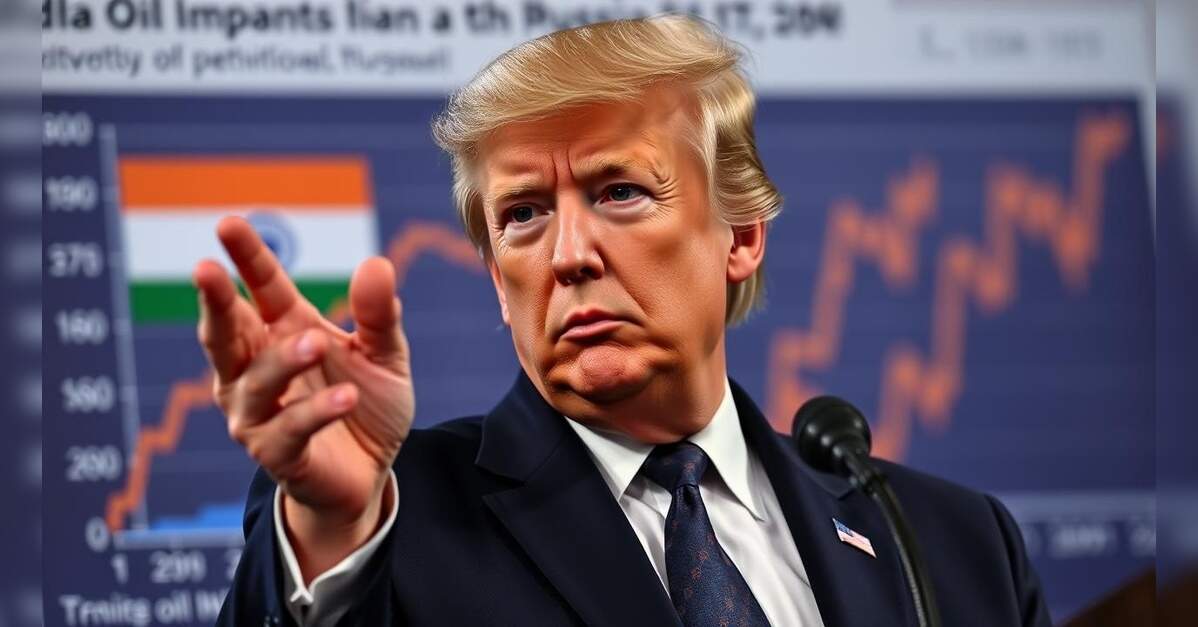
India, a nation whose oil import needs exceed 85% of its consumption, finds itself at a critical juncture. For the past two years, Russian crude, offered at significant discounts following the 2022 invasion of Ukraine, has become the bedrock of India’s energy security, skyrocketing from less than 2% of total imports to an astonishing 35%. This strategic pivot has delivered substantial cost advantages to Indian refiners, insulating them somewhat from the initial surge in global crude prices that saw Brent briefly touch $137 per barrel. However, the looming threat of U.S. penalties, stemming from calls to curb Russian oil purchases, is forcing New Delhi to re-evaluate its supply matrix. This analysis delves into the intricate dynamics of India’s energy strategy, the implications for global oil markets, and the key investment considerations for navigating this evolving landscape.
India’s Russian Oil Dependency and the Economic Imperative
India’s reliance on Russian oil has grown dramatically, with the nation importing approximately 1.75 million barrels per day (mbpd) in the first half of this year alone, marking a 1% increase from a year prior. This volume represents more than a third of India’s total oil imports, a testament to the economic benefits derived from discounted Russian crude. For refiners like Nayara Energy and Reliance Industries, which operate the world’s largest refining complex and hold long-term supply agreements with Rosneft, these discounts have been instrumental in maintaining competitive margins. While state-owned refiners have reportedly paused new Russian oil purchases amidst the escalating geopolitical pressure, the overall strategic importance of this supply stream to India’s energy economics remains undeniable. The immediate challenge for India is balancing its long-standing ties and economic necessities with mounting external pressure, particularly given the current market environment where every cost advantage is crucial.
Geopolitical Headwinds and the Diversification Mandate
The explicit warnings from figures like former U.S. President Donald Trump, suggesting increased tariffs on Indian goods or even sanctions if New Delhi continues its Russian oil purchases without a peace deal in Ukraine, introduce a significant layer of uncertainty. India has historically resisted such external pressure, citing its sovereign energy policy and economic imperatives. Yet, the strategic imperative to diversify has clearly accelerated. India’s oil minister, Hardeep Singh Puri, has highlighted the nation’s success in broadening its procurement to nearly 40 countries. Beyond traditional Middle Eastern suppliers like Iraq (India’s top supplier before 2022) and Saudi Arabia, Indian refiners have actively sourced crude from the United States, West Africa, Azerbaijan, and emerging producers such as Guyana, Brazil, and Canada. This robust diversification strategy provides a vital hedge against geopolitical risks, demonstrating India’s commitment to securing its energy future beyond any single source. Investors are keenly observing these shifts, with questions frequently arising about the long-term price trajectory of oil, underscoring the market’s sensitivity to major supply reconfigurations.
Market Volatility and Upcoming Catalysts for Crude Prices
The broader energy market currently reflects a period of heightened volatility, a backdrop against which India’s supply decisions will play out. As of today, Brent crude trades at $90.38 per barrel, marking a significant intraday decline of 9.07%, having fluctuated within a range of $86.08 to $98.97. Similarly, WTI crude stands at $82.59, down 9.41% within a daily range of $78.97 to $90.34. This recent downturn follows a notable trend over the past two weeks, where Brent has shed $20.91, or 18.5%, from its $112.78 perch on March 30th to $91.87 just yesterday. Such pronounced price swings underscore the sensitivity of the market to supply-demand signals and geopolitical developments.
Looking ahead, several key events within the next two weeks could amplify or temper these trends. The OPEC+ Joint Ministerial Monitoring Committee (JMMC) meeting on April 18th, followed by the full Ministerial OPEC+ Meeting on April 19th, will be critical. Discussions around production quotas, particularly in light of potential shifts in Indian demand from Russia to other suppliers, could directly influence global crude availability and pricing. Investors frequently ask about OPEC+’s current production quotas, highlighting the importance of these meetings for market direction. Furthermore, the weekly API and EIA crude inventory reports on April 21st, 22nd, 28th, and 29th will provide fresh insights into U.S. supply-demand balances, offering short-term trading signals. The Baker Hughes Rig Count on April 24th and May 1st will also be closely watched for indications of future production capacity, especially in regions that could pick up any slack from India’s reduced Russian imports.
Investment Implications and Strategic Positioning
For investors, India’s evolving energy strategy presents both risks and opportunities. Companies with significant refining assets in India, particularly those with long-term Russian supply deals, face potential margin compression if they are forced to shift to higher-priced alternative crudes. Conversely, producers in the Middle East, West Africa, North America, and South America, particularly those with spare capacity or developing new projects in regions like Guyana and Brazil, stand to benefit from increased Indian demand. The shift will likely see a re-routing of global crude flows, potentially increasing tanker traffic on certain routes and impacting freight rates. Investors should closely monitor the financial health and strategic sourcing of major Indian refiners, assessing their agility in adapting to new supply chains. Furthermore, the broader question of oil price stability by the end of 2026, a frequent query from our readership, remains heavily contingent on how successfully India manages this transition and how OPEC+ responds to global supply dynamics. Positioning in diversified energy portfolios, with an eye on both upstream producers in alternative supply regions and downstream players demonstrating supply chain resilience, will be key to navigating this complex environment.


