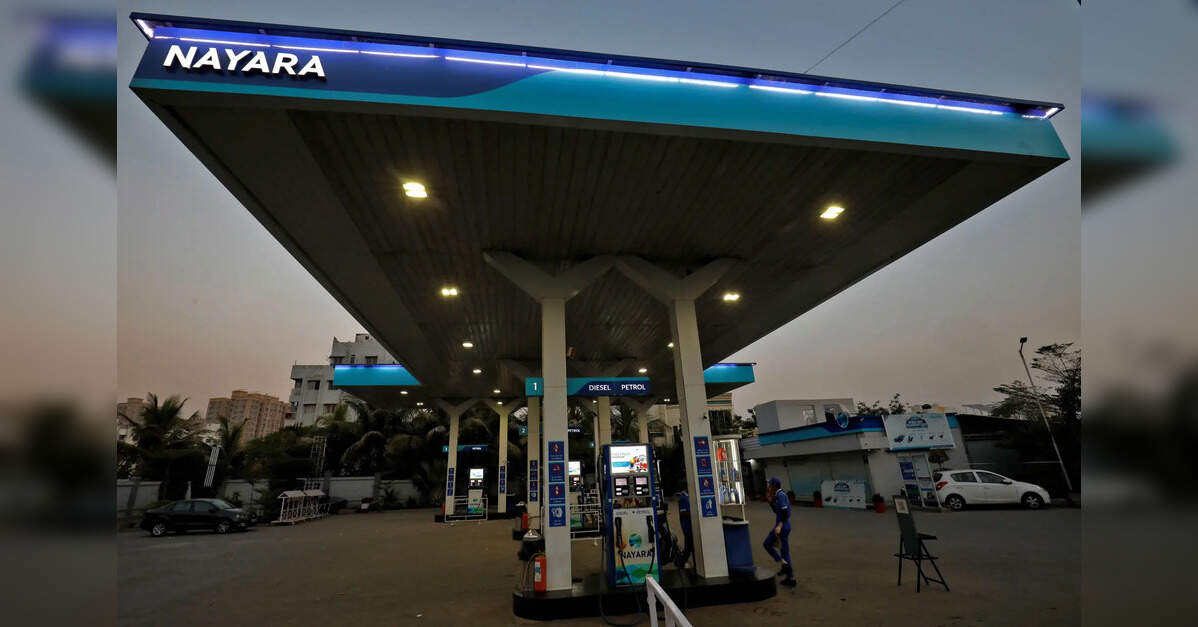
Mumbai-based Nayara Energy Ltd., a significant player in India’s vast refining sector, is actively pursuing new domestic financial partnerships in response to escalating international scrutiny and recent European Union sanctions. The company, which counts Russian energy titan Rosneft PJSC as a major stakeholder, has engaged senior Indian government officials to facilitate connections with local lenders, such as UCO Bank Ltd., as larger, globally exposed financial institutions grow increasingly wary.
Sources familiar with the confidential discussions indicate that Nayara’s executives held meetings with India’s finance ministry last week. The primary objective is to secure a local banking partner capable of managing the intricate financial mechanisms required for crude oil imports and processing payments for its substantial refined fuel product exports. This strategic shift underscores the growing complexities faced by entities with direct or indirect ties to sanctioned Russian enterprises in the global financial landscape.
Navigating Sanction Headwinds
The European Union’s imposition of sanctions against Nayara in July has presented immediate challenges, prompting a cautious retreat among several international banks from even fundamental banking services. This reluctance stems from a broader concern regarding potential secondary sanctions, which could impact any financial entity dealing with sanctioned companies. Consequently, Nayara is strategically targeting smaller Indian lenders, perceived to have less entanglement with international financial markets, thereby mitigating the risk of inadvertent exposure to punitive measures.
UCO Bank, for instance, has historical experience in facilitating oil-related transactions under challenging geopolitical circumstances, notably its role in enabling oil trades with Iran in 2018. This precedent positions such institutions as viable alternatives for Nayara as it seeks to ring-fence its operational financing from the ripple effects of Western sanctions against Russia.
Geopolitical Crosscurrents and Trade Tensions
Adding another layer of complexity to Nayara’s operational environment is the persistent specter of broader geopolitical tensions. The potential for renewed trade friction, including past discussions by former US administrations about imposing a 25% tariff and other penalties on India’s trade relationship with Russia, remains a significant risk factor. Such measures could substantially alter the economic calculus for Indian refiners, who have significantly increased their intake of discounted Russian crude since the 2022 invasion of Ukraine.
This surge in Russian oil imports has been a boon for Indian refiners, allowing them to secure feedstock at advantageous prices. However, it simultaneously exposes them to the political ramifications of navigating intricate international relations. For investors, monitoring these geopolitical undercurrents is crucial, as they directly influence supply chain stability and profitability for companies like Nayara.
Operational Adjustments and Market Impact
Despite these financial hurdles, Nayara has demonstrated operational resilience. Ship-tracking data reveals the company successfully loaded at least two clean-petroleum product (CPP) cargoes in the month following the EU sanctions. This indicates continued, albeit potentially more complex, export operations.
However, the sanctions have not been without consequence for Nayara’s core refining activities. The company has begun reducing run rates at its key west India refinery as buyers, cautious of sanction implications, began to distance themselves. This operational adjustment directly impacts throughput and profitability, demanding close attention from market observers.
Nayara commands a significant presence in the Indian energy landscape, contributing nearly 8% of the nation’s total refining capacity and operating 7% of its retail-fuel network. Rosneft PJSC holds just over 49% of Nayara, with a consortium, Kesani Enterprises Co., holding another just over 49%, and the remainder distributed among retail investors. This ownership structure makes Nayara a focal point for understanding the broader implications of sanctions on the energy sector in emerging markets.
Financial Health Amidst Uncertainty
Despite the current challenges, Nayara’s underlying financial health appears robust. Local credit rating agency CareEdge, in its July assessment, highlighted Nayara’s low leverage and healthy liquidity as positive indicators. The company reported substantial cash and equivalents totaling 105.5 billion rupees, equivalent to approximately $1.2 billion, underscoring a strong balance sheet position.
Exports constitute a significant portion of Nayara’s revenue, accounting for more than a quarter of its total business. Critically, the CareEdge report noted that direct exports to the European Union were “negligible,” suggesting that the immediate impact of EU sanctions on its direct sales channels might be limited. However, the broader financial implications, particularly concerning international banking and transaction facilitation, remain a key area of concern for the company and its investors.
Investment Outlook and Future Prospects
For investors tracking the Indian energy sector, Nayara Energy’s predicament offers a valuable case study in managing geopolitical risk in an interconnected global economy. While the company’s strong domestic market presence, healthy liquidity, and strategic pursuit of local banking partners provide a buffer, the evolving landscape of international sanctions and trade relations will continue to shape its operational and financial trajectory.
The ability of Nayara to successfully forge new domestic financial alliances and maintain its crude supply and product off-take channels will be paramount. The outcome of these efforts will not only dictate Nayara’s immediate future but also offer broader insights into the resilience and adaptability of India’s energy sector in navigating an increasingly complex and fragmented global financial order.


