Guyana and Suriname: Navigating the Investment Landscape of South America’s Oil Frontier
The burgeoning oil and gas sector in South America continues to captivate global investors, with neighboring Guyana and Suriname emerging as critical focal points. While both nations share significant hydrocarbon potential, their immediate trajectories present distinct scenarios for those tracking energy market opportunities. Understanding these nuances is key for strategic capital deployment in this rapidly evolving basin.
Guyana’s Unstoppable Offshore Ascent
Guyana stands as a testament to the transformative power of offshore discoveries. Since commencing oil production in 2019, the nation has witnessed an unprecedented surge in its GDP per capita. Production figures underscore this rapid growth, with the country targeting approximately 660,000 barrels per day (bpd) by mid-2025, a substantial leap from the 391,000 bpd recorded in 2023. Industry giant ExxonMobil, a key operator in the region, projects an even more aggressive expansion, forecasting production capacity to reach 1.3 million barrels per day (MMbpd) by 2027 and an impressive 1.7 MMbpd by 2030.
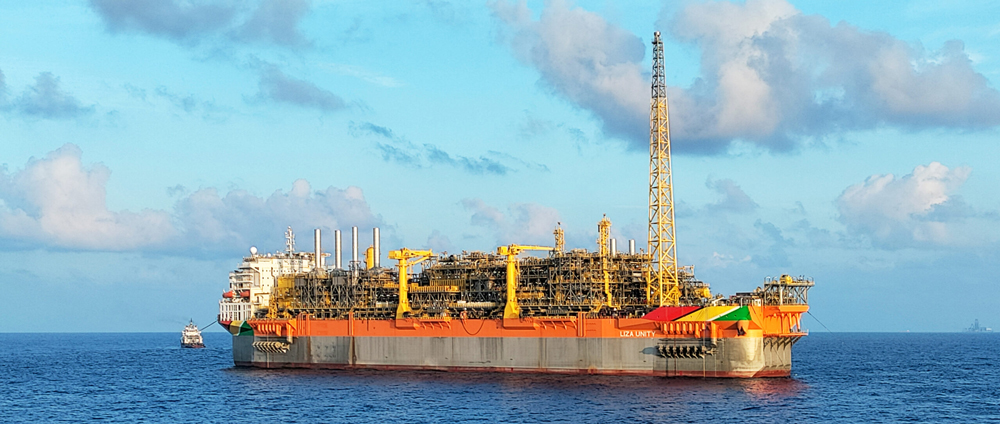
This remarkable growth is primarily driven by the prolific Stabroek Block, a vast deepwater area where multiple large-scale projects are actively under development. Flagship ventures such as Liza Destiny, Liza Unity, Prosperity, and Yellowtail are already contributing significantly to the output, with additional projects continuously advancing through the development pipeline. The sustained success of these operations solidifies Guyana’s position as one of the world’s most exciting new oil provinces, offering substantial long-term value for stakeholders.
Suriname’s Emerging Potential and Immediate Challenges
Adjacent to Guyana, Suriname shares a similar geological endowment with promising offshore finds, yet its near-term oil and gas narrative is characterized by a different set of considerations. While the long-term outlook for hydrocarbons in the Suriname-Guyana basin was once perceived as a straightforward “deploy one FPSO annually, exceed nameplate capacity, and repeat” pathway, the reality on the ground introduces complexities.
Industry experts, such as Pat Jelinek, EY Americas Oil & Gas and Chemicals Leader, highlight that despite robust project momentum, non-hydrocarbon factors are poised to significantly influence the region’s development, especially as Suriname approaches its first oil production. Investors must account for these external variables, which could shape the pace and profitability of future ventures.
Operational Bottlenecks and Local Content Mandates
A critical shared challenge for both Guyana and Suriname lies in addressing local-content requirements and infrastructure bottlenecks. Both nations have instituted mandates for local sourcing of goods, services, and talent, aiming to ensure that the economic benefits of the oil boom are distributed within their respective economies. However, the current domestic capacity in both countries remains constrained, posing a potential impediment to the rapid scaling of operations.
For instance, the availability of adequate shorebase facilities, particularly in key logistical hubs like Georgetown, is a recurring topic within the industry. These logistical and supply chain limitations can impact project timelines and operational efficiencies, directly influencing the economic returns for energy companies and their investors. Navigating these requirements while ensuring operational continuity demands sophisticated planning and significant investment in local capacity building.
Coastal Vulnerability: An Overlooked Risk Factor
Beyond the operational and policy challenges, both Guyana and Suriname face a profound environmental risk: coastal flooding. With a low population density, approximately 90% of Guyana’s 779,004 inhabitants reside on a narrow coastal plain, which constitutes only 10% of the country’s total land area. This concentration makes the population and a significant portion of economic activity highly susceptible to severe flooding from heavy rainfall and the escalating threat of sea-level rise.
Suriname grapples with an equally dire situation. World Bank studies identify it as one of the most vulnerable countries globally to the impacts of flooding. Approximately 87% of Suriname’s population lives along its 386-kilometer coastal plain, with this figure rising to about 67% in the capital city, Paramaribo. As in Guyana, flooding impacts the majority of the population and an estimated 90% of human activities. This vulnerability is further exacerbated by inadequate drainage systems in highly populated urban coastal zones, such as Paramaribo. For investors, understanding these geographical and climate-related risks is essential, as they can indirectly affect labor availability, infrastructure resilience, and the overall stability of the operating environment.
The Investor’s Outlook: Balancing Opportunity with Risk
The Guyana-Suriname basin undeniably represents a compelling growth story within the global oil and gas sector. Guyana’s established production trajectory and ambitious future targets, anchored by the Stabroek Block, offer clear investment appeal. Suriname, while earlier in its development cycle, holds similar geological promise. However, astute investors must weigh these substantial hydrocarbon opportunities against a backdrop of complex non-hydrocarbon factors.
The interplay of local content demands, infrastructure limitations, and severe coastal vulnerabilities introduces layers of operational and environmental risk. Successful navigation of this dynamic environment will require not only robust technical expertise but also a deep understanding of local socio-economic landscapes and a proactive approach to climate resilience. For those willing to engage with these complexities, the rewards from South America’s newest oil frontier could be significant.