Data Center Map Reveals Power Demand Hotspots
The relentless march of artificial intelligence is not merely transforming technology; it’s igniting an unprecedented surge in global energy demand, creating compelling dynamics for investors across the oil and gas landscape. As Big Tech giants accelerate their AI ambitions, the ripple effect on electricity grids and the underlying fuel sources powering them becomes increasingly pronounced. Companies like Amazon, Microsoft, Google, and Meta have recently signaled monumental increases in their capital expenditure projections, a clear indication of the massive infrastructure build-out required to support the burgeoning AI economy.
During recent quarterly earnings calls, these industry titans unveiled staggering investment plans. Amazon has indicated it will surpass its initial $100 billion capital expenditure target. Google announced a significant $10 billion hike in its capex. Meta, not to be outdone, also modestly increased its spending forecast. Microsoft projects a record $30 billion in capital spending for its current fiscal first quarter alone. A substantial portion of these colossal investments directly targets the construction and expansion of data centers, the physical backbone of the digital revolution.
The Infrastructure Tsunami: Quantifying the Data Center Boom
The scale of this data center expansion is truly remarkable. A decade and a half ago, in 2010, permit filings for new data centers in the United States numbered just 311. By the close of last year, that figure had nearly quadrupled. Comprehensive analyses now identify 1,240 data centers across America that are either fully operational or have secured approval for construction. This dramatic increase underscores the sheer velocity at which the digital infrastructure is growing, demanding an equally rapid expansion of energy supply.
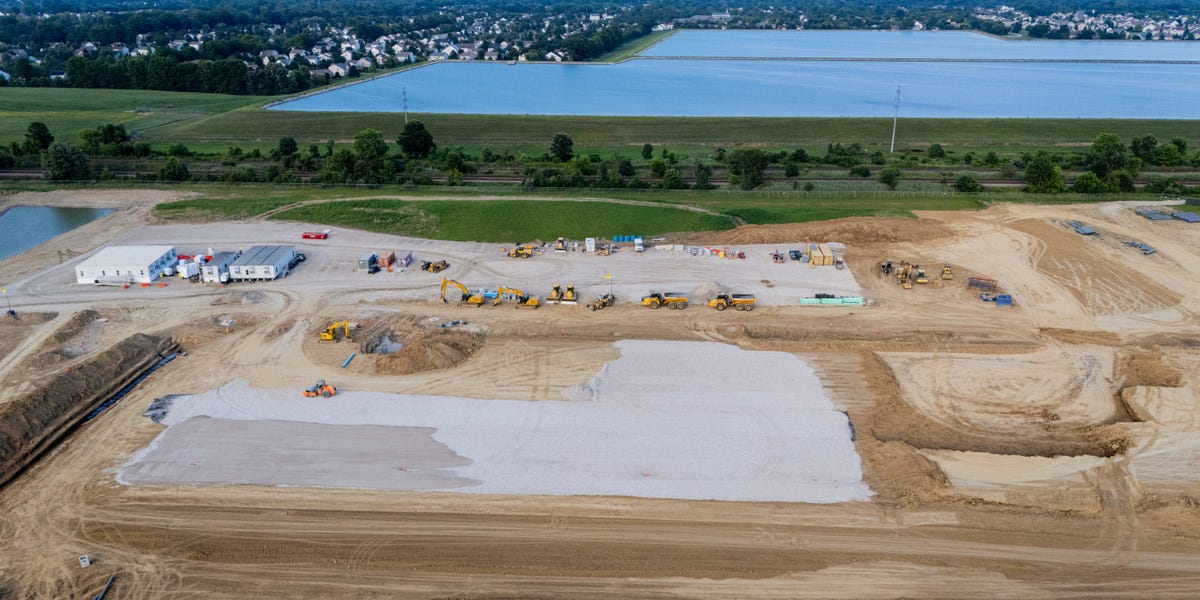
For energy investors, understanding where these digital fortresses are rising is as crucial as knowing their overall numbers. The mapping of these locations reveals distinct geographical hotspots that are becoming significant centers of electricity consumption. Northern Virginia stands out as a prime example, hosting an astounding 329 data centers. Maricopa County, Arizona, also represents a major hub with 48 facilities. Beyond these established powerhouses, new regions are rapidly emerging as prime locations for data center development, including areas like Central Ohio and Sarpy, Nebraska. These emerging zones present both opportunities and challenges for local energy providers and infrastructure developers.
Policy, Incentives, and Local Impact on Energy Grids
The scramble to capitalize on the economic transformation promised by AI has led many cities and states to offer substantial incentives for data center development. Millions of dollars in tax breaks are frequently extended to developers, often with a relatively modest promise of full-time job creation in return. For instance, in Ohio, analysis suggests that tax incentives provided to developers can accumulate to over $2 million in tax savings for every permanent, full-time position created at an operational data center. While these incentives aim to attract investment, they also facilitate the concentration of immense power demand in specific locales.
Furthermore, evolving local ordinances are now permitting the construction of these industrial-scale complexes in closer proximity to residential neighborhoods. This trend places significant, continuous strain on local energy grids and infrastructure, as these facilities operate 24/7. For oil and gas companies involved in power generation, transmission, and distribution, these developments highlight the critical need for proactive planning and investment to ensure grid stability and reliability in the face of concentrated, high-volume energy demand.
The Insatiable Thirst: Powering the Digital Frontier
The energy footprint of this unprecedented digital build-out carries an extreme cost. Consider the 322 largest data centers among those recently counted; individually, some of these facilities can consume as much electricity as an entire city. Beyond power, they also demand vast quantities of water, potentially several million gallons daily, for cooling. This dual demand for energy and water creates complex resource management challenges that directly impact the energy sector.
The aggregate electricity consumption figures are even more striking. Projections suggest that US data centers could soon collectively consume more electricity than the entire nation of Poland, with its population of 36.6 million, utilized in 2023. This staggering statistic underscores the profound impact AI-driven infrastructure development will have on global energy markets. For oil and gas investors, this translates directly into sustained, and potentially increasing, demand for natural gas, a primary fuel source for electricity generation in many regions. The need for reliable, dispatchable power will likely bolster investment in new gas-fired power plants and associated infrastructure, ensuring the lights stay on for the digital economy.
Investment Implications for the Energy Sector
For savvy investors focused on the oil and gas sector, these trends represent significant opportunities and strategic imperatives. The exponential growth in data center energy demand will necessitate substantial investments in power generation capacity, grid modernization, and transmission infrastructure. Natural gas, with its flexibility and relatively lower emissions compared to other fossil fuels, is positioned to play a pivotal role in meeting this escalating electricity requirement.
Companies involved in natural gas production, processing, and transportation stand to benefit from the sustained demand. Furthermore, the need for enhanced grid resilience and stability will drive innovation and investment in areas like energy storage, smart grid technologies, and potentially even localized power solutions. The intertwining of Big Tech’s digital ambitions and the energy sector’s ability to deliver reliable, scalable power creates a compelling long-term investment thesis. Monitoring these data center hotspots and the energy policies shaping their development will be crucial for navigating the evolving landscape of energy finance.


