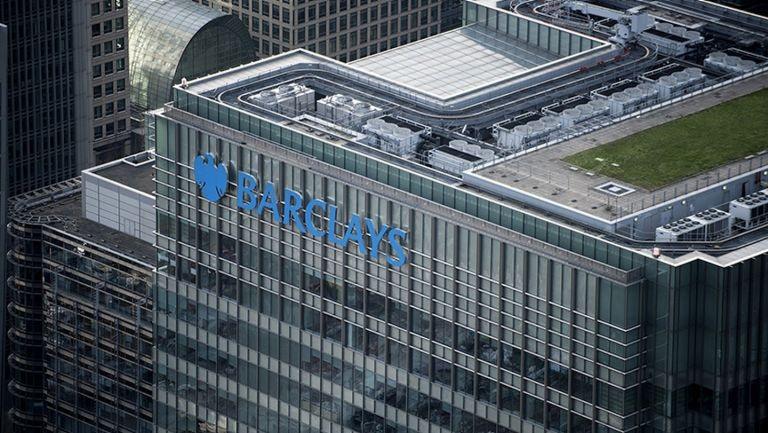
Barclays has announced its strategic departure from the Net-Zero Banking Alliance (NZBA), a significant development that reverberates across the global financial landscape and notably eases a specific layer of pressure on the oil and gas sector’s access to capital. This decision marks the second major UK financial institution to withdraw from the UN-backed coalition, following HSBC’s exit last month, underscoring a broader, accelerating trend among global banking giants.
The Accelerating Exodus from Climate Alliances
The British banking giant now joins a growing roster of global financial powerhouses stepping back from the NZBA. Earlier this year, all major Wall Street banks, alongside their Canadian counterparts, also severed ties with the alliance. This trend reflects a strategic reassessment by institutions navigating increasingly complex geopolitical and regulatory environments. Beyond North America and the UK, Australia’s Macquarie and Japan’s Sumitomo Mitsui have similarly announced their exits, painting a clear picture of a fragmented and weakening global banking consensus on collective climate commitments.
Political Winds and Investment Realities Reshape Banking Strategy
The accelerating exodus from the NZBA stems primarily from intense political scrutiny and mounting regulatory risks, particularly emanating from the United States. Republican lawmakers in various US states have aggressively challenged financial institutions participating in climate-focused alliances, warning of potential legal violations and threatening exclusion from lucrative state business. These warnings, part of a broader anti-ESG (Environmental, Social, and Governance) legislative push, have forced banks to re-evaluate the costs and benefits of membership in such groups. For financial institutions heavily reliant on diverse client bases and robust capital markets, the strategic calculus shifted dramatically, favoring independence over collective mandates perceived as politically charged or financially restrictive.
Barclays’ Stance Amidst the Shift: Commitment and Pragmatism
In its official statement regarding the withdrawal, Barclays cited the diminishing efficacy of the alliance itself, noting that “with the departure of most of the global banks, the organisation no longer has the membership to support our transition.” This suggests a practical assessment that the alliance’s collective power and utility had waned considerably, rendering its membership less valuable for advancing Barclays’ own climate objectives.
Despite the exit from the NZBA, Barclays firmly reiterated its internal commitment to achieving net-zero status by 2050. The bank also remains steadfast in its ambitious target to mobilize $1 trillion in sustainable and transition finance by 2030. Recent disclosures reveal Barclays generated approximately £500 million (USD$660 million) in revenues from these sustainable and transition finance activities in 2024. Furthermore, cumulative volumes have reached $220.2 billion towards its $1 trillion objective, indicating an accelerating pace of activity during the first half of 2025. In its announcement, Barclays articulated its ongoing dedication to collaborating with clients on their transitions, funding climate technology, and critically, “helping to ensure energy security for our customers and clients.” This emphasis on energy security resonates strongly with the realities of global energy demand and the ongoing role of traditional energy sources.
NZBA’s Diminished Influence and the Path Forward
This latest withdrawal delivers another significant blow to the NZBA, an initiative designed to channel banking finance towards global net-zero objectives. Crucially, this departure occurs even after the alliance’s members, in April 2025, agreed to substantial revisions to its framework and principles. These changes included eliminating a mandatory requirement for banks to align lending and capital markets activities with the goal of limiting global warming to 1.5°C, an adjustment seemingly aimed at retaining members and offering greater flexibility. However, these concessions were clearly insufficient to stem the tide of exits.
An NZBA spokesperson, in response to Barclays’ announcement, maintained a resolute tone, stating that the alliance “remains focused on delivering on the future vision overwhelmingly endorsed by member banks a few months ago.” The spokesperson emphasized the NZBA’s role in supporting members to lead on climate by addressing barriers for clients investing in the net-zero transition, highlighting its unique position to provide practical support for managing opportunities and risks associated with the move to net zero.
Implications for Oil & Gas Investment and Energy Finance
For investors in the oil and gas sector, these developments signal a tangible easing of the institutional pressure previously exerted by such banking alliances. While individual banks like Barclays may retain their own internal net-zero aspirations and sustainable finance targets, the collective, coordinated pressure to de-risk or divest from traditional energy assets, once amplified by alliances like the NZBA, has demonstrably weakened. This shift could lead to a more pragmatic, less ideologically driven approach to energy lending and capital allocation within major financial institutions.
It suggests that access to capital for well-managed, efficient oil and gas projects may face fewer systemic hurdles, provided they meet standard financial criteria and demonstrate strong operational ESG performance. The emphasis on “energy security” by Barclays is particularly telling, indicating a recognition of the indispensable role traditional energy plays in the global economy during this protracted energy transition.
Investors should interpret these exits not as a repudiation of climate action by individual banks, but rather as a recalibration of how financial institutions navigate complex geopolitical and market realities while pursuing their own sustainability goals. The focus may now shift more towards direct engagement with clients on their decarbonization pathways, rather than adherence to broad, potentially restrictive alliance mandates. This evolving landscape presents both challenges and opportunities for energy companies and their financial partners, emphasizing resilience, strategic adaptation, and a clear articulation of their role in meeting global energy demands.


