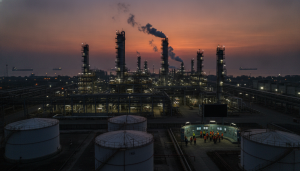
Mumbai’s energy landscape is undergoing a significant shift as major state-owned refiners in India have reportedly ceased new spot market procurements of Russian crude. This pivotal move, confirmed by industry sources, comes directly in the wake of punitive tariffs imposed by the United States on Indian exports, signaling a critical juncture for global energy trade and investment strategies.
The affected entities include cornerstone players in India’s energy sector: Indian Oil Corporation (IOCL), Bharat Petroleum Corporation (BPCL), Hindustan Petroleum Corporation (HPCL), and Mangalore Refineries and Petrochemicals Ltd (MRPL). These state-run giants, which collectively manage 60% of India’s refining capacity and typically source approximately 40% of their crude oil requirements from the spot market, are now recalibrating their supply chains.
US Tariffs Reshape India’s Energy Procurement
The catalyst for this strategic pivot is a recent decree from US President Donald Trump, effective August 1, 2025. This executive action levies a substantial 25% tariff on Indian exports. Crucially, the US administration explicitly linked these tariffs to an “additional penalty” for India’s deepening strategic trade relationship with Moscow, particularly highlighting its substantial oil purchases and military imports. This move underscores the escalating geopolitical pressures impacting international energy flows and financial markets.
For investors tracking the oil and gas sector, this development carries profound implications. India stands as the world’s third-largest oil-importing and consuming nation, making its procurement decisions ripple across global crude markets. The sudden withdrawal of significant Indian state-owned purchasing power from the Russian spot market creates both challenges and opportunities for various stakeholders.
Financial Headwinds for State Refiners
Industry insiders indicate that these refiners are now poised to reorient their sourcing towards traditional suppliers in the Middle East, along with other international markets. While this ensures continuity of supply, it comes at a tangible cost. Russian Urals crude has historically offered a significant discount, and the shift to alternative sources is expected to be more expensive. This increased procurement cost will inevitably exert pressure on the gross refining margins (GRMs) of IOCL, BPCL, HPCL, and MRPL, a key metric for evaluating refinery profitability and investor returns.
The financial impact on these public sector undertakings (PSUs) will be closely monitored. Higher input costs could translate to reduced profitability, potentially influencing dividend policies and capital expenditure plans. Investors in these companies will need to factor in the revised cost structures and their potential effects on bottom-line performance.
Private Sector Maintains Russian Ties, For Now
In contrast to their state-owned counterparts, private Indian refiners Reliance Industries (RIL) and Nayara Energy appear to be maintaining their existing procurement strategies for Russian crude. Sources suggest these companies, which typically secure crude through long-term contracts rather than the spot market, may continue their Russian imports. This divergence highlights the differing risk appetites and contractual obligations within India’s refining sector.
RIL and Nayara Energy have strategically leveraged Russian crude in recent years, particularly for exporting refined products to Europe, a market that has proven exceptionally profitable for them. Their ability to secure discounted crude under term contracts has provided a competitive edge, allowing them to capitalize on global demand for refined products. Should the geopolitical landscape further tighten, the sustainability of even these term contracts could come under scrutiny, posing a potential risk to their established export-driven profitability model.
Geopolitical Dynamics and Global Oil Prices
The broader implications of these developments for global oil prices cannot be overstated. Hardeep Singh Puri, India’s Oil Minister, issued a stark warning on July 17, cautioning that any significant disruption to Russian supplies could propel crude prices into the $130-140 per barrel range. This forecast underscores the fragility of global energy markets and the potential for rapid price escalation in response to supply shocks.
Minister Puri also emphasized India’s preparedness to swiftly transition to alternative sources should any existing supply lines be cut. He reiterated that the global market is currently well-supplied with oil, a factor that has helped to temper price increases. However, the current situation, where India’s third-largest oil importing nation is forced to alter its procurement patterns, introduces an element of uncertainty that could test the resilience of global supply chains.
Quantifying India’s Russian Crude Dependence
The financial scale of India’s reliance on Russian crude is substantial. In the fiscal year 2025, India’s crude oil imports from Russia amounted to approximately $50.3 billion. This figure represents more than one-third of India’s total crude expenditure for the year, which stood at $143.1 billion. The magnitude of these imports underscores the strategic importance of Russia as a supplier to India and the significant financial adjustment now facing Indian state refiners.
This shift will reverberate through commodity trading desks worldwide. Traders and investors will be closely monitoring the new arbitrage opportunities, the competitive landscape for Middle Eastern and other non-Russian crude grades, and the overall impact on global shipping routes and freight rates.
Investor Outlook: Navigating Volatility and Opportunity
For investors focused on the oil and gas sector, this situation presents a complex interplay of risks and opportunities. Companies with diversified crude sourcing capabilities and robust refining margins may prove more resilient. The increased demand for Middle Eastern crude could benefit producers in the region, while shipping companies serving these new routes may also see a boost.
Conversely, refiners heavily reliant on specific crude grades or those with less flexibility in their supply chains could face headwinds. The potential for elevated global oil prices, as warned by Minister Puri, also warrants careful consideration, as it impacts not only refiner margins but also consumer demand and broader economic indicators.
Moving forward, market participants should closely track the evolution of US-India trade relations, the geopolitical climate surrounding Russia, and the operational adjustments made by India’s state-owned refiners. The profitability of Indian oil and gas companies, the stability of global crude markets, and the strategic direction of energy security in Asia will all be profoundly shaped by these unfolding events.