EU’s Ambitious LNG Play: Strategic Move or Supply Mirage?
The European Union is signaling a significant pivot in its energy sourcing strategy, exploring a collective purchasing mechanism for U.S. liquefied natural gas (LNG). This initiative, announced just days ago, aims to consolidate demand from European companies, fostering a unified front in securing long-term supply from the United States. Modeled on the successful 2022 AggregateEU program that bolstered gas security post-Ukraine invasion, this new U.S.-focused version could launch as early as September if sufficient interest materializes. The stated goal is monumental: to meet commitments under a landmark energy trade deal, potentially aiming to import $250 billion worth of U.S. energy annually for three years. This target, however, represents a staggering increase, more than tripling the EU’s current $76 billion in annual U.S. energy imports. For investors tracking the global energy landscape, this move presents both strategic opportunities and considerable logistical challenges that warrant close examination.
The Staggering Scale of EU’s U.S. Energy Commitment
Brussels’ plan to collectively procure U.S. LNG is designed to fulfill a substantial energy trade commitment with Washington, reportedly targeting $250 billion per year in U.S. energy — encompassing LNG, oil, and nuclear fuel — for the next three years. This initiative follows a landmark trade deal signed recently, underscoring the EU’s strategic intent to deepen energy ties with the U.S. However, the sheer scale of this ambition immediately raises questions among market observers. Last year, the EU’s total energy imports from the U.S. stood at $76 billion. Meeting the new $250 billion annual target would necessitate a nearly threefold increase in U.S. energy flows to Europe. Analysts are quick to point out the significant discrepancy between this aspiration and current realities. Globally, total U.S. energy exports reached $318 billion in 2024, meaning the EU’s proposed annual intake alone would absorb a substantial majority of the entire U.S. export capacity. While the concept of pooled purchasing theoretically enhances negotiating leverage and contract alignment, the practical hurdles of securing such immense volumes remain formidable.
Capacity Constraints and Fierce Global Competition
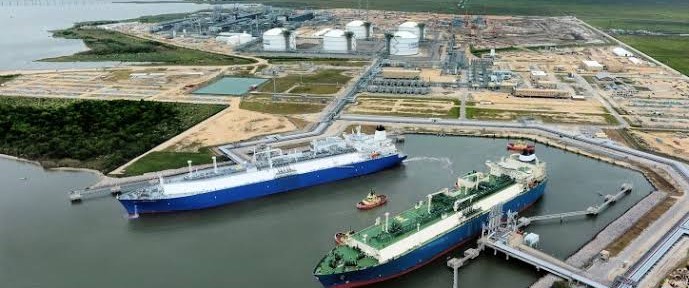
The fundamental challenge facing the EU’s pooled LNG purchasing strategy lies in the physical availability of supply. Despite significant expansion, U.S. LNG export capacity, while growing, is not poised to meet such an unprecedented surge in European demand in the near term. Key projects like Golden Pass, Corpus Christi Stage 3, and Plaquemines LNG are indeed expanding output, but their combined additional volumes are unlikely to satisfy the EU’s stated ambition within the short timeframe. Moreover, the global LNG market is fiercely competitive. Asian buyers, in particular, frequently outbid European counterparts for available cargoes, especially on the spot market. This dynamic means that even with a coordinated buying mechanism, the EU may find itself primarily organizing a larger waiting list rather than immediately securing the desired volumes. The Commission’s assurance that this aggressive procurement strategy will not compromise climate targets also faces scrutiny, with experts questioning whether the necessary gas volumes even physically exist to fulfill such a colossal pledge.
Navigating Volatility: Market Signals and Investor Sentiment
The EU’s bold move to secure long-term LNG supply unfolds against a backdrop of considerable volatility in the broader energy markets. As of today, Brent crude trades at $94.45 per barrel, reflecting a 1.08% decline from its opening, having ranged between $93.98 and $95.69. Similarly, WTI crude is at $86.12, marking a 1.49% drop, with its daily range spanning $85.50 to $86.78. This recent downward pressure follows a more significant trend; Brent crude has seen a substantial correction, declining by nearly 20% from $118.35 on March 31 to $94.86 just yesterday. These price movements underscore a market wrestling with supply perceptions, demand outlooks, and geopolitical uncertainties. Investors are keenly focused on price direction, with common queries ranging from “is WTI going up or down?” to “what do you predict the price of oil per barrel will be by end of 2026?” The EU’s push for U.S. LNG, while strategic, adds another layer of complexity to these market dynamics, potentially influencing future natural gas prices and the investment landscape for energy infrastructure.
Forward Outlook: Upcoming Events Shaping the LNG Landscape
For investors, understanding the future trajectory of the EU’s LNG ambitions requires close attention to both policy developments and critical market events. The European Commission has indicated that a pooled LNG-buying round could launch as early as September, contingent on sufficient interest. This timeline positions the initiative within a busy calendar of energy market catalysts. In the immediate future, the OPEC+ JMMC Meeting today, April 21, will provide insights into crude oil supply decisions, which often ripple through the entire energy complex. The EIA Weekly Petroleum Status Reports on April 22 and April 29, along with the API Weekly Crude Inventory reports on April 28 and May 5, will offer crucial data on U.S. oil and gas inventories, impacting short-term price movements and the perceived availability of associated gas for LNG production. Furthermore, the Baker Hughes Rig Counts on April 24 and May 1 will signal trends in U.S. drilling activity, a leading indicator for future production volumes. Perhaps most critically, the EIA Short-Term Energy Outlook on May 2 will provide official forecasts for U.S. energy production, consumption, and prices, offering invaluable context for the feasibility of the EU’s long-term import targets. Investors should monitor these events closely for signals on U.S. export capacity growth and global demand dynamics, which will ultimately dictate the success and investment implications of the EU’s ambitious LNG strategy.


