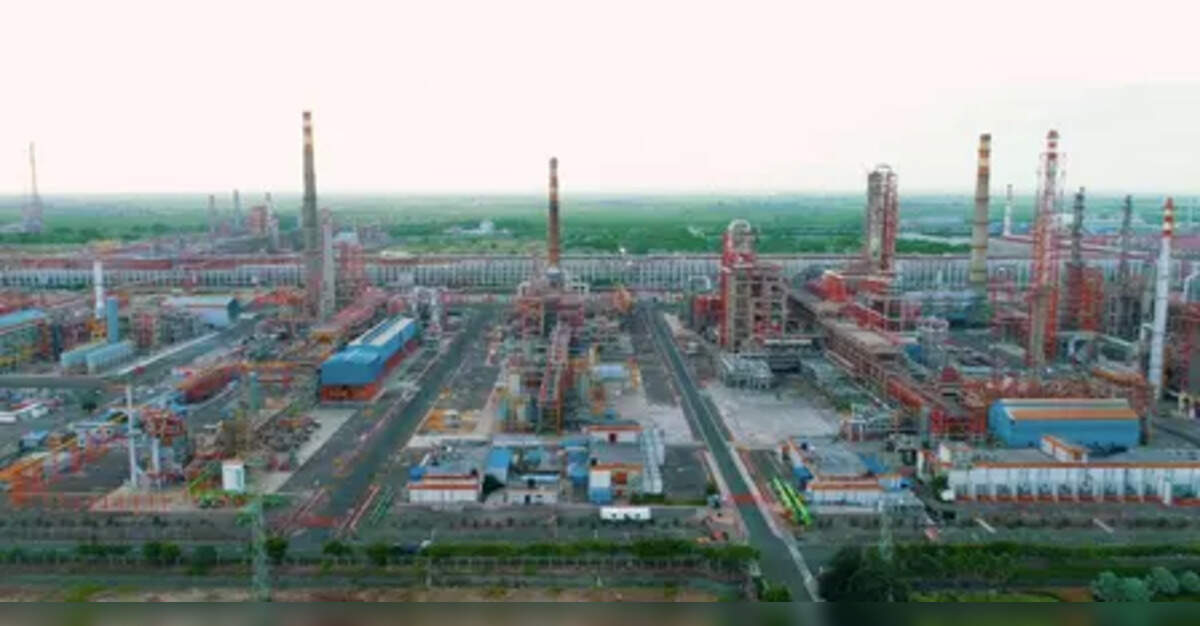
The Nayara Energy Saga: A Microcosm of Geopolitical Risk in Global Energy
The recent, albeit temporary, disruption of services to Nayara Energy by a major tech firm, swiftly followed by restoration, might appear as a minor blip on the radar. Yet, for astute investors in the global oil and gas sector, this incident serves as a potent reminder of the pervasive and often unpredictable nature of geopolitical risk. Nayara Energy, a significant player in India’s fuel retail and exploration landscape, is nearly 49% owned by Russia’s Rosneft. The initial service suspension, attributed to evolving EU sanctions targeting Russia’s energy, banking, and military sectors, underscores how deeply international conflict can ripple through seemingly disconnected operational dependencies, impacting even those entities operating in third-party nations.
Sanctions, Ownership, and the Shifting Landscape of Operational Resilience
The Nayara Energy situation highlights a critical challenge for companies with complex, internationally intertwined ownership structures, particularly those involving entities tied to sanctioned nations. While the tech firm cited EU sanctions from July 18, 2025, as the impetus for its initial action, the subsequent restoration of services suggests a nuanced and ongoing negotiation of compliance boundaries. For investors, this creates an environment of elevated operational risk. Companies like Nayara, even with substantial foreign ownership from Trafigura and UCP Investment Group alongside Rosneft, face potential vulnerabilities to essential digital infrastructure and services. The incident demonstrates that even if a company operates primarily in non-sanctioning jurisdictions, its foundational operations can be jeopardized by its shareholder composition. This necessitates a more rigorous due diligence process for investors, extending beyond traditional financial metrics to include a granular analysis of ownership lineage and potential exposure to evolving international restrictive measures. Our reader intent data indicates a strong investor focus on the performance of specific companies, with questions like “How well do you think Repsol will end in April 2026” signaling a demand for insight into how individual players navigate such complex, sanction-laden environments. The Nayara case offers a stark example of how swiftly operational stability can be threatened, even for established players.
Geopolitical Tensions and Their Echo in Crude Markets
While the Nayara Energy incident alone is not a primary driver of global crude prices, it is emblematic of the broader geopolitical instability that continuously influences market sentiment and supply dynamics. As of today, Brent Crude trades at $90.38, down 9.07% within a day range of $86.08-$98.97, while WTI Crude stands at $82.59, marking a 9.41% decline within a range of $78.97-$90.34. Gasoline prices have also seen a dip, currently at $2.93, down 5.18%. This recent daily downturn follows a more significant 14-day trend, where Brent crude has fallen from $112.78 on March 30, 2026, to $91.87 on April 17, 2026 – a substantial 18.5% drop. This broader market correction suggests a prevailing bearish sentiment, possibly driven by demand concerns or perceptions of adequate supply. However, incidents like Nayara’s remind us that geopolitical disruptions, even if localized or temporary, introduce an unpredictable element to supply security. The EU’s ban on refined petroleum products made from Russian crude, aimed at “preventing Russia’s crude oil from reaching the EU market through the back door,” underscores the ongoing efforts to restrict Russian energy flows. Such measures inherently create friction and potential for unexpected supply chain bottlenecks, contributing to the volatility that makes forecasting future oil prices, a key concern for our readers, exceedingly complex. The question “what do you predict the price of oil per barrel will be by end of 2026?” becomes even more challenging to answer when operational disruptions, however temporary, can emerge from geopolitical compliance issues.
Navigating Upcoming Events: Sanctions as an Undercurrent to OPEC+ Decisions
Looking ahead, the next two weeks are packed with critical energy events that will shape market direction, and the geopolitical backdrop highlighted by the Nayara saga will be an important, if subtle, undercurrent. The OPEC+ Joint Ministerial Monitoring Committee (JMMC) meets on April 18, followed by the Full Ministerial Meeting on April 19. While these meetings will primarily focus on production quotas – a topic our readers are keenly interested in, asking “What are OPEC+ current production quotas?” – the broader market stability and the impact of ongoing sanctions will undoubtedly factor into their deliberations. Unpredictable operational disruptions to Russian-linked entities, even those operating outside Russia, could add another layer of complexity to global supply assessments. Furthermore, the weekly API and EIA Crude Inventory reports (April 21/22 and April 28/29) and the Baker Hughes Rig Count (April 24 and May 1) will provide vital insights into immediate supply and demand dynamics. However, investors must consider that these numbers can be influenced by unforeseen geopolitical events that affect production, refining, or logistics, as the Nayara situation demonstrates. The ability of major tech providers to cut off essential services, even temporarily, to energy companies due to sanctions exposes a new vector of risk that can disrupt supply chains and operational efficiency, regardless of crude production levels.
Investor Action: Beyond the Headlines, Into the Granular
For investors, the Nayara Energy incident is more than just a news story; it’s a case study in the evolving risk landscape of global oil and gas. The swift resolution by the tech firm, driven by “ongoing discussions with the European Union,” indicates the highly dynamic and often ambiguous nature of sanctions compliance. This means that even when services are restored, the underlying risk of disruption remains elevated for entities with similar ownership structures. Investors must enhance their due diligence, scrutinizing not only financial health and operational efficiency but also geopolitical exposure, supply chain dependencies, and the potential for regulatory or sanctions-related interference. Understanding the intricate web of ownership, particularly for companies operating across multiple jurisdictions, is paramount. The incident serves as a clear signal: in today’s interconnected world, even a seemingly minor operational disruption stemming from geopolitical tensions can have significant implications for continuity, profitability, and ultimately, investor confidence. Proactive risk assessment and diversification strategies are more crucial than ever in navigating this volatile energy market.


