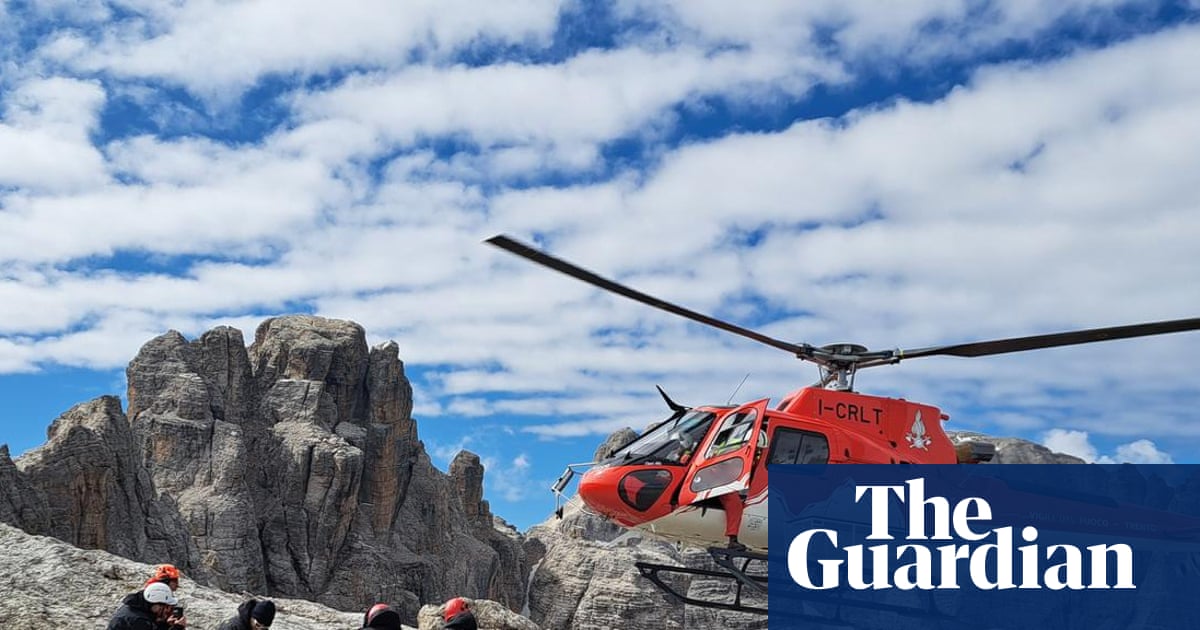
The dramatic scenes unfolding in the Brenta Dolomites, with hundreds of hikers evacuated and climbing routes closed due to a sharp increase in rockfalls, offer a stark visual of environmental change. Experts point to thawing permafrost and rising temperatures as the primary culprits behind the accelerated erosion on peaks like Cima Falkner. While these events hold significant ecological and safety implications for the region, for investors in the global oil and gas markets, the message is clear: the Dolomites rockfalls do not signal a disruption to Brent crude supply or market stability.
Alpine Geology Versus Global Crude Dynamics
The recent geological instability in the Italian Alps, characterized by loud booms and cascading debris on Monte Pelmo and Cima Falkner, is a localized phenomenon. These incidents, while concerning for regional tourism and environmental conservation, bear no material connection to the infrastructure of global oil and gas production, transportation, or refining. The affected areas are renowned for their natural beauty and recreational activities, not for their energy reserves or strategic pipeline routes.
As of today, Brent crude trades at $90.38 per barrel, marking a significant daily decline of 9.07%. West Texas Intermediate (WTI) crude has similarly fallen, now at $82.59, down 9.41%. Gasoline prices have also seen a drop, currently at $2.93, a 5.18% decrease. This pronounced volatility in the crude benchmarks, with Brent having fallen from $112.78 on March 30th to $91.87 yesterday, a $20.91 or 18.5% drop over the last 14 days, is driven by macroeconomic headwinds, shifts in global demand outlooks, and ongoing geopolitical considerations—none of which are influenced by rockfalls in a non-oil-producing region of Italy. Investors should recognize this distinction, separating localized environmental news from the fundamental drivers of energy market pricing.
Upcoming Catalysts: Where Investor Focus Should Lie
For discerning investors, the real market movers are not found in alpine erosion but in the scheduled events that directly impact global supply and demand. Our proprietary event calendar highlights several critical dates in the coming fortnight that will truly shape market sentiment and price action. The most immediate and significant are the OPEC+ Joint Ministerial Monitoring Committee (JMMC) meeting tomorrow, April 18th, followed by the Full Ministerial meeting on April 19th.
These gatherings are paramount, as they determine production quotas and collective supply strategies, directly addressing questions from our readership about “OPEC+ current production quotas.” Decisions made in these meetings can rapidly alter the global supply landscape. Beyond OPEC+, the market will closely watch the API Weekly Crude Inventory reports on April 21st and 28th, and the EIA Weekly Petroleum Status Reports on April 22nd and 29th. These provide crucial insights into inventory levels in the world’s largest consumer market, signaling current demand strength or weakness. Furthermore, the Baker Hughes Rig Count on April 24th and May 1st will offer an indication of future production trends in key shale plays. These are the data points that genuinely inform predictions for future oil prices, a common inquiry among our readers.
Investor Questions: Separating Signal from Noise
Our proprietary reader intent data provides a clear window into what truly occupies the minds of oil and gas investors. The primary concerns revolve around the core mechanics of the market: future price trajectories, OPEC+ policy, and the performance of major players. Questions such as “What do you predict the price of oil per barrel will be by end of 2026?” or inquiries about specific company performance, like “How well do you think Repsol will end in April 2026?”, underscore a focus on fundamental analysis and strategic positioning within the energy sector.
The rockfalls in the Dolomites, while a compelling environmental narrative and a stark reminder of the broader impacts of climate change, fall outside this core investment thesis. They do not introduce supply risk, nor do they alter demand projections for crude or refined products. For investors seeking alpha in the energy markets, the critical task remains filtering out peripheral events and concentrating on the established drivers: global economic health, geopolitical stability, inventory fluctuations, and the coordinated actions of major producers. The recent significant downturn in crude prices reflects a response to these larger forces, not an isolated geological incident.
Climate Change: A Long-Term Systemic Factor, Not a Short-Term Supply Shock
While the Dolomites rockfalls are an acute manifestation of climate change, it is crucial for energy investors to differentiate between localized environmental incidents and the systemic, long-term implications of climate change for the oil and gas sector. Climate change presents a significant transition risk for the industry, driving policy shifts towards decarbonization, influencing investment in renewable energy, and potentially impacting future demand for fossil fuels. These are macro-level, multi-decade trends that demand strategic foresight and adaptation from energy companies.
However, an isolated event like a rockfall in a non-producing region, even if linked to climate change, does not translate into an immediate supply disruption that would move global crude prices. The investment community must continue to assess climate risk through the lens of regulatory frameworks, technological advancements, and evolving consumer behavior, rather than conflating every environmental event with a direct impact on daily crude market operations. The operational integrity of global oil and gas supply chains remains robust against such localized, non-industrial geological occurrences.


