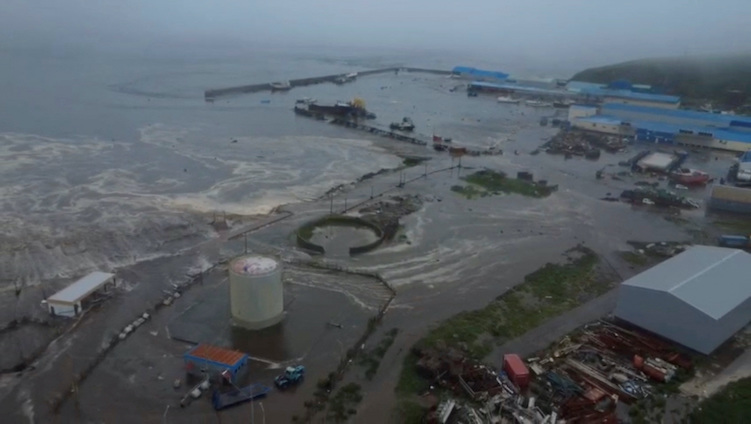
A powerful 8.8 magnitude earthquake, centered off Russia’s Far Eastern Kamchatka Peninsula, has sent ripples of concern across Asia and the broader Pacific, triggering tsunami warnings and necessitating evacuations from Japan to Hawaii. While the immediate human impact and infrastructural damage are significant, particularly in remote Russian communities and parts of Japan, oil and gas investors are weighing how this seismic event truly influences global energy markets amidst pre-existing bearish sentiment. Our proprietary data pipelines reveal a market currently more focused on fundamental supply-demand dynamics and upcoming policy decisions than on this regional disruption, presenting a nuanced picture for energy sector participants.
The Far East Quake: A Regional Shockwave Meets Global Market Headwinds
The recent seismic event in the Kamchatka Peninsula, the strongest in the region since 1952, brought immediate operational halts and evacuation orders across the Pacific Rim. Japan, a major energy consumer and refiner, saw Toyota suspend operations at eight plants, primarily along its vulnerable Pacific coast, and triggered an evacuation of the Fukushima nuclear plant area. Ports in Kamchatka, such as Severo-Kurilsk, reported partial flooding and vessels swept from moorings. Such events typically introduce a ‘risk premium’ into commodity prices, anticipating potential supply disruptions or demand shifts. However, the current market reaction tells a different story. As of today, Brent Crude trades at $90.38, marking a significant 9.07% decline within the day, with WTI Crude similarly falling 9.41% to $82.59. This stark contrast suggests that despite the physical disruptions, the broader market is currently dominated by other, more powerful bearish forces, dampening any potential bullish impulse from this regional instability. The 14-day trend for Brent, which has seen prices drop from $112.78 to $91.87, a nearly 18.5% decrease, underscores this prevailing negative sentiment.
Asia’s Energy Vulnerability and Supply Chain Resilience in Focus
The earthquake serves as a potent reminder of the inherent vulnerabilities within Asia’s vast and interconnected energy supply chains, even if the direct impact on major oil and gas infrastructure remains unconfirmed. Japan, in particular, relies heavily on imported energy, making its coastal infrastructure critical for receiving crude and LNG. While the immediate disruptions, such as Toyota’s plant closures, signal a temporary dip in industrial energy demand, the resilience of the region’s energy logistics infrastructure is paramount. The partial flooding of the Severo-Kurilsk port, while primarily affecting a fish processing plant, highlights the potential for broader port disruptions that could impact maritime trade routes essential for energy movements in the Far East. Investors must consider the potential for cascading effects if such events were to strike closer to major oil terminals, refining complexes, or critical shipping lanes. The current market’s muted response to these localized disruptions suggests that global supply buffers are deemed sufficient, or that the specific energy infrastructure directly affected is not considered globally critical at this juncture. However, this event adds a layer of geological risk to an already complex geopolitical and economic landscape in the Pacific.
Investor Focus: Beyond Regional Shocks to Core Market Drivers
While the Kamchatka quake is a headline-grabbing event, our proprietary reader intent data indicates that the primary concerns for oil and gas investors remain firmly rooted in broader macroeconomic trends and supply-side policy. We observe a consistent stream of inquiries regarding long-term price outlooks, such as “what do you predict the price of oil per barrel will be by end of 2026?” This question underscores a strategic focus on fundamental supply-demand balances, global economic growth forecasts, and the pace of energy transition, rather than short-term reactive plays to regional incidents. Furthermore, significant investor interest revolves around “What are OPEC+ current production quotas?” and the group’s future policy direction. These questions highlight the market’s deep reliance on the collective decisions of major oil producers to manage global supply, far outweighing the immediate, localized impacts of a seismic event. This suggests that while regional disruptions are monitored for their potential to escalate, the market’s pricing mechanism is currently more attuned to the global supply tap controlled by OPEC+ and the overall health of the global economy.
Navigating the Near-Term: OPEC+ and Inventory Watch Ahead
Looking ahead, the next 14 days are packed with critical market catalysts that will undoubtedly exert a far greater influence on oil prices than the recent seismic activity. The market’s immediate attention is fixed on the impending **OPEC+ Joint Ministerial Monitoring Committee (JMMC) meeting on April 18th, followed swiftly by the Full Ministerial meeting on April 19th.** These gatherings will be crucial for assessing the group’s stance on current production quotas, especially in light of the recent downward pressure on crude prices. Will OPEC+ signal further cuts to stabilize the market, or maintain current levels, banking on a demand recovery? Any guidance from these meetings will be a primary driver for price action. Beyond OPEC+, investors will closely scrutinize the weekly inventory reports: the **API Weekly Crude Inventory on April 21st and 28th**, and the **EIA Weekly Petroleum Status Report on April 22nd and 29th**. These reports offer vital insights into U.S. demand strength and supply levels, providing real-time indicators of market balance. The consistent decline in Brent prices over the past two weeks sets a tense backdrop for these upcoming events, as the market seeks clear signals on future supply management and demand trajectory to counter the prevailing bearish sentiment.