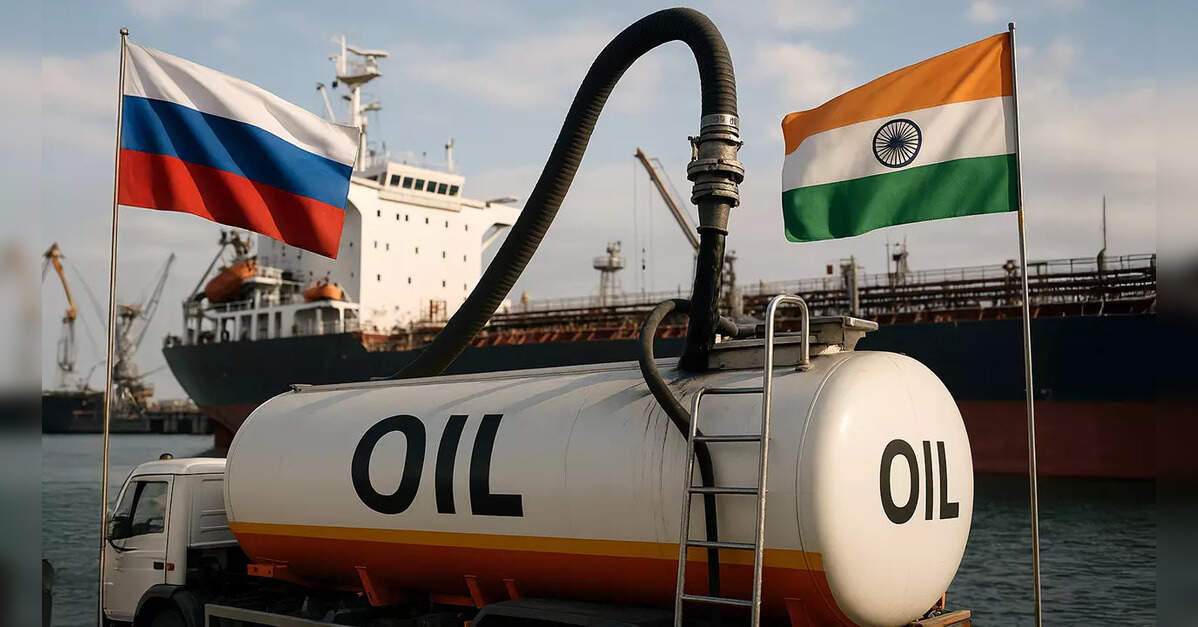
India’s unwavering commitment to securing its energy future, even amidst global geopolitical pressures, stands as a critical pillar in the intricate dynamics of the international oil market. Recent diplomatic commentary underscores New Delhi’s pragmatic stance: its economy, the world’s third-largest energy consumer, simply cannot afford to “switch off.” With over 80% of its energy needs met by imports, India’s pursuit of reliable and affordable crude is not merely a preference but an economic necessity. This fundamental drive ensures a sustained appetite for energy, directly impacting global supply-demand balances and warranting close attention from oil and gas investors.
India’s Economic Imperative and Global Energy Dynamics
India’s High Commissioner to the UK recently articulated New Delhi’s rationale for its diversified energy sourcing, particularly its continued imports of Russian crude. The core argument is an economic one: India must prioritize the operational continuity of its vast economy. This position is strengthened by the perception that traditional supply channels became prohibitively expensive or unavailable as other major economies shifted their procurement strategies. India found itself displaced from established markets, facing escalating costs, which naturally led to seeking more favorable terms from alternative suppliers.
This strategic pivot is not just about price; it’s about sovereignty and securing a stable energy supply for a nation of over 1.4 billion people with ambitious growth targets. The High Commissioner highlighted the perceived incongruity of some Western partners continuing to import critical raw materials and energy products from the very nations they discourage India from buying oil from. This perspective reinforces India’s independent foreign policy in energy matters, signalling to the market that its purchasing decisions are driven by internal economic imperatives rather than external dictates. For investors, this translates into a resilient demand floor for global crude, as one of the largest consuming nations maintains a non-negotiable requirement for energy, regardless of origin.
Navigating Geopolitical Crosscurrents and Security Ties
Beyond immediate economic considerations, India’s relationship with Russia is deeply rooted in historical security cooperation. This long-standing alliance, dating back to an era when Western nations were less inclined to supply India with critical defense equipment, forms a foundational aspect of New Delhi’s foreign policy. This historical context shapes India’s current geopolitical maneuvering, allowing it to resist external pressure regarding its energy partnerships. India has explicitly labeled certain unilateral sanctions, such as those targeting a Rosneft refinery within its borders, as measures to which it does not subscribe.
Furthermore, India’s leadership, including Prime Minister Narendra Modi, has consistently advocated for an end to global conflicts, emphasizing that “this isn’t an era of war.” While expressing a desire for peace, this stance does not translate into economic disengagement from key partners. For oil and gas investors, understanding these complex geopolitical layers is crucial. India’s independent foreign policy reduces its susceptibility to external pressures that might otherwise disrupt its energy supply chains, thereby contributing to a more predictable demand profile for its chosen suppliers. This steadfastness in its energy procurement strategy, insulated by historical ties and a clear national interest, adds a layer of stability to Russian oil demand that might otherwise appear vulnerable.
Current Market Realities and Investor Sentiment
The global oil market is currently navigating a period of significant volatility, underscoring the importance of diversified supply and consistent demand. As of today, April 18, 2026, Brent Crude trades at $90.38 per barrel, experiencing a notable daily downturn of 9.07% within a range of $86.08 to $98.97. Similarly, WTI Crude stands at $82.59, marking a 9.41% decline, with its daily range between $78.97 and $90.34. This sharp daily correction follows a broader trend; Brent has seen an 18.5% drop from $112.78 on March 30, 2026, to $91.87 just yesterday, April 17, 2026. Gasoline prices also reflect this bearish sentiment, currently at $2.93, down 5.18% on the day.
Against this backdrop of softening prices, investors are keenly focused on future market direction. Our proprietary reader intent data shows significant investor interest in predicting oil prices, with many asking, “what do you predict the price of oil per barrel will be by end of 2026?” India’s consistent demand, bolstered by its economic growth and pragmatic energy policy, acts as a critical counterweight to potential price slides. While supply-side factors like OPEC+ quotas are frequently queried by our readers, India’s sustained import needs provide a fundamental demand-side support. This strong, consistent demand from a major economy can help stabilize prices, offering a potential floor even during periods of increased supply or economic uncertainty, influencing the profitability outlook for integrated oil and gas companies like Repsol, a topic also frequently on investors’ minds.
Forward Outlook and Upcoming Catalysts
Looking ahead, the interplay of supply management and demand signals will continue to shape the oil market, with India’s role becoming even more pronounced. The coming weeks are packed with events that could introduce significant volatility. This weekend, April 18-19, 2026, the OPEC+ Joint Ministerial Monitoring Committee (JMMC) and the Full Ministerial Meeting will convene. Investors will be scrutinizing these meetings for any signals regarding production quotas, especially given the recent price declines and reader questions like “What are OPEC+ current production quotas?” Any adjustments, or lack thereof, will directly impact global supply.
Further insights into market fundamentals will arrive with the API Weekly Crude Inventory reports on April 21 and April 28, followed by the EIA Weekly Petroleum Status Reports on April 22 and April 29. These reports will provide crucial data on U.S. crude stocks, refining activity, and product demand, offering a clearer picture of the immediate supply-demand balance. Additionally, the Baker Hughes Rig Count on April 24 and May 1 will indicate future production trends in North America. For investors seeking to answer the question of end-of-year oil prices, understanding India’s sustained demand trajectory in conjunction with these upcoming supply-side catalysts is paramount. India’s unwavering commitment to securing energy for its growing economy, irrespective of the source, ensures that global oil demand will retain a robust base, providing a fundamental support that will influence market dynamics through 2026 and beyond.


