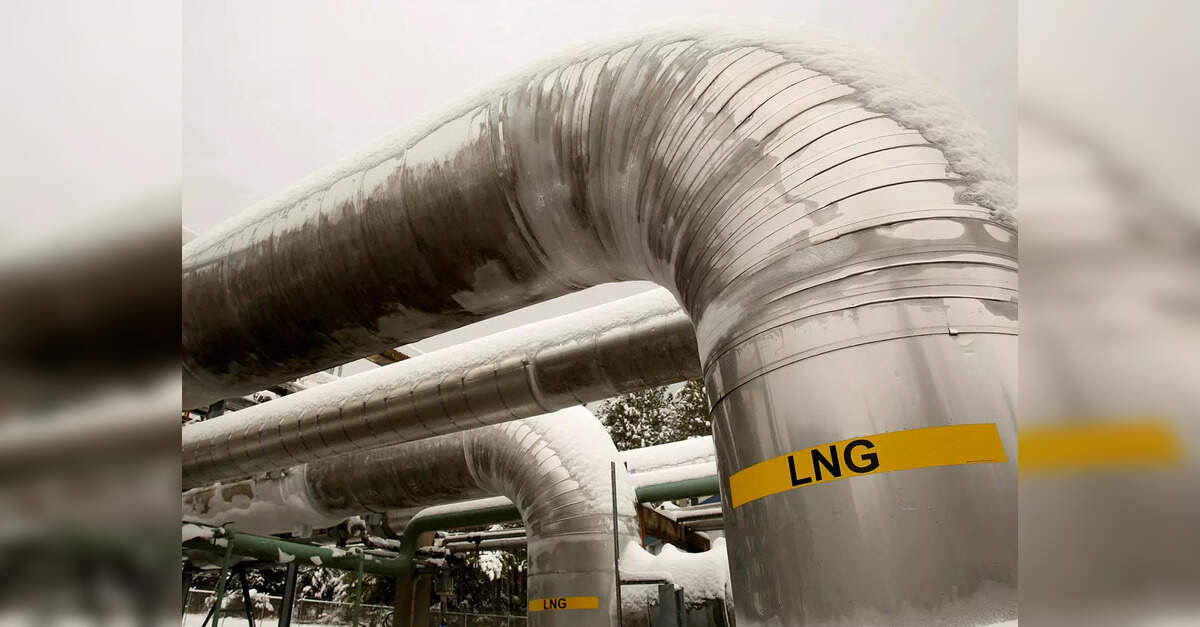
India’s burgeoning energy demand continues to drive aggressive capital deployment across its energy majors, and Petronet LNG’s latest strategic moves underscore this imperative. The company’s ambitious plan to secure a ₹12,000 crore loan to finance its significant petrochemical expansion in Dahej, Gujarat, along with a new LNG import terminal in Odisha, signals a robust commitment to both diversification and capacity augmentation. This substantial capital expenditure, projected to reach ₹30,000 crore over the next few years, positions Petronet at the forefront of India’s evolving energy landscape, demanding a close look at the investment implications amidst a dynamic global market.
Petronet’s Strategic Leap into Petrochemicals and LNG Capacity
Petronet LNG’s decision to pursue a ₹12,000 crore loan is explicitly earmarked for its Dahej petrochemical plant, a project with an estimated cost of ₹20,685 crore. This move signifies a strategic pivot beyond its traditional role as primarily an LNG importer. By integrating forward into petrochemicals, Petronet aims to capture higher value-added segments of the energy chain, aligning with India’s domestic industrial growth and the burgeoning demand for chemical feedstocks. This diversification strategy helps de-risk the company’s revenue streams from the sole volatility of LNG regasification margins. Furthermore, the board’s recent approval for a 5 million tonnes per year (MTPA) LNG import terminal in Odisha, costing ₹6,350 crore, demonstrates a dual-pronged approach to growth. This new terminal will bolster India’s gas import capacity, ensuring energy security and catering to the nation’s increasing appetite for cleaner fuel. The cumulative capital expenditure of ₹30,000 crore over the coming years, with FY27’s projected spend set to surpass the ₹5,000 crore estimated for FY26, illustrates an accelerating investment cycle designed to capitalize on India’s long-term energy requirements.
Navigating Macro Headwinds: Crude Volatility and Project Economics
The scale of Petronet’s planned investments necessarily invites scrutiny of the prevailing macro energy environment. As of today, Brent Crude trades at $90.38, reflecting a notable decline of 9.07% within the day, with prices fluctuating between $86.08 and $98.97. Similarly, WTI Crude stands at $82.59, down 9.41%, having ranged from $78.97 to $90.34. This daily volatility follows a significant two-week trend, where Brent has fallen from $112.78 on March 30th to $91.87 yesterday, representing an 18.5% drop. While LNG contracts often operate on different pricing mechanisms, persistent crude price weakness can influence overall energy market sentiment and indirectly impact gas prices, as well as the economics of petrochemical feedstocks. For Petronet’s petrochemical venture, lower crude prices could translate to more favorable naphtha costs if it forms part of their feedstock strategy, though gas-based petrochemicals might see less direct impact. Investors must weigh the long-term demand drivers for gas and petrochemicals in India against the inherent short-to-medium term volatility in global energy benchmarks that could affect project financing costs and revenue projections.
Future Catalysts and Investor Concerns: A Forward-Looking Perspective
Our proprietary reader intent data shows investors are keenly focused on the broader market trajectory, with common queries like ‘what do you predict the price of oil per barrel will be by end of 2026?’ and ‘What are OPEC+ current production quotas?’ This underscores a prevailing uncertainty about future price stability, which directly impacts the investment climate for large-scale projects. Against this backdrop, the upcoming OPEC+ Joint Ministerial Monitoring Committee (JMMC) and full Ministerial meetings this weekend, April 18th-19th, are critical. Any signals regarding production adjustments will directly influence crude benchmarks and, by extension, the economic viability and investor perception of significant energy infrastructure projects like Petronet’s. Further clarity on demand and supply dynamics will come from the API Weekly Crude Inventory reports on April 21st and 28th, followed by the EIA Weekly Petroleum Status Reports on April 22nd and 29th. These provide crucial snapshots of U.S. inventory levels, a key sentiment driver. Additionally, the Baker Hughes Rig Count on April 24th and May 1st will offer insights into North American supply trends. For Petronet, securing the ₹12,000 crore loan and ensuring the successful execution of its ₹30,000 crore capex plan will depend on a favorable and stable macro environment, making these upcoming events crucial watchpoints for astute investors.
Financing India’s Energy Future: Debt, Equity, and Growth Prospects
The decision to raise a ₹12,000 crore loan to fund a significant portion of the ₹20,685 crore Dahej petrochemical plant highlights a preference for debt financing for this particular expansion. This strategy allows Petronet to leverage its balance sheet while potentially preserving equity, but it also introduces interest rate risk and increases the company’s overall debt burden. Given the total capital expenditure plan of ₹30,000 crore over the next few years, the structure and terms of this loan, alongside future financing arrangements, will be critical for maintaining a healthy debt-to-equity ratio and ensuring robust debt service coverage. Investors will be evaluating Petronet’s ability to manage this substantial debt, especially as the company embarks on an aggressive growth phase where FY27 capex is set to exceed ₹5,000 crore from FY26. The success of these projects, particularly the diversification into petrochemicals, will be key to generating the necessary cash flows to support these financial commitments and deliver long-term shareholder value within India’s high-growth energy market.


