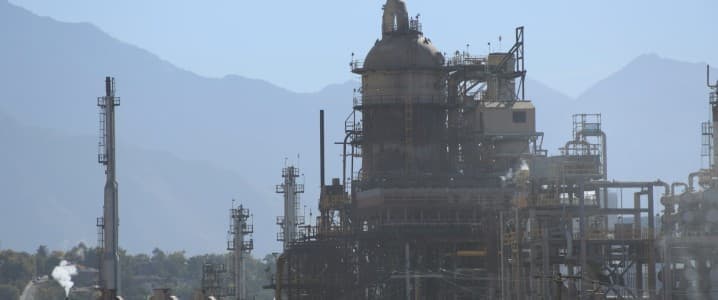
PetroChina has quietly greenlit a monumental $9.6 billion investment to overhaul its refining footprint in Dalian, northeast China. This isn’t merely an upgrade; it’s a strategic pivot indicative of a profound shift within China’s energy landscape and, indeed, the global petrochemical industry. The decision to build a new, modern complex on Changxing Island, featuring a 200,000 bpd crude refinery alongside a substantial 1.4 million ton-per-year ethylene unit and various polyolefin production facilities, underscores a critical re-evaluation of long-term demand drivers. This move effectively replaces the company’s aging, massive 410,000 bpd downtown Dalian refinery, which ceased crude processing on June 30th, marking the end of an era for one of China’s largest fuel-centric operations. For investors, this bold commitment signals PetroChina’s intent to capture growth in higher-value chemicals, even as traditional fuel demand faces structural headwinds.
The Strategic Imperative: Fuel’s Sunset, Petrochem’s Dawn
PetroChina’s Dalian revitalization is a textbook example of adapting to evolving market realities. The closure of the older, larger refinery was not a singular event but a confluence of factors: pressing municipal safety concerns, relocation mandates, and, most importantly, a recognition of long-term overcapacity in China’s refined fuel market. Analysts, including those at the IEA and CNPC, now largely concur that China’s consumption of gasoline and diesel has likely plateaued. This ceiling effect is primarily driven by the rapid adoption of electric vehicles (EVs) and a national economic pivot away from heavy manufacturing toward higher-tech, service-oriented growth models.
However, the narrative for petrochemicals is strikingly different. Demand for plastics, specialty chemicals, and other derivatives continues its robust ascent, fueled by China’s ambitious industrial goals and its dominant position in global exports. PetroChina’s $9.56 billion investment in the new Changxing Island complex, which includes significant polyethylene, polypropylene, and polyolefin elastomer capacities, directly addresses this rising appetite. By downsizing its crude processing capacity while simultaneously expanding its chemical output, PetroChina is strategically rebalancing its portfolio. This shift allows the company to move away from brute-force fuel production, which is increasingly susceptible to margin compression, towards higher-value chemical streams that promise more resilient profitability.
Navigating Volatility: PetroChina’s Counter-Cyclical Strength
PetroChina’s aggressive investment in petrochemicals comes at a time when the broader crude oil market is experiencing significant price volatility, creating a complex backdrop for energy investments. As of today, Brent crude trades at $90.38 per barrel, reflecting a sharp 9.07% decline within a single trading day, with its range fluctuating significantly between $86.08 and $98.97. Similarly, WTI crude has fallen to $82.59, down 9.41%, trading in a range of $78.97 to $90.34. This daily downturn extends a broader trend; investors tracking crude movements closely will note that Brent has shed a significant $20.91, or 18.5%, from $112.78 on March 30th to $91.87 just yesterday, April 17th. Gasoline prices have also followed suit, currently standing at $2.93, a 5.18% drop for the day.
Despite these weakening refined product margins and the considerable drop in crude prices, PetroChina has demonstrated remarkable resilience. In Q1, the company posted a 2.3% increase in profits, a stark contrast to the double-digit profit declines reported by rivals such as Sinopec and CNOOC. PetroChina’s ability to buck this bearish trend is primarily attributed to its robust upstream natural gas sales and strategic government support for its shale development. The Dalian project is a prime case study in this counter-cyclical strategy: by pivoting its refining business towards higher-value chemicals, the company reduces its exposure to the volatile and increasingly saturated fuel market, instead tapping into the more stable and growing demand for petrochemical feedstocks. This strategic foresight positions PetroChina for sustained profitability, even amidst a challenging commodity price environment.
The Investor’s Lens: Long-Term Outlook & Upcoming Catalysts
Our proprietary reader intent data reveals that investors are keenly focused on the future trajectory of crude oil prices, with many asking about the outlook for oil per barrel by the end of 2026 and the current production quotas of OPEC+. This fixation on supply-side dynamics and long-term price stability is understandable given the substantial investments required for projects like Dalian. PetroChina’s multi-billion-dollar commitment signals a long-term view that transcends short-term market fluctuations, betting on the sustained growth of China’s industrial and export sectors and the associated demand for plastics and chemicals.
Looking ahead, the energy calendar over the next two weeks presents several key events that could influence crude prices and, consequently, the economics of refining and petrochemical operations. The upcoming OPEC+ Joint Ministerial Monitoring Committee (JMMC) meeting today, April 18th, followed by the full Ministerial Meeting tomorrow, April 19th, will be critical. Any decisions on production quotas or output adjustments from these gatherings could significantly impact global crude supply and price stability. Investors will also be closely watching the weekly API and EIA crude inventory reports on April 21st/22nd and April 28th/29th, respectively, which provide vital insights into market balances. Furthermore, the Baker Hughes Rig Count on April 24th and May 1st offers a pulse on North American upstream activity. While PetroChina’s Dalian pivot is a strategic hedge against fuel market volatility, the profitability of its new petrochemical complex will still be influenced by feedstock costs, making these upcoming market catalysts relevant to its long-term financial performance. The company’s move is a proactive step to build resilience in an inherently volatile global energy market.


