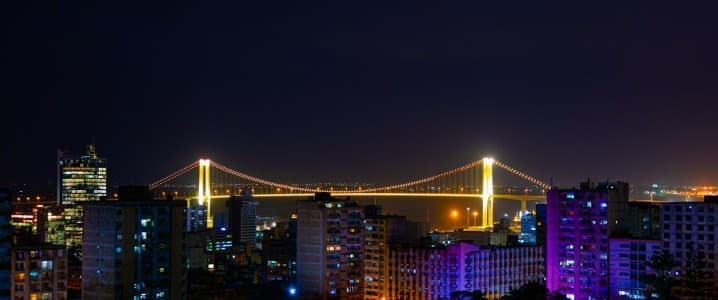
The long-awaited restart of the $20 billion Mozambique LNG project, led by French supermajor TotalEnergies, is now firmly in sight, with main contractor Saipem anticipating construction to resume by the end of this summer. After four years under force majeure, this monumental development signals a significant vote of confidence in Mozambique’s security improvements and offers a crucial long-term supply injection into a global liquefied natural gas market increasingly hungry for stable sources. For investors, this news isn’t just about a single project; it represents a strategic pivot in Africa’s energy future and TotalEnergies’ robust commitment to its expansive LNG portfolio, demanding a closer look at its implications for the broader oil and gas investment landscape.
A Pivotal Restart for African LNG Supply
The Mozambique LNG project, once Africa’s largest foreign investment, faced an abrupt halt in 2021 following severe Islamist militant attacks in the Cabo Delgado province, particularly near the project site in Palma. This forced TotalEnergies to suspend all works, placing the massive undertaking under force majeure. For four years, the project remained dormant, with initial hopes for a restart by the end of 2024 dashed by continued security concerns and a disputed presidential election. Now, however, the tide appears to have turned. Saipem’s CEO, Alessandro Puliti, confirmed that a “progression of activities” will commence this summer, culminating in the lifting of the force majeure. This renewed optimism is echoed by TotalEnergies CEO Patrick Pouyanne, who also anticipated a construction restart by summer’s end. While the initial target for first LNG production has shifted from 2027 to 2029, the green light for resumption is a powerful signal. This multi-decade asset will eventually deliver critical energy resources, cementing Mozambique’s role on the global LNG stage.
Navigating Volatility: The Broader Market Context for LNG Investments
The decision to proceed with a $20 billion capital expenditure project underscores the long-term strategic vision required in the energy sector, particularly when contrasted with the immediate market volatility. As of today, Brent crude trades at $90.38 per barrel, reflecting a sharp decline of 9.07% within the day, ranging between $86.08 and $98.97. Similarly, WTI crude stands at $82.59, down 9.41% for the session, oscillating between $78.97 and $90.34. This significant intraday drop follows a pronounced trend over the past two weeks, where Brent has shed $20.91, or 18.5%, moving from $112.78 on March 30th to $91.87 on April 17th. Such fluctuations highlight the unpredictable nature of crude markets, yet they fail to deter the immense commitment to large-scale LNG developments. Investors must recognize that while daily price swings capture headlines, projects like Mozambique LNG are evaluated on decades-long supply-demand fundamentals, where the strategic importance of diversified, stable energy sources often outweighs short-term commodity price movements. The sheer scale of this investment, moving forward despite significant market turbulence, signals a belief in sustained future demand for natural gas.
Anticipating Future Market Signals and Investor Focus
With the Mozambique LNG project setting its sights on first production by 2029, its long-term trajectory is a critical consideration for investors. However, immediate market drivers and upcoming events will continue to shape the broader energy investment climate. This weekend, the OPEC+ Joint Ministerial Monitoring Committee (JMMC) and the Full Ministerial Meeting (April 18-19) are key dates on the calendar, where decisions on production quotas could significantly impact crude prices and indirectly influence the economics of gas projects. Further into the coming weeks, the API Weekly Crude Inventory reports (April 21, April 28) and the EIA Weekly Petroleum Status Reports (April 22, April 29) will provide crucial insights into U.S. supply and demand dynamics. Our proprietary reader intent data reveals that investors are keenly focused on understanding these immediate market shifts. Questions like “What do you predict the price of oil per barrel will be by end of 2026?” and “What are OPEC+ current production quotas?” dominate discussions. This highlights a fascinating dichotomy: while the market buzzes with short-term price speculation and immediate supply concerns, major capital projects like Mozambique LNG quietly advance, driven by a conviction in long-term energy fundamentals. Investors should track these near-term signals while maintaining a strategic view on the emerging global LNG supply picture.
Strategic Implications and Investment Outlook
The recommencement of the Mozambique LNG project is more than just an operational update; it’s a powerful affirmation of TotalEnergies’ commitment to diversifying its energy mix and strengthening its position as a global LNG player. For Mozambique, it promises substantial economic benefits and a pathway to becoming a major energy exporter, provided security gains are sustained. This $20 billion investment signals a turning point for energy development in East Africa, opening doors for further foreign direct investment in the region. For investors, this project, once operational by 2029, will add significant capacity to global LNG markets, potentially easing future supply constraints and offering a resilient revenue stream for TotalEnergies and its partners. While the path has been arduous, the confidence expressed by both Saipem and TotalEnergies leadership suggests that the most significant hurdles have been addressed. Investors eyeing long-term plays in energy security, particularly within the burgeoning LNG sector, should monitor the project’s progress closely, understanding its potential to reshape regional and global energy flows for decades to come.


