Libya’s Resurgence: Bolstering European Gas Security
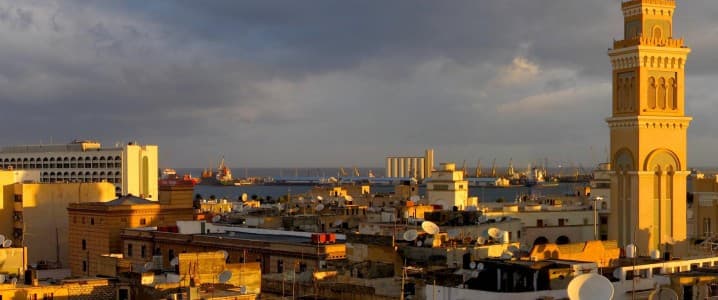
Libya is re-emerging as a critical node in global energy geopolitics, particularly concerning Europe’s ongoing quest for diversified gas supplies. The recent confirmation of a $235 million infrastructure deal, brokered by US presidential adviser Massad Boulos, signals a renewed commitment from Washington to strengthen Libya’s energy sector. This agreement, involving Hill International and Mellitah Oil & Gas (a joint venture between Libya’s National Oil Corporation and Italy’s Eni), targets vital upgrades to pipelines, ports, and logistics corridors integral to the Western Libya Gas Project. The project is designed to enhance the flow through the Greenstream pipeline, a direct link to Italy. Mellitah’s ambitious plan to increase gas output to 750 million cubic feet per day underscores the significant potential for Libya to bolster Europe’s energy security, especially given prevailing uncertainties in alternative supply routes.
From an investor perspective, this immediate, tangible investment represents a de-risking step in a region historically plagued by instability. The focus on established infrastructure and a clear export corridor to a major European economy makes the venture more attractive. This development unfolds against a backdrop of fluctuating global energy prices. As of today, Brent crude trades at $90.38, marking a significant daily decline of 9.07%. This dip contrasts with its recent trajectory, having softened from $112.78 on March 30th to $91.87 by April 17th. This broader market volatility, extending to WTI crude at $82.59 (down 9.41%) and gasoline at $2.93 (down 5.18%), highlights the persistent need for stable and diverse energy sources. For European nations, the prospect of increased, reliable gas from Libya offers a valuable hedge against the unpredictable nature of crude markets and geopolitical supply shocks.
The $70 Billion Blueprint: A New Frontier for US Capital
Beyond the immediate $235 million commitment, a far more expansive proposal has emerged from Tripoli. Interim Prime Minister Abdul Hamid Dbeibah has put forth a sweeping $70 billion US-Libya partnership, spanning not only energy but also health, power, and transport infrastructure. This ambitious blueprint is designed to attract substantial US corporate involvement, positioning American firms at the forefront of Libya’s post-conflict reconstruction. For investors eyeing long-term growth opportunities, this proposal represents a potentially transformative moment, signaling a desire to rebuild critical sectors with robust international backing.
A key question for investors often revolves around the long-term price trajectory of oil and the stability of investments in emerging markets. Many are asking about the predicted price of oil per barrel by the end of 2026, and how geopolitical developments might influence these forecasts. While the $70 billion proposal is currently a framework, not a signed deal, its very existence signals a strategic intent to foster deeper economic ties and create a more predictable investment environment. For US energy and infrastructure companies, this could open doors to multi-decade projects in a region with immense untapped potential. The scale of the proposed partnership suggests a comprehensive approach to national development, which, if realized, could significantly mitigate some of the traditional risks associated with investing in transitional economies by creating broader economic stability.
Geopolitical Chessboard: Navigating Risks and Opportunities
Libya’s energy landscape is inextricably linked to its complex internal and regional political dynamics. The US re-engagement, particularly around the Western Libya Gas Project, is not merely an economic play but a strategic move to strengthen the Government of National Unity (GNU) in Tripoli. This alignment aims to solidify the GNU’s control over crucial export routes, thereby limiting the leverage of rival factions, particularly those under the influence of eastern commander General Khalifa Haftar. Haftar’s recent agreements with Turkish firms to upgrade air navigation infrastructure across eight airports under his control underscore the ongoing geopolitical tug-of-war. Turkey, expanding its presence in both Tripoli and Benghazi, adds another layer of complexity to the regional power balance.
For international energy investors, navigating this geopolitical chessboard is paramount. While the US-Libya partnership offers significant opportunities, sustained political stability remains the ultimate prerequisite for large-scale capital deployment. The strategic alignment of Washington with the GNU in reinforcing the Western gas corridor is a positive signal for investors looking for governmental backing and security for their assets. However, the presence of competing regional interests and the continued influence of various factions mean that any investment strategy must incorporate robust risk assessment and a nuanced understanding of local power dynamics. The long-term success of the $70 billion vision hinges on the ability to translate these diplomatic overtures into enduring political consensus and a secure operational environment.
Beyond the Deal: Key Catalysts and Investor Outlook
The recent $235 million deal is a significant first step, but investors must look towards upcoming events and further developments to gauge the true trajectory of Libya’s energy sector and the potential for the broader $70 billion partnership. The immediate horizon is dominated by critical global energy events. The OPEC+ Joint Ministerial Monitoring Committee (JMMC) meets today, April 18th, followed by the Full Ministerial Meeting tomorrow, April 19th. These meetings are crucial, as they will determine production quotas, a topic frequently raised by our readers who monitor global supply dynamics. While Libya’s gas exports are not directly subject to OPEC+ crude quotas, the overall sentiment and strategic direction set by these gatherings profoundly impact the global energy investment climate. Any decisions on supply adjustments will influence crude prices and, by extension, the perceived value and stability of capital-intensive projects worldwide, including those in Libya.
Further insights will come from weekly data releases: the API Weekly Crude Inventory on April 21st, followed by the EIA Weekly Petroleum Status Report on April 22nd. These reports provide vital snapshots of supply-demand balances in the US, a key indicator for global energy markets. The Baker Hughes Rig Count, scheduled for April 24th, will offer a granular view of drilling activity. For investors, monitoring these indicators is essential to understand the underlying market conditions that will either support or challenge the viability of large-scale energy infrastructure projects in emerging markets like Libya. The future engagement will require more than just technical cooperation; it demands a clear roadmap for the $70 billion proposal, including specific timelines, funding mechanisms, and formal long-term agreements that provide the certainty needed for significant corporate investment. The coming months will be crucial in determining whether Libya can translate diplomatic intent into sustained, investable growth.


