The Dual Imperative: Navigating Hydrocarbon Volatility and Green Hydrogen’s Rise
The recent advancement of a significant green hydrogen initiative in the Netherlands, bolstered by substantial governmental and European Union support, marks a pivotal moment in the energy transition landscape. This decision, involving a major investment by Air Liquide and a long-term supply agreement with TotalEnergies, underscores the strategic imperative for traditional oil and gas giants to diversify their energy portfolios. For investors, this development highlights the growing interplay between established fossil fuel markets and the burgeoning renewable sector, demanding a sophisticated understanding of evolving capital flows and regulatory frameworks. As the global energy matrix continues its complex re-calibration, understanding these strategic moves is critical for optimizing investment exposure.
Green Hydrogen’s Strategic Leap: A Blueprint for Decarbonization
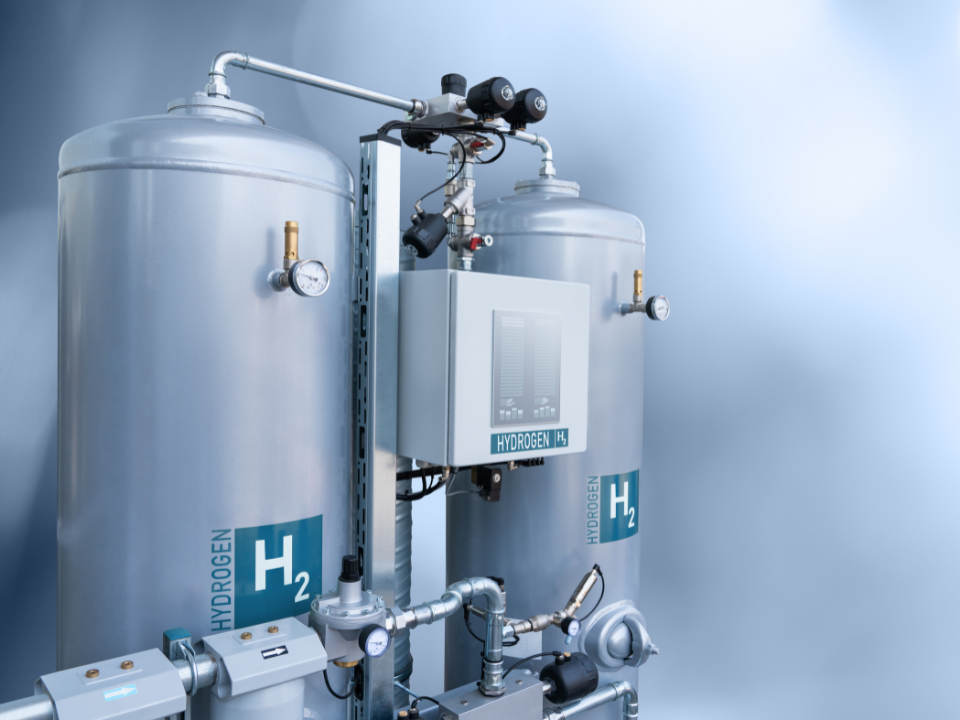
At the heart of this strategic shift is the ELYgator project, an ambitious undertaking by Air Liquide to construct, own, and operate a state-of-the-art electrolyzer with an investment exceeding 500 million euros. This facility is poised to produce 23,000 tons of renewable hydrogen annually, earmarked for industrial applications and heavy-duty mobility customers, significantly reducing up to 300,000 tons of CO₂ emissions per year of operation. What truly distinguishes this project is its innovative integration of both Proton Exchange Membrane (PEM) and Alkaline technologies on a single site, representing a first-of-its-kind engineering feat. The long-term contract to supply TotalEnergies’ industrial platform is particularly telling, signaling a clear intent by a major oil and gas player to embed low-carbon solutions deeply within its operational footprint. Announced in February 2025 and slated for operational commencement by the end of 2027, this initiative demonstrates how substantial capital is being deployed to de-risk and scale green hydrogen, a crucial component in the broader decarbonization strategy for hard-to-abate sectors.
Market Realities: Crude Volatility Meets Investor Demand for Clarity
While the energy transition gathers pace with projects like ELYgator, traditional hydrocarbon markets continue to exhibit their inherent volatility, demanding constant vigilance from investors. As of today, Brent crude trades at $95.15 per barrel, reflecting a modest daily gain of 0.23% within a tight range of $94.42 to $95.15. WTI crude similarly hovers around $91.54, up 0.27%. However, this current stability belies a more significant recent trend. Our proprietary data reveals that Brent has experienced a notable retraction over the past fortnight, shedding over 12% from $108.01 on March 26th to $94.58 by April 15th. This substantial pullback has naturally intensified investor focus on price direction, echoing questions we frequently receive from our readership, such as “What is the consensus 2026 Brent forecast?” and “Build a base-case Brent price forecast for next quarter.” This underscores a critical duality: investors are keenly interested in the future of oil prices even as they seek to understand the implications of strategic moves into renewable energy. The dynamic interplay between these two forces defines the contemporary energy investment landscape.
Regulatory Catalysts and Upcoming Market Signals
The ELYgator project’s advancement serves as a prime example of how robust governmental support can de-risk nascent energy technologies and accelerate their deployment. The crucial support from the Dutch government through the OWE subsidy scheme, complemented by prior backing from the European Innovation Fund and the Dutch IPCEI program, alongside a refined regulatory framework, were all instrumental in moving this project forward. These policy mechanisms provide a tangible financial and legislative foundation, making such large-scale green investments more attractive to industrial players and their shareholders.
Looking ahead, the next two weeks will offer critical insights into the traditional energy sector’s immediate future, influencing broader market sentiment. The upcoming OPEC+ Joint Ministerial Monitoring Committee (JMMC) meeting on April 18th, followed by the Full Ministerial Meeting on April 20th, will be closely scrutinized for any signals regarding crude production policies. Any adjustments could significantly impact global supply balances and, consequently, crude prices. Domestically, investors will be monitoring the Baker Hughes Rig Count reports on April 17th and April 24th for insights into North American drilling activity. Furthermore, the API Weekly Crude Inventory data on April 21st and April 28th, coupled with the EIA Weekly Petroleum Status Reports on April 22nd and April 29th, will provide crucial snapshots of U.S. petroleum demand and inventory levels. These events, occurring amidst significant capital allocation to green projects, highlight the complex set of variables investors must track to navigate the evolving energy market.
Investment Strategy in a Transitional Energy Landscape
The Dutch government’s endorsement and the subsequent commitment to the ELYgator project by Air Liquide and TotalEnergies reinforce a critical investment theme: the energy transition is not merely a long-term aspiration but a current-day reality driving significant capital expenditure. For investors, this necessitates a portfolio strategy that acknowledges the enduring, albeit volatile, role of traditional oil and gas while increasingly allocating to companies actively pursuing decarbonization. Projects like ELYgator, with their clear timelines for becoming operational by the end of 2027 and their substantial environmental impact, represent tangible progress in this shift. They also demonstrate the critical role of government subsidies and long-term corporate contracts in de-risking these early-stage, capital-intensive ventures. The continued demand for insights into traditional crude forecasts, as evidenced by our reader engagement, underscores that hydrocarbon exposure remains fundamental for many portfolios. However, the strategic moves by major players into advanced hydrogen technologies signal a necessary pivot. Successful navigation requires a keen eye on both the macro-economic forces impacting Brent and WTI, as well as the micro-level project developments and policy support shaping the future of energy.