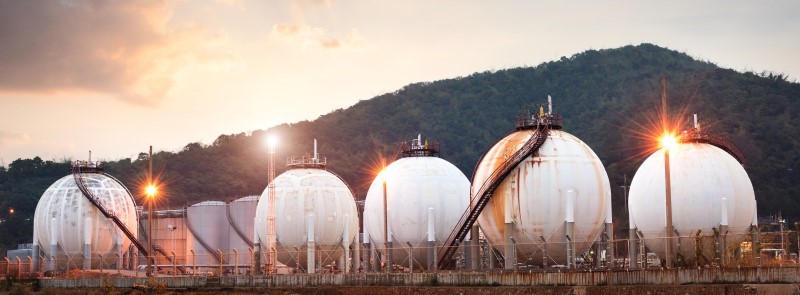
The global liquefied natural gas (LNG) market stands at a pivotal juncture, with the International Energy Agency (IEA) forecasting a monumental shift in supply dynamics. After years of tight market conditions exacerbated by geopolitical disruptions, the IEA’s latest assessment points to a substantial wave of new liquefaction capacity set to come online, particularly in 2026. This anticipated surge is poised to redefine market fundamentals, transitioning from a period of scarcity to one of potential oversupply, presenting both opportunities and challenges for investors navigating the complex energy landscape.
The Impending LNG Supply Wave: North America Leads the Charge
The IEA projects a significant acceleration in global LNG supply, with an expansion of 5.5% anticipated this year, followed by an even more robust 7% increase, or 40 billion cubic meters annually, in 2026. This growth trajectory marks the most substantial expansion in global LNG supply since 2019, signifying a critical inflection point for the sector. The bulk of this additional capacity is expected to originate from North America, where several large-scale projects are nearing completion, alongside notable contributions from Qatar’s ambitious North Field East expansion. The IEA specifically highlights 2026 as the inaugural year of this “LNG wave,” a period that will rigorously test how global demand, particularly from price-sensitive Asian markets, responds to this influx of supply.
Following the energy crisis of 2022, which saw Europe scrambling to secure gas supplies after significant reductions in pipeline flows from Russia, the global scramble for LNG intensified. This new wave of supply promises to ease some of that competitive pressure, potentially reshaping trade routes and pricing benchmarks. While projects like LNG Canada have already begun contributing to global flows, the full impact of these colossal investments will truly be felt in the coming years, with Qatar’s North Field East project, though starting operations in mid-2025, expected to see its primary upside materialize closer to 2027.
Navigating Near-Term Vulnerability Amidst Shifting Macro Signals
While the long-term outlook points to increased supply, the IEA cautions that the market remains susceptible to shocks throughout 2025. Any unforeseen delays in the commissioning or ramp-up schedules of new liquefaction plants could quickly tighten the global LNG balance, underscoring the inherent volatility of energy markets. This near-term uncertainty is precisely what keeps investors vigilant, often prompting questions about immediate market drivers. Our proprietary data indicates that investors are actively seeking clarity on what is driving Asian LNG spot prices this week, alongside a desire for a base-case Brent price forecast for the next quarter.
It’s important to consider this LNG market-specific vulnerability within the broader energy context. As of today, Brent crude trades at $94.85 per barrel, reflecting a marginal decline of 0.08% within a daily range of $94.42 to $94.91. WTI crude similarly hovers around $91.19, down 0.11%. This snapshot follows a notable trend over the past two weeks, where Brent has seen a significant pullback, declining by $13.43, or 12.4%, from its March 26 peak of $108.01 to $94.58 on April 15. This recent softening in crude prices, while not directly tied to LNG oversupply, signals a broader sentiment shift that could influence capital allocation decisions across the energy complex. Investors are clearly focused on forward price clarity, extending to questions about the consensus 2026 Brent forecast, suggesting a keen interest in how various energy commodities will perform in a potentially more abundant supply environment.
Demand Response and the Test of Price Sensitivity
The IEA anticipates that higher LNG production will be a key catalyst for record global gas demand next year. This demand growth is expected to be particularly pronounced in price-sensitive Asian markets, as well as in emerging economies across Africa and the Middle East. The expanded availability of LNG, coupled with potentially more competitive pricing, is projected to support increased utilization in industrial sectors and power generation, where LNG’s role has already expanded significantly. The market’s ability to absorb this new supply wave will be the ultimate test of its elasticity and the global economy’s capacity for sustained growth.
Historically, substantial supply additions have often been met with corresponding demand growth, especially in regions transitioning away from more carbon-intensive fuels or lacking robust pipeline infrastructure. However, the sheer scale of the projected 2026 expansion means that the responsiveness of these demand centers will be crucial for maintaining market equilibrium. A failure of demand to keep pace could indeed lead to the “oversupply” scenario the IEA hints at, impacting profitability for liquefaction project developers and potentially driving down spot prices globally.
Upcoming Catalysts and Strategic Positioning for Investors
As investors look beyond the immediate market dynamics towards the long-term implications of the IEA’s forecast, several upcoming events could provide further directional cues for the broader energy sector. In the immediate future, market participants will closely monitor the Baker Hughes Rig Count reports scheduled for April 17 and April 24, offering insights into upstream activity. More significantly, the OPEC+ Joint Ministerial Monitoring Committee (JMMC) meeting on April 18, followed by the Full Ministerial OPEC+ Meeting on April 20, will be critical. Any decisions on production quotas from these gatherings could introduce significant volatility to crude prices, indirectly influencing the competitive landscape for natural gas and overall energy investment sentiment.
Additionally, weekly inventory data from the API and EIA, due on April 21, 22, 28, and 29, will continue to shape short-term market expectations regarding crude and refined product balances. For investors focused on the LNG space, these broader energy market signals, combined with detailed tracking of new liquefaction project start-up timelines and demand trends in key Asian markets, will be essential for strategic positioning. The IEA’s forecast underscores the imperative for a nuanced investment approach, recognizing the potential for a significant rebalancing in the global gas market from 2026 onwards.