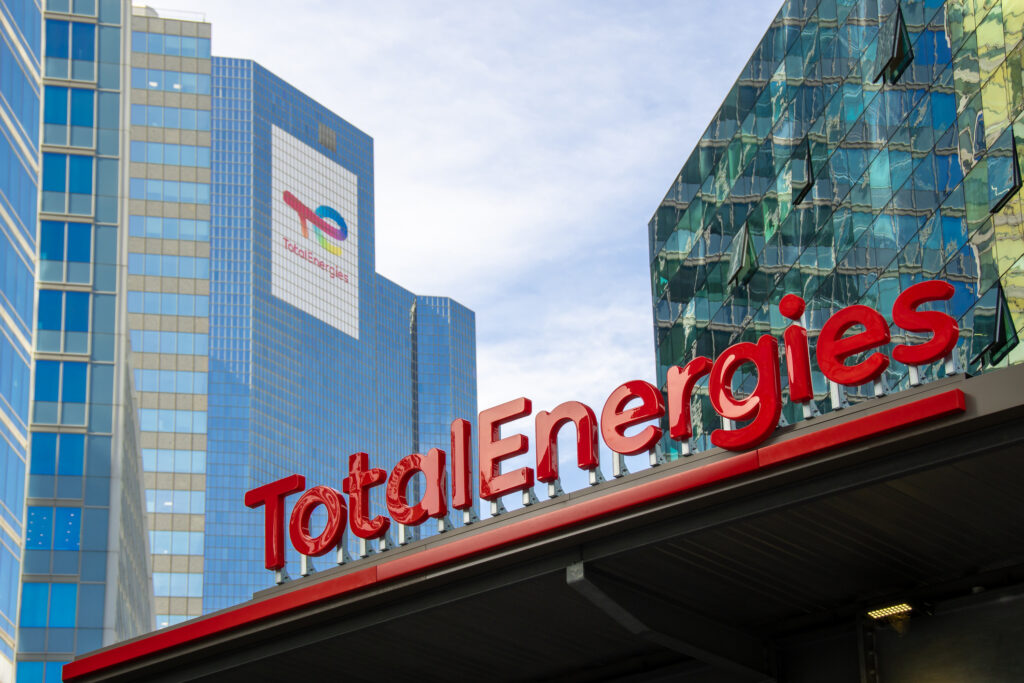
TotalEnergies has announced the successful commencement of production from two pivotal offshore Angola projects, BEGONIA and CLOV Phase 3. These developments collectively inject an additional 60,000 barrels per day (bpd) into the global supply, a significant boost that leverages existing infrastructure and underscores a strategic focus on efficiency and cost discipline. For investors tracking the upstream sector, this move by TotalEnergies highlights a continued commitment to growing production while navigating a dynamic and often unpredictable crude market.
TotalEnergies’ Strategic Offshore Expansion Amidst Market Volatility
The commencement of production from BEGONIA in Block 17/06 and CLOV Phase 3 in Block 17 represents a strategic triumph for TotalEnergies. Each project contributes 30,000 bpd, totaling 60,000 bpd of new output. Critically, these are subsea tie-back developments, connecting to the existing PAZFLOR and CLOV Floating Production, Storage, and Offloading (FPSO) vessels, respectively. This approach allows TotalEnergies to capitalize on available processing capacity, inherently leading to lower marginal production costs and a more favorable carbon intensity profile—attributes highly valued by today’s investment community.
The timing of this increased output is particularly noteworthy given the broader market context. As of today, Brent crude trades at $94.85, reflecting a marginal dip of 0.08% within its daily range of $94.42-$94.91. More significantly, the past two weeks have seen Brent soften considerably, declining from $108.01 on March 26th to $94.58 on April 15th—a substantial drop of 12.4%. This softening price environment underscores the strategic imperative for producers to prioritize projects with robust economics. TotalEnergies’ emphasis on low-cost, low-emissions developments directly addresses this need, positioning the company to achieve its stated goal of more than 3% upstream production growth by 2025, even as crude prices experience downward pressure.
Angola’s Production Resilience and Regional Importance
Beyond TotalEnergies’ corporate strategy, these projects hold profound significance for Angola. The nation’s oil minister and the Angolan National Oil, Gas and Biofuels Agency (ANPG) have emphasized that this new output is crucial for sustaining Angola’s overall crude production levels above the 1 million bpd mark. Maintaining this threshold is vital for Angola’s economic stability, government revenues, and its standing as a key African oil producer.
BEGONIA stands out as Angola’s first inter-block development, signifying enhanced operational flexibility and collaboration within its offshore basins. This project, located 150 km off the Angolan coast, along with CLOV Phase 3, situated 140 km offshore, demonstrates the continued viability and attractiveness of Angola’s deepwater resources. The CLOV Phase 3 project, in particular, showcases robust international collaboration, involving partners such as Equinor (22.16%), ExxonMobil (19%), Azule Energy (15.84%), and Sonangol E&P (5%). This multi-party engagement not only diversifies risk but also brings together diverse technical expertise, ensuring the efficient execution and long-term success of these complex offshore ventures.
Upcoming OPEC+ Decisions and the Global Supply Outlook
As new production streams like those from Angola come online, the global supply-demand equilibrium remains a critical focus for investors. With Angola contributing an additional 60,000 bpd, the market will be keenly observing the upcoming decisions from OPEC+. The Joint Ministerial Monitoring Committee (JMMC) is slated to meet on April 18th, followed by the full OPEC+ Ministerial Meeting on April 20th. These gatherings are pivotal in shaping the near-term supply landscape, as member nations review market conditions and consider adjustments to existing production quotas.
The question for investors is how this new Angolan output will be factored into OPEC+’s ongoing strategy. Will this additional supply, combined with the recent price softness, influence a decision to maintain current cuts or potentially consider further adjustments? While Angola has historically had a complex relationship with its OPEC+ quotas, new, efficient production always adds a layer of complexity to the cartel’s collective strategy. The outcomes of these meetings will undoubtedly impact crude price trajectories and the investment thesis for upstream players, making them a key forward-looking event for anyone building a base-case Brent price forecast for the next quarter.
Investor Focus: Price Forecasts and Strategic Resilience
Our proprietary market intelligence indicates that investors are intensely focused this week on understanding the drivers behind crude prices, with a significant emphasis on building robust base-case Brent price forecasts for the next quarter and assessing the consensus 2026 Brent outlook. This heightened interest underscores the prevailing uncertainty in the energy market, making TotalEnergies’ recent developments in Angola particularly relevant.
In an environment where price volatility is a given, projects that deliver predictable, low-cost production are highly valued. TotalEnergies’ decision to leverage existing FPSO capacity for BEGONIA and CLOV Phase 3 exemplifies this capital discipline. These projects are not merely about adding barrels; they are about adding high-margin barrels with lower carbon footprints. For investors seeking stability and resilience in their energy portfolios, a major like TotalEnergies, executing such efficient growth strategies, presents a compelling case. The ability to grow upstream production while simultaneously reducing costs and emissions positions the company favorably, regardless of whether Brent hovers around its current $94.85 or moves towards the upper or lower bounds of investor forecasts. This strategic agility, coupled with diversified operations, helps insulate against sector-specific headwinds and contributes to the long-term dividend sustainability that many energy investors prioritize.