Close Menu
  • Home
  • Market News
    • Crude Oil Prices
    • Brent vs WTI
    • Futures & Trading
    • OPEC Announcements
  • Company & Corporate
    • Mergers & Acquisitions
    • Earnings Reports
    • Executive Moves
    • ESG & Sustainability
  • Geopolitical & Global
    • Middle East
    • North America
    • Europe & Russia
    • Asia & China
    • Latin America
  • Supply & Disruption
    • Pipeline Disruptions
    • Refinery Outages
    • Weather Events (hurricanes, floods)
    • Labor Strikes & Protest Movements
  • Policy & Regulation
    • U.S. Energy Policy
    • EU Carbon Targets
    • Emissions Regulations
    • International Trade & Sanctions
  • Tech
    • Energy Transition
    • Hydrogen & LNG
    • Carbon Capture
    • Battery / Storage Tech
  • ESG
    • Climate Commitments
    • Greenwashing News
    • Net-Zero Tracking
    • Institutional Divestments
  • Financial
    • Interest Rates Impact on Oil
    • Inflation + Demand
    • Oil & Stock Correlation
    • Investor Sentiment

Subscribe to Updates

Subscribe to our newsletter and never miss our latest news

Subscribe my Newsletter for New Posts & tips Let's stay updated!

What's Hot

Markets on Edge as US-Iran Conflict Intensifies

March 2, 2026

Equinor Discovers More Oil around Snorre offshore Norway

March 2, 2026

Qatar’s state-owned energy company halts LNG production after Iran drone attacks

March 2, 2026
Facebook X (Twitter) Instagram Threads
Oil Market Cap – Global Oil & Energy News, Data & Analysis
  • Home
  • Market News
    • Crude Oil Prices
    • Brent vs WTI
    • Futures & Trading
    • OPEC Announcements
  • Company & Corporate
    • Mergers & Acquisitions
    • Earnings Reports
    • Executive Moves
    • ESG & Sustainability
  • Geopolitical & Global
    • Middle East
    • North America
    • Europe & Russia
    • Asia & China
    • Latin America
  • Supply & Disruption
    • Pipeline Disruptions
    • Refinery Outages
    • Weather Events (hurricanes, floods)
    • Labor Strikes & Protest Movements
  • Policy & Regulation
    • U.S. Energy Policy
    • EU Carbon Targets
    • Emissions Regulations
    • International Trade & Sanctions
  • Tech
    • Energy Transition
    • Hydrogen & LNG
    • Carbon Capture
    • Battery / Storage Tech
  • ESG
    • Climate Commitments
    • Greenwashing News
    • Net-Zero Tracking
    • Institutional Divestments
  • Financial
    • Interest Rates Impact on Oil
    • Inflation + Demand
    • Oil & Stock Correlation
    • Investor Sentiment
Oil Market Cap – Global Oil & Energy News, Data & Analysis
Home » Clearing Gaza rubble could yield 90,000 tonnes of planet-heating emissions | Gaza
Climate Commitments

Clearing Gaza rubble could yield 90,000 tonnes of planet-heating emissions | Gaza

omc_adminBy omc_adminJuly 22, 2025No Comments6 Mins Read
Share
Facebook Twitter Pinterest Threads Bluesky Copy Link


Millions of tonnes of rubble left by Israel’s bombardment of Gaza could generate more than 90,000 tonnes of greenhouse gas emissions – and take as long as four decades to remove and process, a study has found.

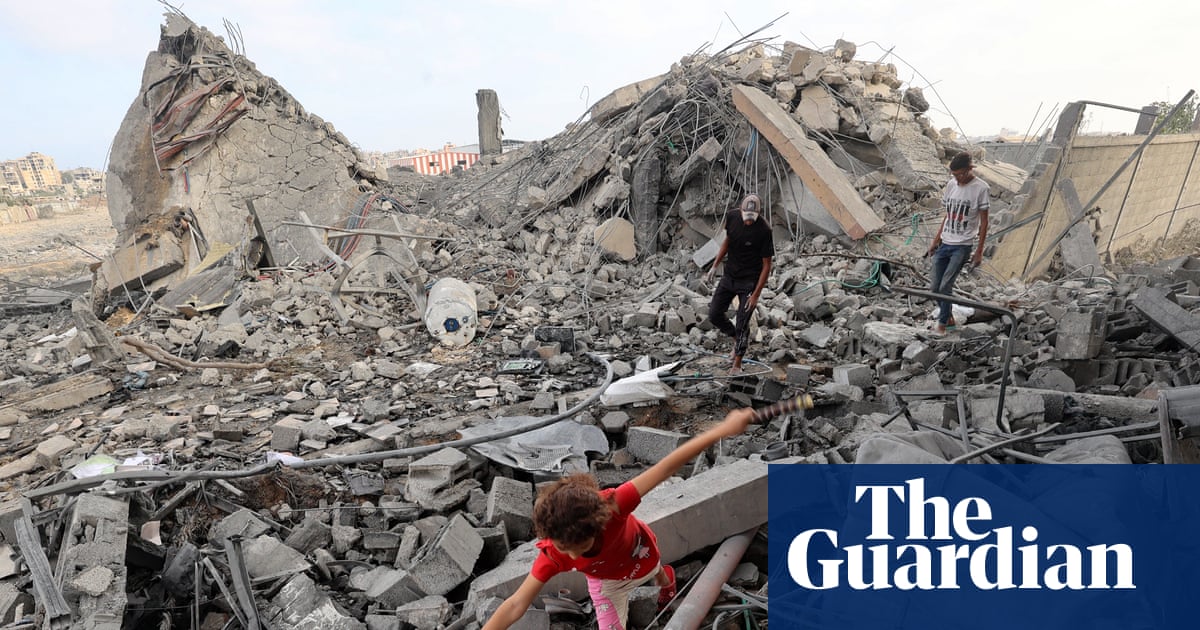
Israel’s destruction of Palestinian homes, schools and hospitals in Gaza generated at least 39m tonnes of concrete debris between October 2023 and December 2024, which will require at least 2.1m dump trucks driving 18m miles (29.5m km) to transport to disposal sites, researchers said.

Just clearing the rubble is on par with driving 737 times the Earth’s circumference, and would generate almost 66,000 tons of carbon dioxide equivalent (CO2e), according to researchers at the universities of Edinburgh and Oxford, who used evolving open-source tools in remote sensing to detect and analyse conflict-related emissions.

The study, published in the journal Environmental Research: Infrastructure and Sustainability, is part of a growing movement to account for the climate and environmental costs of war and occupation, including the long-term damage to land, food and water sources, as well as post-conflict cleanup and reconstruction.

It is the most detailed examination so far of the carbon and logistical toll of dealing with debris – which in Gaza conceals thousands of unidentified human remains, toxins such as asbestos and unexploded ordnance.

Researchers looked at two scenarios to calculate the speed and climate impact of processing the uncontaminated debris – which could then be used to help reconstruct the razed Palestinian territory.

Assuming 80% of the debris is viable for crushing, a fleet of 50 industrial jaw crushers, which appear never to have been permitted in Gaza, would take just over six months and generate about 2,976 tonnes of CO2e, the study found.

But it would take a fleet of 50 smaller crushers, the type primarily used in Gaza, more than 37 years to process the rubble, generating about 25,149 tonnes of CO2e. In this scenario, the CO2 generated by moving and crushing the debris from Gaza’s destroyed buildings would be on a par with charging 7.3bn mobile phones.

The longer the contaminated debris remains in situ, the more damage it will do to the air, water and health of the 2 million Palestinians who have now been displaced, starved and bombarded for 21 months.

“The CO2 emissions from clearing and processing the rubble may seem small compared to the total climate cost of the destruction in Gaza, but our micro focus unpacks the labour and work required to even begin the process of reconstruction,” said Samer Abdelnour, lead author and senior lecturer in strategic management at the University of Edinburgh Business School.

“While filling the military emissions gap is important, our work can also support Palestinian policymakers, civil engineers, planners and other workers on the ground who are determined to reclaim what was lost, stay on the land and rebuild,” said Abdelnour, a Palestinian Canadian.

Commenting on the study, Ben Neimark, senior lecturer at Queen Mary University of London who leads a team researching the total climate cost of Israel’s recent conflicts, said: “The methodological focus on debris is cutting-edge work, highlighting often-missed environmental damage left by militaries after the war is over. It provides a fresh look at the daily images of bombed-out buildings and rubble from Gaza, rather than seeing them as longer-term climate impacts of war.”

Palestinians inspect the rubble at the al-Ansar mosque following an Israeli strike in Deir al-Balah, Gaza Strip, on 2 June 2025. Photograph: Abdel Kareem Hana/AP

Gaza is a 25-mile strip of land, only twice the size of Washington DC at 141 square miles (365 sq km). More than 90% of homes in Gaza have been damaged or destroyed, in addition to the vast majority of schools, clinics, mosques and infrastructure.

skip past newsletter promotion

The planet’s most important stories. Get all the week’s environment news – the good, the bad and the essential

Privacy Notice: Newsletters may contain info about charities, online ads, and content funded by outside parties. For more information see our Privacy Policy. We use Google reCaptcha to protect our website and the Google Privacy Policy and Terms of Service apply.

after newsletter promotion

The current analysis merges open-source data on building surface area, height, structural damage and road network topology to estimate debris distribution across Gaza – and then calculate the carbon cost of processing and transporting that debris during reconstruction, according to Nicholas Roy, co-author of the study who compiled the data and conducted the analysis.

“Looking ahead, finer spatial and temporal resolution of satellite images, advances in deep learning for building and damage classification, and methods that integrate information from different perspectives – such as street-level cellphone footage and top-down satellite images – open new opportunities to estimate military emissions across different scopes and better understand the true climate cost of war,” said Roy, an MSc statistical science student at Oxford University.

Burning fossil fuels is causing climate chaos, with increasingly deadly and destructive extreme weather events forcing record numbers of people to migrate. The Gulf region is among the most vulnerable to extreme weather and slow-onset climate disasters including drought, desertification, extreme heat and erratic rainfall, as well as environmental degradation, food insecurity and water shortages.

The total military carbon footprint is estimated at about 5.5% of global emissions – excluding greenhouse gases from conflict and war fighting. This is more than the combined contribution of civilian aviation (2%) and shipping (3%).

Researchers are attempting to calculate the climate costs being generated in two of the most deadly conflicts currently – Russia’s war in Ukraine and Israel’s military assaults in Gaza and the broader Middle East – that could eventually help calculate claims for reparations.

In June, a study led by Neimark found that the long-term climate cost of destroying, clearing and rebuilding Gaza could top 31m tonnes of CO2e. This is more than the combined 2023 annual greenhouse gases emitted by Costa Rica and Estonia – yet there is no obligation for states to report military emissions to the UN climate body.

Stuart Parkinson, executive director of Scientists for Global Responsibility, said: “Militaries and war are large and hidden contributors to the climate crisis … It is important to include the full range of activities from production of the military equipment to fuel use during war fighting, from the damage to carbon stores like forests to cleanup efforts and reconstruction following the end of the war. This study adds to this bigger picture of war-related emissions.”

The Israeli government did not respond.


Source link

Share. Facebook Twitter Pinterest Bluesky Threads Tumblr Telegram Email
omc_admin
  • Website

Related Posts

Winter getting shorter in 80% of major US cities, new data shows | US weather

February 27, 2026

Trump officials move to kill system that protects US from chemical disasters | US Environmental Protection Agency

February 27, 2026

US ‘bullying’ could scupper carbon levy on shipping, warn experts | Shipping emissions

February 26, 2026
Add A Comment
Leave A Reply Cancel Reply

Top Posts

Federal Reserve cuts key rate for first time this year

September 17, 202513 Views

Inflation or jobs: Federal Reserve officials are divided over competing concerns

August 14, 20259 Views

Oil tanker rates to stay strong into 2026 as sanctions remove ships for hire – Oil & Gas 360

December 16, 20258 Views
Don't Miss

Oil Could Pass $100 as Strait of Hormuz Traffic Halts

By omc_adminMarch 2, 2026

Higher oil and gas prices are certain as the closure of the Strait of Hormuz…

Global oil prices may spike in next few days but calm down in longer term

March 2, 2026

Global oil prices may spike in next few days but calm down in longer term

March 2, 2026

Oil tankers attacked near Strait of Hormuz as Iran conflict disrupts shipping

March 1, 2026
Top Trending

Standard Chartered Earns Over $1 Billion in Sustainable Finance Income

By omc_adminMarch 2, 2026

Digital Product Passports Are Coming, and 2026 Is When the Real Work Begins

By omc_adminMarch 2, 2026

ESG Today: Week in Review

By omc_adminMarch 1, 2026
Most Popular

The 5 Best 65-Inch TVs of 2025

July 3, 202515 Views

AI’s Next Bottleneck Isn’t Just Chips — It’s the Power Grid: Goldman

November 14, 202514 Views

The Layoffs List of 2025: Meta, Microsoft, Block, and More

May 9, 202510 Views
Our Picks

Equinor Discovers More Oil around Snorre offshore Norway

March 2, 2026

Israel Pauses Leviathan Gas Production

March 2, 2026

Saudis Pulled Deeper into War after Strike around Key Refinery

March 2, 2026

Subscribe to Updates

Subscribe to our newsletter and never miss our latest news

Subscribe my Newsletter for New Posts & tips Let's stay updated!

Facebook X (Twitter) Instagram Pinterest
  • Home
  • About Us
  • Advertise With Us
  • Contact Us
  • DMCA
  • Privacy Policy
  • Terms & Conditions
© 2026 oilmarketcap. Designed by oilmarketcap.

Type above and press Enter to search. Press Esc to cancel.