The global energy landscape is undergoing a profound transformation, with increasing emphasis on sustainable solutions and diversification away from traditional fossil fuels. While crude oil markets continue to command significant investor attention, the strategic pivot towards renewable energy sources like bio-CNG is carving out a compelling investment narrative. This analysis delves into recent developments in India’s waste-to-energy sector, specifically focusing on a series of significant biogas projects, and examines their implications for the broader energy investment thesis, particularly against a backdrop of fluctuating crude prices and evolving investor priorities.
Strategic Expansion in Bio-CNG Capacity Signals Energy Transition Momentum
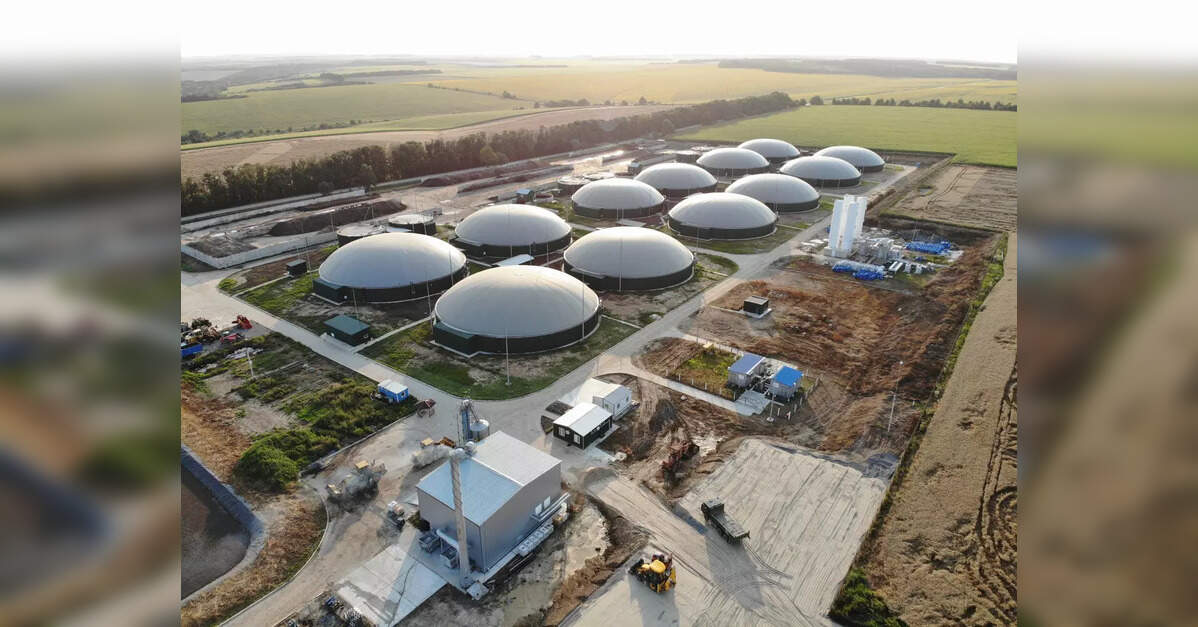
India’s commitment to energy diversification is vividly demonstrated by the recent commissioning and ongoing development of several large-scale biogas facilities. Leading this charge, the first compressed biogas plant designed to process dairy waste in Nangli, located in south-west Delhi, has successfully commenced full operations. This facility, a cornerstone of three proposed plants, is now contributing to the processing of 200 metric tonnes (MT) of cattle dung daily. Its sister projects, planned for Goyla Dairy and Ghogha Dairy, will collectively boost this capacity to 600 MT per day, transforming what was once a significant environmental challenge into a valuable energy resource. Each plant, developed at an estimated cost of ₹16 crore, converts biogas into compressed natural gas (CNG), thereby reducing reliance on conventional fossil fuels, while also producing organic manure for agricultural use.
Beyond dairy waste, the sector is seeing parallel growth in municipal organic waste processing. A decentralised biomethanation plant in Ghogha, northwest Delhi, has also recently become operational, processing 100 MT of organic waste daily. This facility, established through a collaboration with Indraprastha Gas Limited (IGL), marks a critical step towards treating a cumulative 750 MT of organic waste daily across three new installations. Furthermore, a substantial bio-CNG plant in Okhla, capable of processing 300 MT of waste daily, reached its revised completion target of December 2025 and is now a key contributor to the region’s energy mix. Looking ahead, a compressed biogas facility at Ghazipur, also being developed by IGL, is targeted for commissioning by December 2026, adding another 350 MT per day of wet waste processing capacity. These initiatives collectively underscore a robust, multifaceted approach to renewable energy generation and waste management.
Navigating Crude Volatility: The Value Proposition of Localized Energy
The investment landscape for energy remains dynamic and complex, with traditional oil markets experiencing continued volatility. As of today, Brent crude trades at $94.51 per barrel, reflecting a marginal decline of 0.44% within the day’s range of $94.42-$94.91. Similarly, WTI crude is priced at $90.62, down 0.73% from its daily high. This relative stability comes after a more significant downward adjustment over the past two weeks, during which Brent crude shed over 12%, falling from $108.01 on March 26th to $94.58 by April 15th. This recent trend highlights the inherent geopolitical and economic sensitivities that continue to influence global crude prices.
In this context of price fluctuations, the strategic importance of localized, stable energy sources like bio-CNG becomes increasingly clear. Projects such as those recently brought online by the Municipal Corporation of Delhi offer a compelling hedge against the unpredictability of international fossil fuel markets. By converting local waste into usable fuel, these plants not only address critical environmental concerns but also foster greater energy independence and price stability at a regional level. For investors seeking to de-risk their energy portfolios, exposure to such renewable infrastructure projects represents a tangible pathway to resilience amidst ongoing crude market uncertainty.
Upcoming Energy Events and the Long-Term Renewable Trajectory
The immediate future of the global energy market will undoubtedly be shaped by several critical upcoming events. Investors are keenly anticipating the OPEC+ Joint Ministerial Monitoring Committee (JMMC) meeting on April 18th, followed by the full OPEC+ Ministerial Meeting on April 20th. These gatherings are pivotal, as any decisions regarding production quotas could significantly impact global crude supply and, consequently, price benchmarks. Further market insights will be provided by the Baker Hughes Rig Count reports on April 17th and 24th, offering a snapshot of North American drilling activity. Additionally, the API and EIA weekly crude inventory reports on April 21st/22nd and 28th/29th will offer crucial data on U.S. supply and demand dynamics.
While these events will undoubtedly drive short-term trading sentiment, they also underscore the long-term investment thesis for renewable energy. The commissioning of the Ghazipur compressed biogas facility by December 2026 stands as a forward-looking catalyst within the renewable sector. This project, along with its already operational counterparts, represents a consistent, predictable growth trajectory in a segment less exposed to the geopolitical machinations that often dominate OPEC+ discussions or the immediate fluctuations of inventory reports. Investors looking beyond short-term market noise will find significant value in the steady expansion of bio-CNG infrastructure, which promises sustained growth and environmental dividends regardless of immediate crude market shifts.
Addressing Investor Queries: Bio-CNG’s Role in Future Energy Forecasts
Our proprietary reader intent data reveals that a significant portion of OilMarketCap.com’s audience is focused on forecasting, with common questions revolving around building a base-case Brent price forecast for the next quarter and understanding the consensus 2026 Brent outlook. While our internal models indicate continued pressure on crude prices from a complex interplay of global economic growth concerns and strategic supply management by major producers, the emergence of robust bio-CNG ecosystems offers an important dimension to this forecast, particularly at a regional level.
The operational success of plants like those in Nangli, Ghogha, and Okhla, and the anticipated commissioning of the Ghazipur facility by the end of 2026, mean that a growing portion of local energy demand is being met through sustainable, domestically sourced alternatives. While these projects may not directly sway global Brent prices, they significantly impact regional demand for conventional fossil fuels, including gasoline and diesel. By providing a clean alternative to traditional CNG, these biogas initiatives contribute to a more diversified energy mix, alleviating some pressure on refined product markets and fostering energy resilience. For investors assessing the broader energy landscape, understanding the scaling impact of such renewable projects is crucial for a holistic view of future energy demand and pricing dynamics, particularly when building long-term energy investment strategies that account for the accelerating energy transition.
Investment Implications and Outlook for Energy Transition Capital
The coordinated development of these six biogas facilities, processing a combined 1,350 MT of waste daily, represents a substantial stride in India’s energy transition and waste management efforts. For investors, this sector offers a compelling blend of environmental stewardship and tangible economic returns. The projects generate revenue not only from the sale of bio-CNG, which reduces consumer dependence on volatile fossil fuel prices, but also from the byproduct organic manure, supporting agricultural sustainability. Furthermore, the mitigation of pollution from dairy and organic waste contributes positively to ESG (Environmental, Social, and Governance) metrics, an increasingly critical factor for institutional investors.
The involvement of entities like IGL underscores the commercial viability and scalability of these ventures. As global efforts intensify to decarbonize economies and achieve net-zero targets, investments in proven waste-to-energy technologies are poised for sustained growth. For investors seeking exposure to the evolving energy matrix, the bio-CNG sector presents an attractive opportunity to participate in a segment characterized by strong government backing, clear environmental benefits, and a growing market for clean, domestically produced fuels. This strategic pivot towards localized renewable energy solutions offers a robust pathway for long-term capital appreciation within the broader energy investment sphere.


