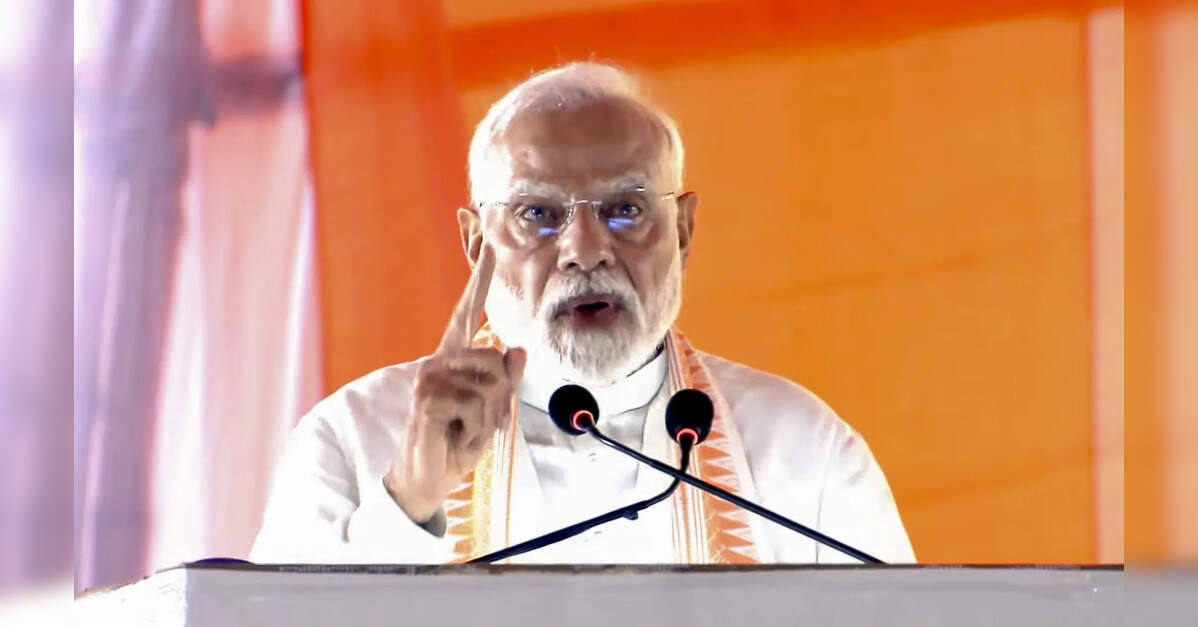
India’s strategic focus on robust infrastructure development continues to reshape its domestic energy landscape, offering compelling long-term opportunities for investors. A recent initiative in Durgapur, West Bengal, spearheaded by Prime Minister Narendra Modi, saw the inauguration and foundation stone laying for projects valued at a substantial ₹5,400 crore. These investments, spanning oil & gas, power, road, and rail sectors, are not merely regional developments; they are foundational elements bolstering India’s energy security, driving economic growth, and signaling a clear trajectory for future energy demand that global investors cannot afford to overlook.
India’s Strategic Energy Build-Out Amidst Evolving Global Markets
The core of India’s ambitious energy strategy lies in expanding its domestic capacity and diversifying its energy mix. In West Bengal, key projects include Bharat Petroleum Corp. Ltd (BPCL)’s City Gas Distribution (CGD) network in Bankura and Purulia districts, a significant investment of approximately ₹1,950 crore. This initiative aims to deliver Piped Natural Gas (PNG) to households, commercial establishments, and industrial consumers, alongside establishing Compressed Natural Gas (CNG) retail outlets. Concurrently, the Durgapur to Kolkata section of the Durgapur-Haldia Natural Gas Pipeline, an integral part of the flagship Pradhan Mantri Urja Ganga (PMUG) Project, was launched. This crucial 132-kilometer pipeline, valued at over ₹1,190 crore, traverses through critical districts, promising to facilitate natural gas supply to millions.
These domestic gas infrastructure projects gain particular strategic importance when viewed against the backdrop of current global energy markets. As of today, Brent crude trades at $94.56, reflecting a slight dip of 0.39% within a daily range of $94.56-$94.91, while WTI crude sits at $90.92, down 0.41%. Looking back, the 14-day trend for Brent shows a decline from $102.22 on March 25th to $93.22 on April 14th, representing an 8.8% decrease. This volatility underscores India’s imperative to reduce reliance on imported crude by fostering a robust gas-based economy. By expanding its natural gas infrastructure, India is not only enhancing energy access but also building resilience against international price fluctuations, directly impacting its import bill and potentially stabilizing its energy costs for industries and consumers alike.
Catalyzing Future Demand and Navigating Global Supply Dynamics
The long-term nature of these infrastructure investments positions India as a pivotal player in shaping future global energy demand. The expansion of CGD networks and pipelines will inevitably lead to increased natural gas consumption across residential, commercial, and industrial sectors. This surge in domestic demand has significant implications for global LNG markets and, indirectly, for crude oil, as gas displaces other fuels. Investors should closely monitor how these projects mature, as they represent a fundamental shift in India’s energy consumption patterns, favoring cleaner-burning natural gas.
Looking ahead, the next few weeks hold critical events that could influence the broader energy market environment into which India’s projects are developing. The upcoming OPEC+ Joint Ministerial Monitoring Committee (JMMC) meeting on April 18th, followed by the Full Ministerial meeting on April 20th, will be crucial. Any decisions regarding production quotas could significantly impact global crude supply and, consequently, prices. For investors tracking India’s energy trajectory, understanding these global supply-side shifts is paramount. While India builds domestic resilience, the overall cost of its energy basket remains tied to international benchmarks. Furthermore, weekly data releases like the API Weekly Crude Inventory (April 21st, April 28th) and EIA Weekly Petroleum Status Report (April 22nd, April 29th) will provide fresh insights into U.S. supply and demand dynamics, offering further context to India’s strategic push for domestic energy sources.
Investor Insights: Deciphering India’s Demand Trajectory
Our proprietary reader intent data reveals a consistent focus among investors on understanding future price movements, particularly a base-case Brent price forecast for the next quarter and the consensus 2026 Brent forecast. India’s accelerating infrastructure development, exemplified by the West Bengal projects, is a critical variable in this equation. The expansion of gas-based transport and industries within India suggests a sustained and growing demand for natural gas, potentially easing some pressure on crude oil demand growth in the long run. However, the sheer scale of India’s economic expansion means its overall energy appetite will continue to rise across all segments.
The question of “what’s driving Asian LNG spot prices this week” also frequently arises, highlighting the interconnectedness of regional energy markets. As India’s gas infrastructure strengthens, its influence on Asian LNG demand will only grow. While some investors focus on Chinese “tea-pot” refineries and their impact on crude processing, India’s shift towards domestic gas distribution and cleaner energy, as seen in Durgapur, represents a structural demand shift that provides a robust floor for energy consumption in the region. Investors formulating their 2026 Brent forecasts must factor in India’s consistent demand growth, driven by such foundational infrastructure projects, which acts as a powerful counterbalance to potential demand softening elsewhere.
Cleaner Energy and Integrated Industrial Growth: A Dual Mandate
Beyond the direct oil and gas investments, the West Bengal projects underscore India’s dual mandate of economic growth and environmental stewardship. The inauguration of Pollution Control Systems, specifically flue gas desulphurisation (FGD) units, at both the Durgapur Steel Thermal Power Station and Raghunathpur Thermal Power Station of Damodar Valley Corporation, represents an investment of over ₹1,457 crore. These systems are designed to drastically reduce emissions, aligning with India’s broader commitment to cleaner energy generation. For investors, this signals a growing market for environmental technologies and a commitment to sustainable energy practices within India’s industrial sector.
Furthermore, the comprehensive development package includes significant enhancements to transport infrastructure, vital for supporting industrial and economic activity. The doubling of the 36-kilometer Purulia – Kotshila Rail Line, an investment exceeding ₹390 crore, will significantly improve rail connectivity, linking industrial hubs like Jamshedpur, Bokaro, and Dhanbad with Ranchi and Kolkata. This project, along with the two new Road Over Bridges (ROBs) totaling over ₹380 crore, facilitates more efficient movement of goods and reduces travel times. Improved logistics are a direct catalyst for industrial growth, which in turn drives demand for both traditional and cleaner energy sources, creating a virtuous cycle that reinforces India’s long-term energy outlook and investment attractiveness.


