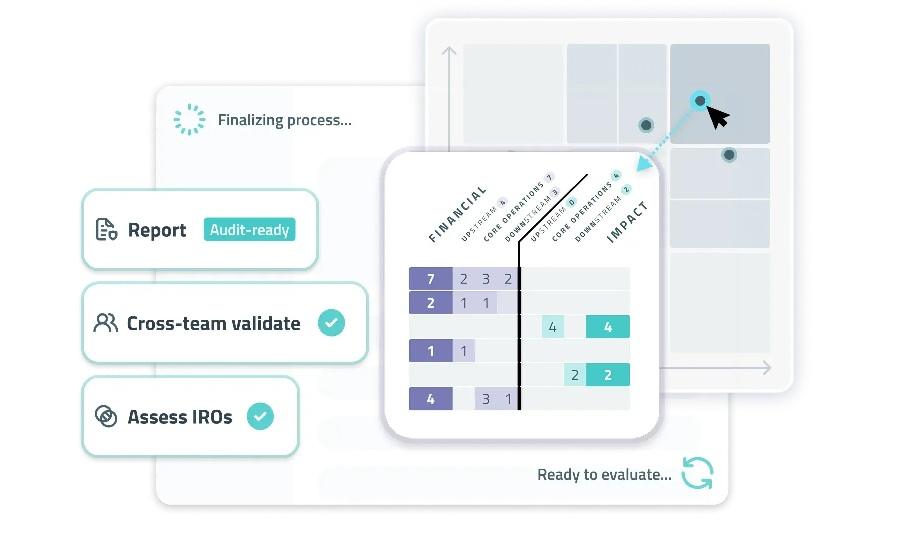
The global oil and gas sector stands at a critical juncture, continuously navigating market volatility, geopolitical shifts, and an accelerating mandate for sustainable practices. In this environment, Environmental, Social, and Governance (ESG) performance has transcended mere compliance to become a pivotal driver of investor confidence and long-term value. The recent launch of Datamaran Suite, an advanced ESG-focused software analytics platform, represents a significant development for companies striving to not only meet but exceed these evolving expectations, ultimately enhancing their appeal to a discerning investment community.
Elevating ESG Transparency and Strategic Insight
For oil and gas companies, demonstrating clear, verifiable progress on ESG initiatives is no longer optional; it is fundamental to accessing capital and maintaining social license. Datamaran Suite, building on its Core capabilities, offers a comprehensive toolkit designed to streamline the identification, management, and disclosure of ESG impacts, risks, and opportunities (IROs). Key features such as the IROs Benchmarking module are particularly valuable. This allows companies to meticulously compare their disclosed IROs against industry peers across diverse geographies, providing an unparalleled view into alignment with sector norms and highlighting potential disclosure gaps. Furthermore, the “Multiple Reviews” feature, enabling up to 25 reviewers per topic, underscores a commitment to thorough and consistent assessments, directly addressing investor demands for robust internal governance and data integrity. In an industry frequently scrutinized for its environmental footprint and social impact, such granular, data-driven transparency is a powerful differentiator, signaling a mature approach to sustainability that resonates deeply with long-term investors.
Navigating Market Volatility with Resilient ESG Strategies
The energy market remains inherently dynamic, and recent price action serves as a stark reminder of this volatility. As of today, Brent crude trades at $94.66, a marginal dip of 0.28% within a daily range of $94.59 to $94.91. This snapshot reflects a broader trend; Brent has experienced a notable correction over the past two weeks, sliding from $102.22 on March 25th to $93.22 yesterday, representing a nearly 8.8% decline. Similarly, WTI crude sits at $90.77, down 0.57%, while gasoline futures hover around $2.99. This fluctuating landscape underscores the imperative for oil and gas companies to build resilience beyond mere operational efficiency. Datamaran Suite’s “Target Setting” capabilities, which factor in external benchmarks, peer disclosures, and policy signals, are instrumental here. By enabling companies to set evidence-based, ambitious, yet achievable ESG targets, the platform helps embed sustainability into core business strategy. This strategic integration can fortify a company’s financial performance against market shocks, attract capital from increasingly ESG-mandated funds, and ultimately command a premium valuation in a sector where long-term viability is tied directly to sustainable practices.
Proactive Positioning Ahead of Critical Industry Events
OilMarketCap.com readers consistently seek clarity on future price trajectories, with queries ranging from “base-case Brent price forecast for next quarter” to the “consensus 2026 Brent forecast.” While direct price predictions are complex, understanding the strategic posture of energy companies in anticipation of market-moving events is paramount. The upcoming calendar is packed with such catalysts: the OPEC+ Joint Ministerial Monitoring Committee (JMMC) meeting on April 18th, followed by the full OPEC+ Ministerial meeting on April 20th. These gatherings, alongside regular Baker Hughes Rig Count reports on April 17th and 24th, and API/EIA weekly inventory data, will significantly influence short-term market sentiment. For oil and gas companies, proactively managing their ESG narrative and demonstrating progress through platforms like Datamaran Suite becomes a strategic advantage. It allows them to articulate how their operations are optimized for resilience amidst potential supply shifts or demand changes, including those influenced by factors like Chinese tea-pot refinery activity or Asian LNG spot price dynamics, which also feature prominently in investor inquiries. By systematically tracking ESG performance and benchmarking against peers, companies can present a more compelling investment case, showcasing their adaptability and commitment to sustainable growth regardless of immediate market headwinds or the outcomes of OPEC+ deliberations.
The Strategic Edge of Data-Driven ESG in Capital Allocation
In a capital-intensive industry like oil and gas, the ability to attract and retain investment is heavily influenced by a company’s perceived risk profile and future-readiness. Datamaran Suite’s integrated approach to materiality assessment, regulatory monitoring, and benchmarking provides a strategic edge. It allows companies to move beyond a reactive stance on ESG compliance to a proactive, value-creation mindset. By understanding how peers frame ESG issues (“Topics Benchmarking”) and having access to a networking platform like Harbor+ to connect with sustainability professionals, companies can refine their strategies and disclosures, ensuring they align with best practices and evolving investor expectations. This level of sophistication in ESG management translates directly into a more robust investment proposition. Companies that can clearly demonstrate their commitment to mitigating ESG risks, identifying opportunities, and transparently reporting progress are better positioned to secure favorable financing, attract long-term institutional capital, and ultimately enhance shareholder returns in an energy landscape increasingly defined by environmental and social considerations.


