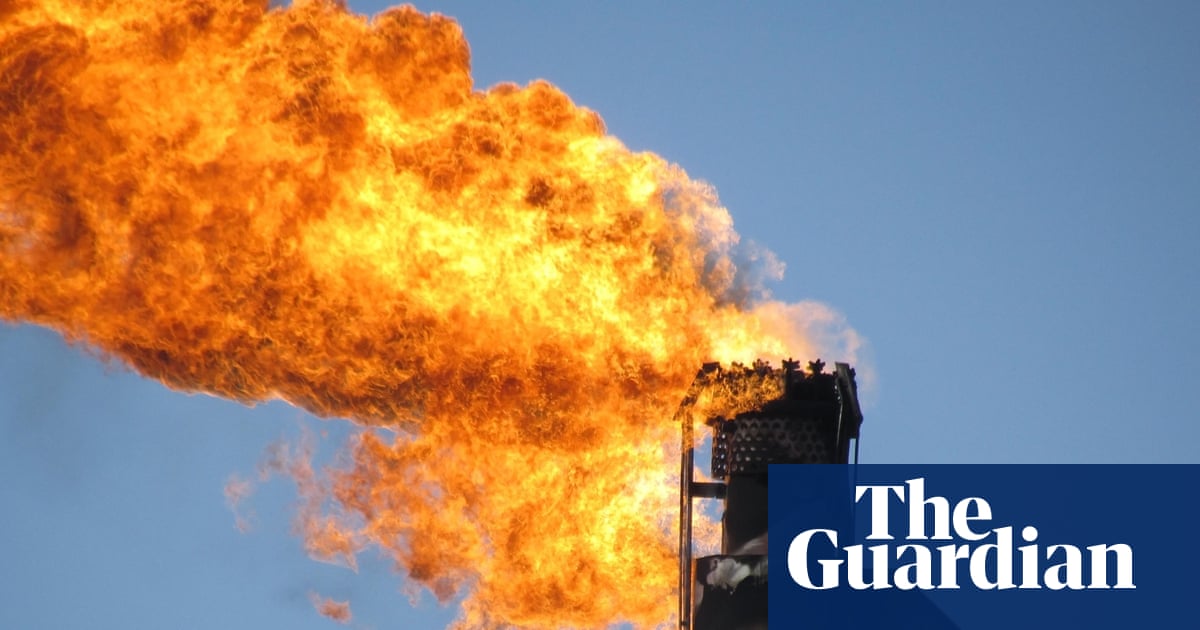
The global oil and gas industry is facing an escalating challenge from gas flaring, a practice that needlessly combusts significant volumes of natural gas during oil production. Recent analysis reveals that last year, the sector released an additional 389 million tonnes of carbon pollution into the atmosphere, burning 151 billion cubic meters of gas – a volume not seen since 2007. This represents not only a massive environmental burden but also an “enormous waste” of valuable energy resources, equivalent to over $63 billion at current European import prices. For astute investors, this isn’t just an environmental headline; it’s a rapidly crystallizing regulatory risk and a material drag on potential returns, demanding a re-evaluation of exposure to producers with high flaring intensities.
Flaring’s Economic Blind Spot and Current Market Dynamics
The sheer scale of wasted resources from flaring in 2024 is staggering. The 151 billion cubic meters of gas burned represents a 3 billion cubic meter increase year-over-year, reaching levels not witnessed in nearly two decades. This “needlessly wasteful” practice, as industry experts describe it, is often driven by a simple economic calculus: it’s frequently cheaper to burn off associated gas than to invest in the infrastructure required to capture, process, and bring it to market. However, this short-term cost-saving comes with a substantial long-term price tag in terms of carbon emissions and lost revenue potential.
Consider the immediate market context: As of today, Brent crude trades at $94.66 per barrel, reflecting a slight dip of 0.28% from earlier today, with WTI crude similarly down 0.57% at $90.77. This price level, while off its recent peak, still underscores a robust market where energy security remains a paramount concern. The 14-day trend for Brent, which saw prices move from $102.22 on March 25th to $93.22 on April 14th, highlights the volatility and the premium placed on every barrel and cubic meter of energy. The $63 billion worth of gas flared last year, a sum that is more than half of the International Energy Agency’s estimated upfront costs to eliminate routine flaring, represents a monumental opportunity cost for an industry constantly seeking to optimize its value chain and address investor calls for improved capital efficiency.
Regulatory Pressures and Upcoming Catalysts
Despite growing concerns about climate change and energy security, the intensity of flaring – the volume flared per barrel of oil produced – has remained stubbornly high for the past 15 years. This persistence is a clear red flag for investors, signaling a growing disconnect between industry practice and evolving global expectations. A concentrated risk is evident, with nine countries, including Russia, Iran, Iraq, and the United States, accounting for three-quarters of global flaring, many of which operate state-owned oil companies. This geographic concentration suggests that global solutions will require significant geopolitical will and coordinated regulatory action.
The International Energy Agency has set an ambitious target to eliminate all routine flaring by 2030. While this might seem distant, the regulatory landscape is shifting, and “political will and regulatory pressure” are increasingly seen as the missing ingredients. Investors should closely monitor upcoming industry and governmental events for signals of stricter enforcement or new mandates. The OPEC+ Joint Ministerial Monitoring Committee (JMMC) meeting on April 18th, followed by the Full Ministerial Meeting on April 20th, while primarily focused on production quotas, could serve as a platform for member states to discuss broader sustainability commitments or national strategies for resource monetization. While flaring may not be a direct agenda item, the increasing global scrutiny on the industry’s environmental footprint makes it an implicit backdrop. Furthermore, successive Baker Hughes Rig Count reports (April 17th, April 24th) and weekly API/EIA inventory data will provide ongoing insights into production activity, where increased output could exacerbate flaring if not accompanied by infrastructure investments. A lack of proactive steps from key producing nations or major operators will only amplify future regulatory intervention, adding unforeseen costs and complexities to projects.
Investor Scrutiny Intensifies: Valuations and ESG Risks
OilMarketCap readers are increasingly focused on the long-term outlook for crude prices, with questions ranging from base-case Brent forecasts for the next quarter to consensus 2026 Brent projections. The issue of gas flaring directly impacts these forecasts by introducing both potential supply-side impacts and significant ESG-related risks. Companies with high flaring intensities face mounting pressure from institutional investors, who are increasingly integrating environmental performance into their investment criteria. This isn’t merely about optics; it translates into tangible financial risks. Higher flaring can lead to:
- Increased capital costs due to stricter environmental compliance requirements.
- Potential carbon taxes or penalties, directly impacting profitability.
- Reduced access to capital as lenders and investors divest from high-emission assets.
- Reputational damage, affecting public perception and potentially leading to operational delays or licensing issues.
The stark contrast in flaring intensity – Norway being 18 times cleaner than the US and 228 times cleaner than Venezuela – highlights a clear differentiator among producers. Investors are asking what drives Asian LNG spot prices; reducing flaring could unlock significant volumes of natural gas, potentially influencing regional supply dynamics and offering a new revenue stream for producers who invest in capture technologies. The market is beginning to price in these disparities, favoring operators demonstrating a commitment to responsible production practices and resource efficiency.
Navigating the Future: Investment Considerations
For investors positioning their portfolios in the oil and gas sector, understanding and assessing flaring risk is no longer optional. It represents a critical component of a comprehensive due diligence process. The industry has known solutions for flaring reduction, often cost-effective, but implementation at scale remains a hurdle. Companies that proactively invest in gas capture and monetization technologies will not only mitigate regulatory and reputational risks but also unlock new revenue streams from what was once considered waste. This includes projects focused on gas-to-power, gas-to-liquids, or simply connecting to existing pipeline infrastructure.
As the global energy transition accelerates, the ability to produce hydrocarbons with a lower environmental footprint will become a significant competitive advantage. Investors should look for producers with clear, measurable targets for flaring reduction, a track record of implementing best practices, and transparent reporting on their emissions. Companies that continue to operate with high flaring intensities face a growing threat of stranded assets, higher costs of capital, and diminished long-term shareholder value. The $63 billion in wasted gas isn’t just an environmental statistic; it’s a direct indication of misallocated capital and an unaddressed opportunity that will increasingly define investment resilience in the coming years.


