Chevron’s Permian Plateau: A Strategic Shift Towards Unlocking Shareholder Value
In a significant strategic pivot that reverberates across the U.S. shale landscape, Chevron Corporation is signaling a shift in its Permian Basin operations from aggressive production growth to a steadfast focus on free cash flow generation. This move, poised to deliver billions in additional cash flow over the coming years, marks a maturation point for one of the world’s most prolific oil fields and sets a new precedent for how major players intend to extract value from their shale assets. As the industry grapples with balancing supply, demand, and investor expectations, Chevron’s strategy offers a compelling case study in disciplined capital allocation and sustainable returns, moving beyond the “growth at all costs” mantra that once defined shale development.
From Growth to Cash: The Permian Plateau’s Financial Implications
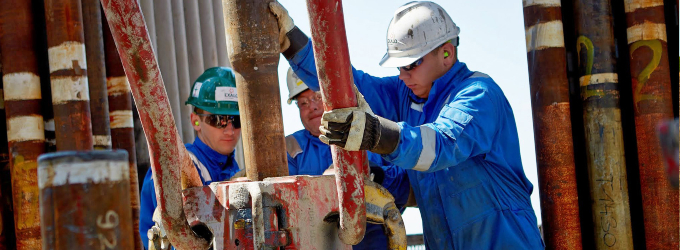
Chevron is on the cusp of reaching a long-term production target of 1 million barrels of oil equivalent per day (boed) in the Permian, a level it anticipates sustaining through 2040. This deliberate plateau is not a sign of diminishing returns but rather a calculated strategy to optimize capital efficiency. The company is already adjusting its operational footprint, having reduced drill rigs from 13 to 9 and frac crews from four to three since the beginning of the year. This targeted reduction in capital expenditure is projected to significantly bolster free cash flow from its Permian operations by an additional $2 billion over the next two years, ultimately targeting an impressive $5 billion annually by 2027. This financial discipline represents a paradigm shift from the perpetual capital demands typically associated with shale production, where new wells are constantly required to offset rapid decline rates. Chevron’s approach aims to “crack the code” of shale profitability, demonstrating that scale and efficiency can lead to sustained cash generation even with reduced drilling activity. This commitment to robust free cash flow generation directly supports Chevron’s broader dividend objectives, a critical factor for long-term investors.
Current Market Dynamics Amplify Strategic Gains
The timing of Chevron’s strategic shift is particularly opportune, given the prevailing strength in crude oil markets. As of today, Brent crude trades at $94.59 per barrel, reflecting a slight daily dip of 0.36% within a day range of $94.59 to $94.91. Similarly, WTI crude is priced at $90.83, experiencing a 0.5% decrease, trading between $90.81 and $91.50. This current pricing environment stands in stark contrast to the $60 per barrel Brent assumption Chevron used to project its $5 billion annual free cash flow target by 2027. The sustained higher price deck, despite a recent 14-day trend showing Brent declining from $102.22 on March 25th to $93.22 on April 14th (a decrease of approximately 8.8%), means the actual free cash flow generated could significantly exceed initial projections, bolstering shareholder returns even further. While some U.S. shale operators might react to price fluctuations by cutting rigs below certain thresholds, Chevron’s decision to reduce activity is an integral part of its decade-long strategy to build a large-scale, efficient operation designed for profit harvesting, rather than a reactive measure to market softness. The broader energy market also sees gasoline prices at $2.99, indicative of robust demand fundamentals underpinning the crude market’s resilience.
Investor Sentiment: A Clear Demand for Returns Over Unbridled Growth
Our proprietary reader intent data reveals a tangible shift in investor priorities, moving decisively towards financial performance and sustainability rather than solely focusing on production volume. Historically, inquiries often revolved around quarter-over-quarter output increases and acreage acquisition. However, this week, a significant portion of our investor audience is actively seeking a base-case Brent price forecast for the next quarter and the consensus 2026 Brent forecast. This indicates a clear demand for forward-looking profitability analysis and a deeper understanding of the factors influencing future cash flows. Chevron’s Permian strategy directly addresses this evolving investor mandate. By prioritizing $5 billion in annual free cash flow by 2027, the company offers a compelling narrative of financial discipline and value creation. This approach resonates with investors who have grown wary of the shale industry’s historical tendency for high production growth that often outpaced profitability. Chevron is demonstrating that it’s possible to maintain a substantial production base while simultaneously reducing capital intensity, thereby delivering consistent, predictable returns that can support long-term dividend objectives.
Navigating the Near-Term: Upcoming Events and Supply Dynamics
The coming weeks are packed with critical energy events that will undoubtedly shape market sentiment and influence the investment landscape, further underscoring the strategic implications of Chevron’s Permian pivot. This Friday, April 17th, the Baker Hughes Rig Count will provide an immediate snapshot of U.S. drilling activity, offering a broader industry context to Chevron’s specific rig reductions. The following day, April 18th, the OPEC+ Joint Ministerial Monitoring Committee (JMMC) convenes, leading into the full OPEC+ Ministerial Meeting on April 20th. These meetings are pivotal for global supply policy, and any decisions regarding production quotas could significantly impact crude prices. Furthermore, the API Weekly Crude Inventory reports on April 21st and April 28th, followed by the EIA Weekly Petroleum Status Reports on April 22nd and April 29th, will offer granular data on U.S. supply-demand balances. Chevron’s strategic decision to plateau Permian production, as the Permian’s second-largest producer, could have a material impact on overall U.S. output, especially if other major operators adopt similar capital discipline. This, combined with potential OPEC+ supply adjustments, could contribute to a tighter global supply picture, potentially bolstering crude prices and, in turn, amplifying the free cash flow generation for companies like Chevron committed to efficiency and returns.