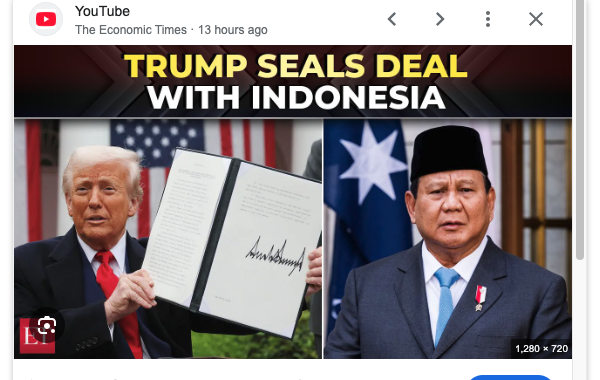
The global trade landscape continues its volatile shift, with Indonesia, Southeast Asia’s largest economy, now facing a significant 19% tariff on its exports to the United States. This development, announced following intense bilateral negotiations, carries profound implications for international commerce, particularly for the energy sector, as Indonesia simultaneously committed to a staggering $15 billion in US energy purchases.
Initially threatened with a more severe 32% levy, the reduction to 19% comes at a considerable cost for the nation of 285 million people. While the US President touted the agreement as a “great deal” that secures market access for American goods and services, the specifics reveal an asymmetric burden on the Indonesian economy, which, with a per capita income approximately 18 times lower than that of the United States’ 340 million citizens, is now reportedly obligated to spend $34 billion to open its own markets.
US Energy Exports Set for Major Boost
A cornerstone of this new trade framework is Indonesia’s commitment to procure $15 billion worth of American energy products. For investors keenly watching the oil and gas markets, this represents a substantial, guaranteed uplift in demand for US exports. While the specific energy commodities were not fully detailed, such a large sum could encompass a diverse portfolio, including liquefied natural gas (LNG), crude oil, refined petroleum products, or even petrochemical feedstocks. This influx of orders will undoubtedly bolster the revenue streams for US energy producers and exporters, potentially influencing decisions around infrastructure expansion and production levels, offering a clear incentive for oil and gas investments.
Beyond energy, Indonesia also pledged to acquire $4.5 billion in American agricultural products and 50 Boeing jets, many of them 777 models. These commitments underscore the comprehensive nature of the concessions made by Jakarta to mitigate the higher tariff threat, effectively creating substantial new markets for key American industries and impacting global trade tariffs.
The Price of Negotiation: An “Extraordinary Struggle”
From the US perspective, the deal is framed as a success in addressing trade imbalances. The United States currently lists Indonesia as its 23rd largest trading partner, and the push for “better terms” reflects a broader strategy to shrink the US trade deficit. The US President, in a post on Truth Social, expressed satisfaction, noting direct engagement with Indonesia’s “highly respected President” and promising further details.
However, the mood in Jakarta painted a starkly different picture. Indonesian President Prabowo Subianto, addressing the press, conveyed a palpable sense of anguish despite his diplomatic language. He acknowledged the “tough” negotiations, stating, “Although the negotiation was quite tough, we understood the interests of the United States and they also understood our interests. We agreed on the tariffs now from 32% down to 19%.”
His remarks highlighted the immense pressure on his negotiating team: “I will keep negotiating and I would say he (Donald Trump) is quite hard to negotiate with. We have calculated and discussed everything, the most important thing is that I have to protect all of our workers. Although we stand with our offers and we couldn’t offer more than this, the most important thing is our workers are safe. I am very optimistic that our economy is strong and in good condition.”
Video footage featuring President Prabowo alongside Vice President Gibran Rakabuming Raka revealed no celebratory tone regarding the outcome. Hasan Nasbi, the President’s spokesperson, offered a more candid assessment to Reuters, describing the process as “an extraordinary struggle by our negotiating team led by the Coordinating Minister for Economic Affairs.” This candid remark underscores the perceived lopsidedness of the agreement, where significant financial and procurement concessions were made to achieve a reduction in tariffs, impacting emerging market economics.
Implications for Global Trade and Emerging Markets
For financial analysts and investors in the oil and gas sector, this trade agreement serves as a potent reminder of the power dynamics at play in global commerce. While the US secures a tangible win for its export sectors, especially energy, the terms appear to impose a heavy economic burden on an emerging market economy like Indonesia. The reported $34 billion cost for market access, coupled with substantial procurement mandates, suggests a transactional approach to trade relations that could set precedents for other developing nations and influence future crude oil markets and LNG demand.
The guaranteed $15 billion in US energy purchases presents a clear upside for American energy companies and their investors, providing a stable, long-term demand corridor for various commodities. However, for Indonesia, the balancing act involves managing the immediate economic outlay against the long-term benefits of reduced tariffs and maintaining crucial trade relations with a major global power. The deal highlights the complex interplay between trade policy, geopolitical influence, and the imperative for nations to protect their domestic industries and labor forces.
As market participants assess the reverberations of this agreement, attention will turn to the specifics of Indonesia’s energy procurement strategy and its impact on global energy prices and supply chains. While the headlines focus on tariffs, the underlying energy commitments offer a tangible, albeit forced, boost to US energy exports, an area ripe for investor scrutiny in the coming months, particularly concerning future oil and gas investments.