Kazakhstan’s recent affirmation of its commitment to the OPEC+ alliance, even as it continues to significantly exceed its production quotas, presents a complex challenge for the global oil market and discerning investors. The Central Asian nation’s dual stance—pledging allegiance while prioritizing national interest through boosted output—adds a layer of uncertainty to an already volatile supply landscape. This analysis delves into the implications of Kazakhstan’s actions, examining their impact on crude benchmarks, OPEC+ cohesion, and the forward-looking investment thesis, leveraging OilMarketCap’s proprietary market data and reader insights to provide an unvarnished perspective.
Kazakhstan’s Persistent Overproduction and Current Market Dynamics
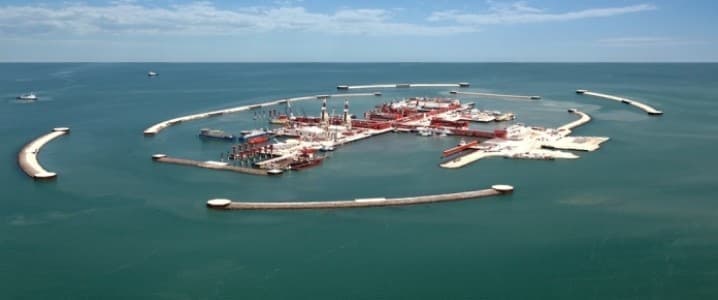
Kazakhstan has become an increasingly significant variable in the OPEC+ equation, consistently operating above its assigned production targets. Recent data highlights a substantial 11.6% jump in its oil output during the first half of 2025 compared to the same period last year. This aggressive expansion, driven by international majors developing key oilfields, saw Kazakhstan’s production hit 1.847 million barrels per day (bpd) in June, a notable 64,000 bpd increase from May and a stark contrast to its allocated quota of 1.5 million bpd. This persistent oversupply, amounting to hundreds of thousands of barrels daily, has undoubtedly contributed to the broader market sentiment.
As of today, Brent Crude trades at $94.85, showing minimal daily movement but reflecting a sharper trend over the past fortnight, having declined approximately 8.8% from $102.22 on March 25th to $93.22 by April 14th. WTI Crude mirrors this sentiment, currently at $90.98. While multiple factors influence these price shifts, the cumulative effect of non-compliance from members like Kazakhstan introduces bearish pressure, counteracting the intended market stabilization efforts of the broader OPEC+ group. For investors, understanding these micro-level deviations is crucial, as they can collectively undermine price floors and introduce unexpected supply surges.
National Interest vs. Alliance Discipline: A Balancing Act
The Kazakh Prime Minister Olzhas Bektenov articulated the nation’s position clearly: it will “do our best to fulfill our obligations, but we’ll take into account national interests.” This statement encapsulates the core tension. Kazakhstan argues it cannot compel international supermajors, such as Chevron, to reduce production, given their contractual obligations and the country’s desire to maximize revenue from its natural resources. Energy Minister Yerlan Akkenzhenov has explicitly stated that the republic “has no right to enforce production cuts” on foreign operators. This stance highlights a fundamental challenge within the OPEC+ framework: how to enforce quotas when national economic imperatives and contractual agreements with powerful international entities diverge from collective production targets.
This dynamic is not unique to Kazakhstan, but its scale of overproduction makes it particularly impactful. Investors must consider whether this precedent could embolden other members to prioritize individual output gains over group cohesion, potentially eroding the cartel’s influence over global supply. The implication is a less predictable supply environment, where the efficacy of future OPEC+ cuts could be questioned, introducing greater volatility and risk into oil price forecasts.
Navigating Supply Uncertainty: Investor Questions and Future Price Forecasts
OilMarketCap’s reader intent data reveals a consistent focus among investors on crude price trajectory, particularly questions surrounding base-case Brent price forecasts for the next quarter and the consensus 2026 Brent forecast. Kazakhstan’s actions directly complicate these projections. While the current market sees Brent just under $95, the persistent overproduction from a significant non-OPEC+ member introduces a quantifiable supply-side risk that needs to be factored into any forward-looking model.
For investors constructing their base-case scenarios for the upcoming quarter, Kazakhstan’s confirmed continued overproduction suggests that even with broader OPEC+ cuts, the market may absorb more oil than anticipated. This could temper bullish outlooks, potentially pushing the upper bound of short-term Brent forecasts slightly lower. Longer-term, for 2026, the question becomes whether OPEC+ can effectively rein in such persistent non-compliance. If not, the structural integrity of the alliance in managing supply could face significant challenges, leading to a potentially wider range of consensus forecasts as analysts grapple with this additional layer of supply uncertainty. Investors should model a scenario where a portion of OPEC+ declared cuts might be offset by persistent overproducers.
Upcoming OPEC+ Meetings: A Test of Alliance Resolve
The immediate future holds critical junctures for OPEC+, with upcoming meetings poised to address these internal tensions. The Joint Ministerial Monitoring Committee (JMMC) is scheduled for April 18th, followed swiftly by the Full Ministerial OPEC+ Meeting on April 20th. These events will be under intense scrutiny, as members deliberate on current market conditions and, crucially, address adherence to production quotas.
Kazakhstan’s public declaration of its intent to remain in the alliance while simultaneously acknowledging its overproduction puts the onus on OPEC+ to demonstrate its capacity for discipline. Will the group issue a stronger rebuke? Will there be calls for compensatory cuts, or will the “national interest” argument gain tacit acceptance, further weakening compliance? Investors should closely monitor the rhetoric and any concrete outcomes from these meetings. A firm stance against overproduction could provide a bullish signal, reinforcing the alliance’s commitment to market management. Conversely, a muted response might be interpreted as a sign of waning influence, potentially leading to further supply increases from other members and downward pressure on crude prices.


