Petrobras De-risks Deepwater Pipe Technology, Unlocking New Investment Potential
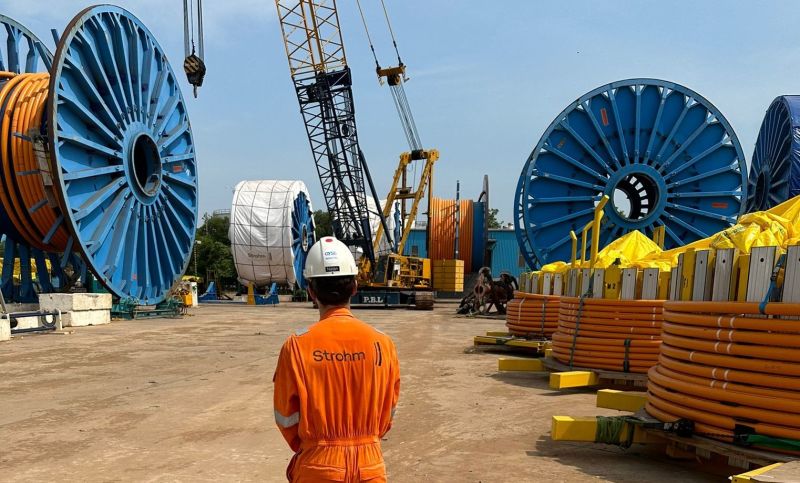
Petrobras, Brazil’s state-controlled energy giant, has significantly advanced its deepwater operational capabilities following the successful completion of initial field trials for Strohm’s innovative thermoplastic composite pipe (TCP) technology. This pivotal achievement, conducted offshore Brazil at water depths approximating 1,500 meters, promises to reshape subsea infrastructure development and enhance the economic viability of challenging deepwater projects, particularly within the country’s prolific but complex pre-salt and post-salt plays.
The rigorous testing and engineering assessments, carried out in the Campos Basin over the past month, unequivocally demonstrated TCP’s robust performance under real-world conditions. Crucially for investors, the trials also confirmed the technology’s ease of deployment, notably leveraging Petrobras’ existing fleet of standard flexible pipe installation vessels. This compatibility is paramount, translating directly into reduced capital expenditures and potentially accelerated project timelines, as no specialized or new vessel investments are required for adoption.
TCP’s Operational and Economic Advantages Confirmed
The comprehensive evaluation protocol mirrored the stringent methodologies applied to conventional flexible pipes, ensuring TCP meets both industry benchmarks and the unique demands of the Brazilian offshore environment. Assessments covered critical performance indicators including crushing resistance and deep immersion performance (DIP) tests, alongside subsea first and second-end vertical connection tests. As part of the testing regime, the pipe was installed in a catenary configuration and maintained for 24 hours, allowing for a thorough assessment of its behavior under typical operational stresses.
These successful trials underscore the compelling economic advantages of TCP. Its lightweight composition, compared to traditional steel-reinforced flexible pipes, translates directly into lower transportation and installation costs. This characteristic further enables simpler, more cost-effective installation methodologies, such as subsea pallet deployment, which can significantly streamline project execution and reduce vessel time – a major cost driver in deepwater operations.
Strategic Impact on Brazilian Deepwater Development
Crucially for investors monitoring Brazil’s vast deepwater reserves, the tested TCP design demonstrates immediate suitability for post-salt wells. More significantly, the trials have yielded invaluable data that will support the full qualification of TCPs for the more complex and highly prospective pre-salt applications. Pre-salt reservoirs, renowned for their immense hydrocarbon potential but also their challenging conditions, frequently encounter stress corrosion cracking exacerbated by high concentrations of CO₂. TCP’s inherent resistance to this corrosive mechanism positions it as a definitive and durable solution for managing one of the major integrity challenges in these critical pre-salt clusters offshore Brazil.
Environmental and ESG Considerations Drive Value
Beyond its operational and economic benefits, TCP offers a compelling environmental advantage, aligning with growing global pressures for more sustainable energy production methods. The technology boasts a significantly smaller carbon footprint compared to conventional flexible pipes, attributable to both the materials used in its construction and its reduced weight. This factor not only contributes to a lower environmental impact throughout the project lifecycle but also enhances the ESG (Environmental, Social, and Governance) profile of deepwater investments, an increasingly important consideration for institutional investors.
Industry Perspectives and Future Outlook
Renato Bastos, Strohm’s Vice President for Brazil, emphasized the transformative potential unlocked by this collaboration. “This successful phase culminates an extraordinary partnership between Petrobras and Strohm over recent months, with the field trial results unequivocally demonstrating the innovation and quality TCP introduces to the industry,” Bastos stated. “This technology is set to revolutionize the global deepwater market and unlocks immense potential for us within Brazil,” he added, underscoring the strategic importance of this development for Strohm’s market penetration.
Bastos further highlighted this initiative as Petrobras’ inaugural offshore trial involving thermoplastic composite pipes, a testament to the enduring relationship between the two companies. “The trial’s success not only paves the way for broader adoption across the nation but also keeps us on track to become Petrobras’ primary composite pipe supplier, while simultaneously preparing for localized production,” Bastos affirmed, pointing to future growth and capacity building within Brazil.
Gustavo Calazans, Petrobras’ Subsea Engineering General Manager, echoed this sentiment, emphasizing the broader strategic context. “This represents a pivotal achievement within our Subsea Industrialization Program, where Strohm stands as a crucial partner,” Calazans commented, indicating the importance of this technology to Petrobras’ long-term strategic objectives for its subsea infrastructure.
Investor Takeaway: De-risking and Value Creation
For investors monitoring the deepwater oil and gas sector, this development signals a significant de-risking of future projects and the potential for enhanced returns through reduced CAPEX and OPEX. TCP’s proven performance, coupled with its environmental benefits and compatibility with existing infrastructure, strengthens Petrobras’ position as a leader in developing challenging deepwater environments. Simultaneously, Strohm emerges as a key technology enabler, poised for substantial growth in the rapidly evolving subsea market.
The successful deployment and validation of TCP technology in Brazil’s demanding offshore environment sets a new benchmark for subsea infrastructure, promising long-term value creation for stakeholders and solidifying the economic viability of deepwater energy resources for decades to come. This innovation represents a tangible step forward in optimizing both the cost and environmental footprint of offshore hydrocarbon production.