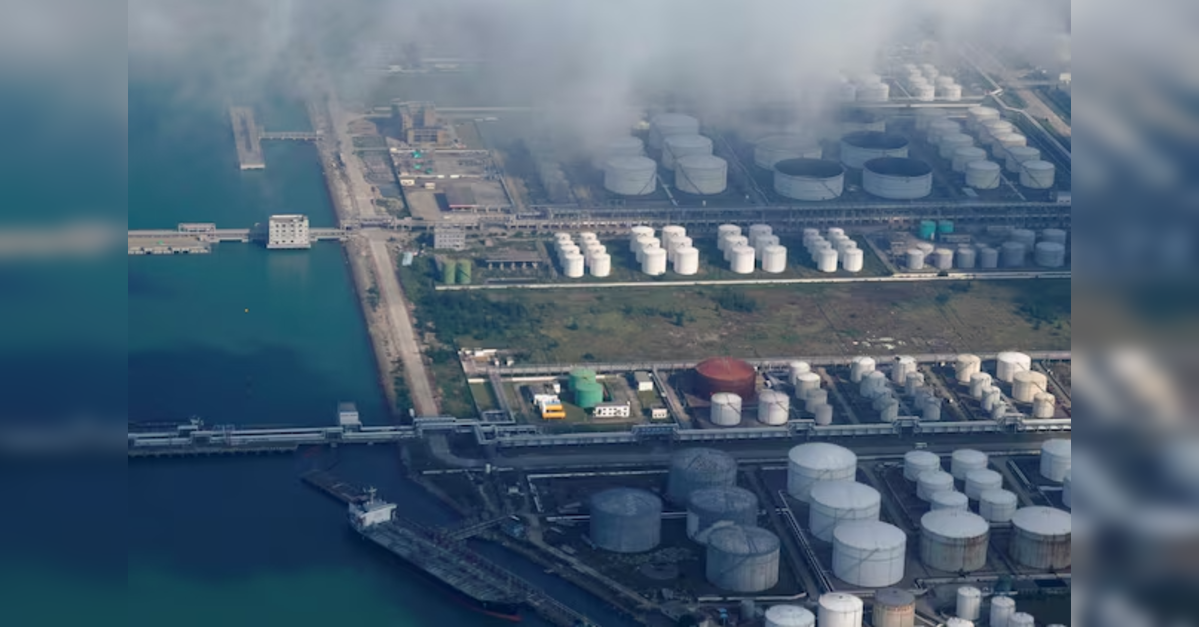
China’s State Refiners Power Up, Signaling Stronger Crude Demand and Investment Opportunities
China’s dominant state-owned refining giants are significantly accelerating their crude processing activities, a strategic move designed to capitalize on surging third-quarter fuel consumption and to replenish critically low domestic inventories of diesel and gasoline. This operational ramp-up, expected to persist throughout the current quarter, foreshadows a notable increase in crude oil imports by the world’s largest buyer, even as broader consumption growth faces moderating headwinds from internal economic factors.
The Refining Sector’s Accelerated Pace
Recent data highlights a pronounced shift in China’s refining landscape. Operating rates across state refineries soared past 80% by the close of June, a substantial increase from approximately 73% just a month prior. This marks the highest operational intensity for this period in half a decade, primarily driven by the return to full capacity of several major Sinopec facilities following extensive second-quarter maintenance cycles. The impact on overall throughput is clear: China’s total refining output reached an impressive 15.15 million barrels per day in June, a volume not seen since September 2023.
Industry experts attribute this sharp acceleration in state-backed refinery operations to the depleted product stockpiles resulting from the heavy maintenance schedules in April and May. These maintenance periods inadvertently supported product profit margins, creating a lucrative incentive for refiners to maximize output. Furthermore, robust demand for jet fuel and various petrochemical feedstocks within China is providing a healthy impetus for state-owned facilities to boost their supply.
Looking ahead, output from key state refiners, including Sinopec, PetroChina, CNOOC, and Sinochem, is projected to surpass 10 million barrels per day in July, an increase of 100,000 to 110,000 barrels per day compared to June levels. Projections from FGE anticipate this elevated output to reach 10.4 million barrels per day through July and August. This trajectory contrasts sharply with recent history; JPMorgan analysts forecast year-on-year increases in China’s refinery runs for both the third and fourth quarters, following a challenging period of five consecutive quarterly declines.
Inventory Rebuild and Product Mix Dynamics
Despite the recent surge in refinery output, the nation’s product inventories remain at multi-year lows. While diesel and gasoline stocks showed some modest increases in the initial weeks of July, they still stand at 14 million and 11 million metric tons respectively, levels not seen in six years. This critical shortage follows a significant contraction earlier in the year, with China’s diesel and gasoline production from January to May declining by 7% annually.
A key factor contributing to these low inventory levels and the overall production deficit has been the subdued performance of China’s independent refineries, often referred to as “teapots.” These smaller, privately run facilities have been operating at a mere 40% to 50% of their capacity this year. Their struggles stem from poor refining margins and increasing difficulties in procuring affordable crude supplies, particularly Iranian oil, due to tightening U.S. sanctions. This situation underscores the strategic importance of the state-owned refiners in maintaining domestic fuel supply and highlights a segmented market where larger players are better positioned to navigate geopolitical and economic pressures.
Navigating Demand Headwinds and Tailwinds
While China’s oil demand typically experiences a seasonal uptick into September, several structural factors are expected to temper overall consumption growth. The ongoing downturn in the country’s property sector, persistent trade tariffs, and the rapid expansion of electric vehicle (EV) sales for both passenger and commercial use all represent significant headwinds.
Barclays estimates that China’s oil demand grew by approximately 330,000 barrels per day year-on-year during the first half of 2024. However, this growth rate is anticipated to moderate, with full-year expansion projected to ease to 150,000 barrels per day.
Specific product demand varies. July has seen a firming of gasoline consumption, largely attributed to the summer travel season as domestic tourism recovers. In stark contrast, diesel demand remains weak. Extreme weather events, including intense heatwaves and widespread floods across various regions, have significantly delayed construction projects and disrupted logistics, thereby dampening industrial and transportation fuel needs. Investors should monitor these divergent trends closely, as they reflect the complex interplay of consumer behavior, industrial activity, and environmental factors on China’s energy appetite.
Investment Implications for Global Oil Markets
The concerted effort by Chinese state refiners to boost output and replenish inventories carries significant implications for global crude oil markets. This sustained increase in processing rates inevitably translates to higher demand for crude imports, providing a crucial demand floor for international benchmarks. For investors in the energy sector, this development signals potential support for crude oil prices, particularly for grades favored by Chinese refiners.
However, the nuanced demand picture within China—robust jet fuel and petrochemical demand juxtaposed with softer diesel consumption and overall moderating growth—requires a discerning approach. Companies with exposure to the specific product markets experiencing growth may find stronger performance. Furthermore, the operational struggles of independent refiners could lead to consolidation or strategic shifts within the Chinese refining landscape, potentially benefiting the larger, more resilient state-owned entities.
As China navigates its complex economic recovery and energy transition, the strategic decisions of its state-owned refining sector will remain a pivotal determinant of global oil market dynamics. Investors should continue to monitor refining throughput, inventory levels, and the evolving demand landscape, particularly the impact of government stimulus on industrial activity and the accelerating adoption of electric vehicles. The current ramp-up underscores a critical phase for the world’s largest energy consumer, influencing supply-demand balances and investment opportunities across the entire oil and gas value chain.


