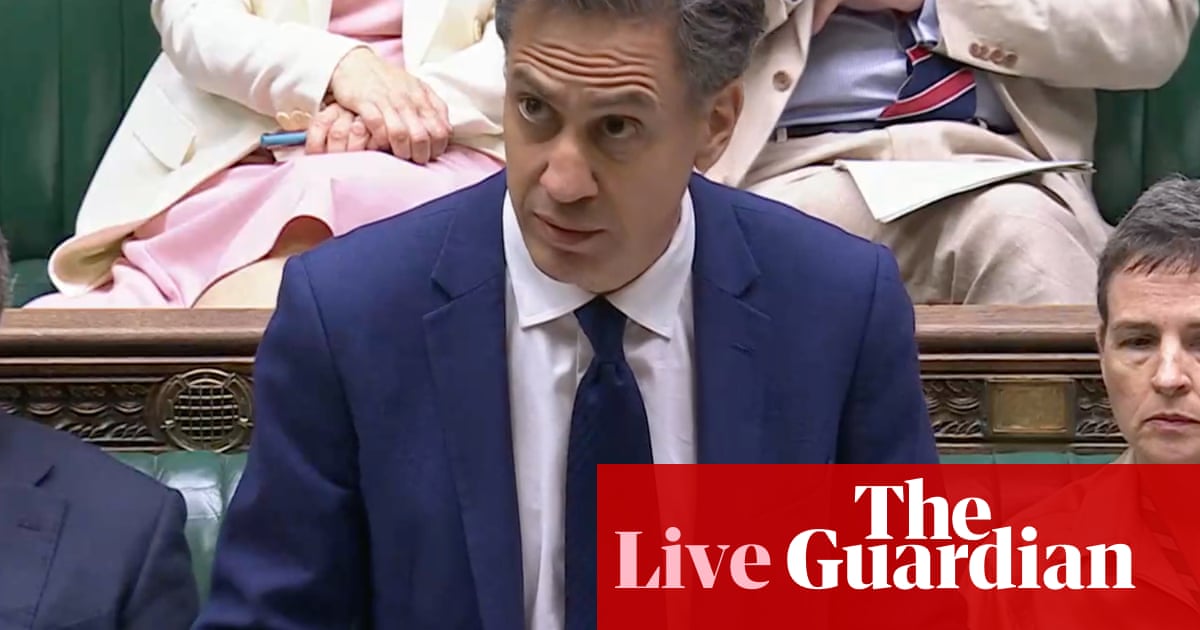
The United Kingdom’s energy policy landscape has become a battleground, with recent parliamentary exchanges highlighting a stark divergence in approach to climate targets and future energy security. This political friction introduces a significant layer of uncertainty for investors evaluating opportunities within the UK’s oil and gas sector and broader energy transition initiatives. The core of the debate centers on the commitment to net-zero by 2050, its economic implications, and the very foundation of scientific consensus guiding these policies. For capital allocators, this signals elevated regulatory and political risk, directly impacting long-term investment horizons and project viability.
Political Rifts Threaten Energy Investment Climate
Recent public discourse has underscored a troubling breakdown in the long-standing bipartisan consensus on UK climate policy. Critics have accused the current government’s stance as being “anti-science, anti-jobs, anti-energy security, and anti-future,” asserting a fundamental abandonment of the commitment to net-zero by 2050. This rhetoric, while politically charged, resonates deeply with investors who rely on stable, predictable policy frameworks to deploy capital. The argument that delaying climate action invariably costs more, rather than less, directly contradicts claims that net-zero policies will impoverish the nation. This ideological chasm creates a volatile environment where the rules of engagement for energy projects could shift dramatically with each election cycle. For an industry requiring multi-decade investment horizons, such instability is a significant deterrent, potentially leading to delayed Final Investment Decisions (FIDs) or even a re-evaluation of UK-based ventures in favor of more predictable jurisdictions.
Navigating Volatile Markets Amidst Policy Paralysis
Against a backdrop of domestic policy uncertainty, global energy markets continue their dynamic shifts, further complicating the investment picture. As of today, Brent Crude trades at $94.93, having seen a notable decline from $102.22 just three weeks ago, representing an 8.8% drop. While day trading shows little movement, the broader trend over the past fortnight indicates a volatile environment for global crude prices. This price sensitivity underscores the ongoing need for robust energy security, a concept now explicitly questioned within the UK policy debate. When domestic policy creates disincentives for investment in indigenous energy sources—whether traditional or renewable—a nation becomes more exposed to the vagaries of international markets. The accusation of being “anti-energy security” takes on tangible meaning for investors when considering the capital required to develop new projects that could buffer the UK from global price shocks. Maintaining a healthy balance of domestic production and diversified import channels is crucial, yet political infighting risks undermining the necessary investment to achieve this balance.
Investor Focus: Global Signals and UK Specifics
Our proprietary intent data reveals that investors are currently heavily focused on understanding the future trajectory of crude prices, with a significant number of inquiries centered on building a base-case Brent price forecast for the next quarter. This global price outlook is inextricably linked to the investment case for any UK energy project. The upcoming OPEC+ Joint Ministerial Monitoring Committee (JMMC) meeting on April 18th, followed by the full Ministerial Meeting on April 20th, will be pivotal in shaping global supply expectations. Any decisions on production quotas will have immediate ramifications for crude prices. Similarly, the ongoing API and EIA weekly crude inventory reports provide crucial demand signals. For investors eyeing the UK, however, these global dynamics are now overlaid with a unique layer of domestic political risk. If the UK is perceived as lacking a coherent, stable energy strategy, it struggles to compete for international capital, regardless of favorable global commodity prices. The lack of clarity on whether the UK still maintains a credible net-zero target, as highlighted in recent discussions, directly translates into a higher risk premium for UK-specific energy investments. This makes forecasting for UK-exposed assets considerably more challenging, as policy swings could negate otherwise sound market analyses.
Forward-Looking Risks and the Urgency of Policy Clarity
The current political turbulence around UK energy policy extends beyond immediate investment decisions; it casts a long shadow over the nation’s ability to attract the substantial capital required for its long-term energy transition and security needs. The continuous questioning of scientific consensus and the economic viability of net-zero targets creates an environment of regulatory uncertainty that frightens away long-term capital. Energy infrastructure projects, whether they be offshore wind farms, carbon capture facilities, or even new oil and gas developments, demand billions in upfront investment and decades of operational stability. Without a clear, cross-party commitment to a defined energy pathway, investors are forced to factor in significantly higher political risk. This could lead to a ‘wait and see’ approach, delaying crucial infrastructure development at a time when energy security and climate action are more critical than ever. The UK stands at a crossroads: either it re-establishes a stable, science-backed energy policy that can attract necessary investment, or it risks falling behind in the global energy transition race while simultaneously weakening its own energy security.


