Crude Oil Surges Amid Geopolitical Tensions and Robust Asian Demand
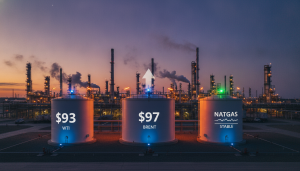
The global crude oil market is currently exhibiting a pronounced bullish trajectory, fueled by a confluence of escalating geopolitical risks and resilient demand signals from key economic powerhouses. Investors are closely monitoring the unfolding dynamics, as West Texas Intermediate (WTI) crude has firmly established an upward trend, clearing significant technical hurdles and positioning itself for further gains. This upward momentum is underpinned by the enduring impact of Western sanctions on Russia and surprisingly strong import data emanating from China, painting a compelling picture for energy commodity investors in the immediate term.
WTI Technical Landscape: A Bullish Formation
From a purely technical standpoint, WTI crude oil futures are displaying a robust bullish structure that warrants attention from market participants. The commodity has decisively moved past its previous weekly high, a clear indicator of strengthening investor sentiment and buying conviction. A critical development has been WTI’s ability to firm above the significant $67.44 pivot level, which now acts as a foundational support point. This price action suggests that the path of least resistance remains to the upside, encouraging long positions among traders.
Looking ahead, immediate resistance for WTI crude is identified at $71.20. This short-term pivot could potentially trigger a wave of profit-taking or fresh selling interest from bearish participants, leading to a temporary consolidation or minor retracement. However, a sustained breakout and close above this $71.20 threshold would be a powerful bullish signal, likely accelerating the upward trajectory. Such a move would effectively clear the path for WTI to challenge the next major resistance zone situated around $78.40, a level that would represent a significant psychological and technical milestone for the commodity.
On the downside, investors should keep a watchful eye on key support levels that could attract renewed buying interest in the event of any market retracement. The primary long-term pivot support is firmly established at $67.44. Should prices dip below this, the next critical area of defense lies at the 200-day moving average, currently positioned at $65.31. Further down, the 50-day moving average at $63.50 presents another strong support zone. These moving averages are widely followed by institutional investors and often serve as magnets for demand, signaling potential entry points for those looking to capitalize on price pullbacks.
Geopolitical Risks Bolstering Oil Prices
The geopolitical landscape continues to exert a profound influence on global crude oil markets, with Western sanctions against Russia emerging as a primary catalyst for the current bullish bias. The coordinated efforts by the United States and the European Union to restrict Russia’s energy exports and financial activities have effectively tightened global supply, creating a perception of scarcity even as overall production remains robust. These punitive measures introduce significant uncertainty regarding future supply stability, compelling buyers to secure volumes and driving up futures prices.
Investors are increasingly factoring in the long-term implications of these sanctions, which are not merely transient but represent a fundamental reshaping of global energy trade flows. The rerouting of Russian crude, the impact on refinery feedstock, and the potential for further escalations all contribute to a heightened risk premium embedded within oil prices. This geopolitical risk component acts as a strong underpinning for the market, preventing significant downside corrections even in the face of other potential headwinds. The ongoing tension ensures that supply disruptions, real or perceived, will continue to have an outsized impact on price discovery, keeping energy investment firmly in the spotlight.
China’s Unwavering Demand: A Powerful Tailwind
Complementing the supply-side constraints from geopolitical tensions is the robust and seemingly insatiable demand originating from China. Recent import data from the world’s second-largest economy has been remarkably strong, indicating a healthy appetite for crude oil that is providing a significant demand tailwind for the global market. As China’s economy continues its post-pandemic recovery and industrial activity ramps up, its hunger for energy commodities, particularly crude oil, is a critical driver of global pricing.
This sustained high demand from China is a powerful signal to the market, demonstrating that despite global economic uncertainties, a major consumer is pulling significant volumes of crude. The implications for oil investors are clear: strong Chinese imports absorb available supply, reduce global inventories, and exert upward pressure on prices. This fundamental demand strength provides a crucial counterweight to any bearish sentiment and reinforces the overall bullish outlook for crude oil in the coming months. Monitoring China’s economic indicators and energy consumption patterns will remain paramount for anyone invested in the crude oil complex.
Investor Outlook and Key Watchpoints
Considering the prevailing technical strength, persistent geopolitical risks, and solid demand fundamentals, the near-term outlook for crude oil remains unequivocally bullish. The momentum building in the market suggests that a decisive break above the $71.20 resistance level would likely trigger a significant acceleration in upside price action, potentially leading to a retest of higher price targets. Investors with long positions in crude oil or related energy equities are positioned to benefit from this prevailing market sentiment.
However, shrewd investors must remain vigilant for potential shifts that could temper these gains. A key factor to monitor closely is the potential for China to release crude oil from its strategic or commercial inventories into the market. While current demand is strong, any large-scale release of stored crude could significantly increase available supply, thereby dampening prices and limiting the extent of future rallies in the weeks ahead. Such a move would signal a shift in China’s internal energy strategy or an attempt to manage domestic inflation, and it would undoubtedly send ripples through the global oil market.
Furthermore, broader global economic indicators, the evolution of geopolitical events, and any unexpected shifts in OPEC+ production policies should be continuously assessed. The interplay of these complex factors will ultimately dictate the trajectory of crude oil prices. For now, the balance of evidence strongly points towards a continued upward bias, making crude oil an attractive commodity for investors seeking exposure to a dynamic and fundamentally supported market.