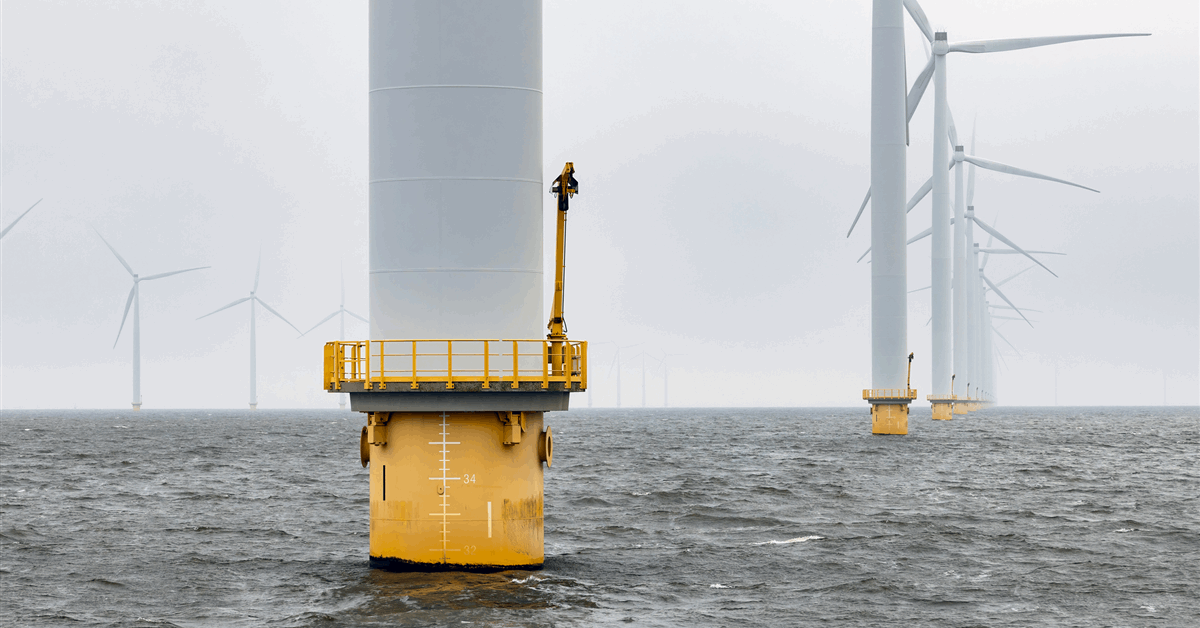
The recent EUR 5.2 billion co-investment by Abu Dhabi Future Energy Co. (Masdar) and Iberdrola SA in the 1.4-gigawatt East Anglia III offshore wind farm in the UK North Sea represents a pivotal moment for energy investors. This monumental transaction, described as the “largest offshore wind transaction of the decade,” underscores a powerful trend: the strategic deployment of vast capital from both established utilities and national energy entities into large-scale, de-risked renewable assets. For investors navigating the complex energy landscape, this deal offers critical insights into capital allocation priorities, the evolving risk-reward calculus of energy projects, and the accelerating pace of the global energy transition.
Strategic Capital Deployment in the Energy Transition
The agreement sees Spanish utility Iberdrola farming out a 50 percent stake in East Anglia III to Masdar, establishing an equal ownership structure for the under-construction project. This significant equity commitment builds upon an existing EUR 15 billion partnership between the two entities, targeting key markets including the UK, Germany, and the United States. Such a substantial financial collaboration, exemplified by the East Anglia III deal and the recent completion of the 476-MW Baltic Eagle wind farm in Germany, signals a clear intent: diversify energy portfolios and secure long-term, stable revenue streams away from traditional hydrocarbon volatility. For Masdar, a state-owned renewable energy company, this move is part of a broader national strategy to become a global leader in clean energy, leveraging its financial strength to acquire and develop world-class assets.
The project’s financing structure further highlights investor confidence. A GBP 3.5 billion financing agreement was secured with 24 international banks, notably oversubscribed by 40 percent. This robust institutional backing, covering a substantial part of the project’s estimated EUR 5.2 billion total cost without consolidating debt on either partner’s balance sheets, demonstrates the attractive risk profile of such large-scale, contracted renewable infrastructure. Investors should note this blend of strategic equity and strong debt financing as a blueprint for future major energy transition projects.
De-risking Offshore Wind: UK’s CFD Framework and Market Dynamics
A key enabler for the East Anglia III investment is the UK’s Contracts for Difference (CFDs) mechanism. East Anglia III secured two CFDs in 2022 and 2024, ensuring a flat, indexed revenue rate for the electricity produced over a 15-year period. This framework effectively shields developers from wholesale price volatility, providing predictable returns and significantly de-risking the investment for both equity partners and lenders. For investors, this structure offers a compelling alternative to the more volatile commodity markets, where price swings can dramatically impact project economics.
As of today, the traditional energy markets continue to exhibit a degree of volatility. Brent crude trades at $94.93, showing a modest daily gain of 0.15%, with WTI at $91.39, up 0.12%. However, the broader trend reveals a recent softening, with Brent shedding nearly 9% over the past 14 days, declining from $102.22 to $93.22. This inherent unpredictability in crude prices stands in stark contrast to the stable, contracted revenue streams offered by projects like East Anglia III. The ability of offshore wind projects to secure corporate power purchase agreements, such as Amazon’s commitment to buy 159 MW (700 GWh/year) from East Anglia III, further solidifies revenue predictability and investor appeal, positioning these assets as foundational components of a diversified energy portfolio.
Investor Focus: Diversification, Future Outlook, and Upcoming Catalysts
Investors keenly monitoring the energy sector, particularly those asking about the consensus 2026 Brent forecast or seeking a base-case Brent price forecast for the next quarter, must integrate the implications of massive renewable capital deployment into their analyses. While short-term crude prices are influenced by supply-demand fundamentals, geopolitical factors, and inventory data, the long-term trajectory is increasingly shaped by the structural shift towards renewables. Projects like East Anglia III, expected to power over 1.3 million homes and commence generation in 2026, represent tangible steps in reducing reliance on fossil fuels for electricity generation.
Looking ahead, the energy calendar provides multiple data points that, while primarily focused on hydrocarbons, offer indirect insights into the broader energy transition narrative. The upcoming OPEC+ Joint Ministerial Monitoring Committee (JMMC) meeting on April 18th, followed by the full Ministerial meeting on April 20th, will set the tone for near-term oil supply. Similarly, the API and EIA Weekly Crude Inventory reports on April 21st, 22nd, 28th, and 29th will provide critical snapshots of market balances. Investors must consider how these traditional market catalysts interact with the accelerating deployment of renewable capacity. A sustained period of high oil prices, for instance, could further incentivize investment in cleaner alternatives, potentially accelerating the displacement of fossil fuel demand in the long run. Conversely, a softening oil market could pressure investment returns in all energy sectors, though de-risked assets like East Anglia III are designed to weather such volatility more effectively.
The Long Game: Building a Sustainable Energy Future
The East Anglia III project, with its substantial 1.4 GW capacity, is a key component of the larger East Anglia Hub, which includes the operational 714-MW East Anglia 1 and the planned 960-MW East Anglia 2 (expected to begin construction in 2027). This phased development strategy highlights the long-term vision required for large-scale energy infrastructure. From consent in 2017 to projected generation in 2026, these projects demand patient capital and a strategic outlook spanning decades. The generation of over 2,300 jobs during construction further underscores the economic benefits of such investments, a factor increasingly considered by policymakers and investors alike.
For investment analysts, the Masdar-Iberdrola deal is more than just a transaction; it’s a blueprint for how global energy capital is being strategically reallocated. It showcases the synergy between established energy players and emerging renewable giants, leveraging financial strength and technical expertise to build the energy infrastructure of tomorrow. As the world continues its journey towards decarbonization, such large-scale, de-risked renewable energy projects will increasingly form the bedrock of diversified investment portfolios, offering stable returns and contributing to a more sustainable energy future.


