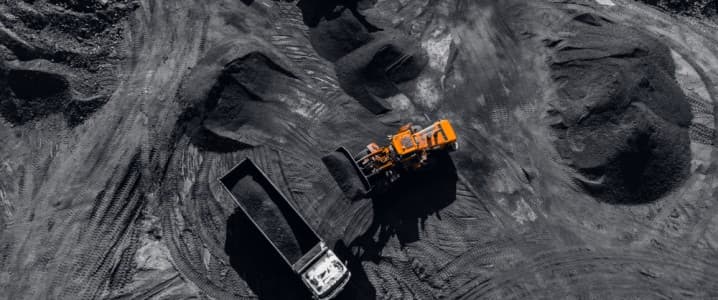
A significant strategic shift is underway in the critical minerals sector, underscored by the United States Department of Defense’s (DoD) substantial investment in rare earth producer MP Materials. This landmark public-private partnership, announced last Thursday, is set to dramatically bolster an end-to-end domestic rare earth magnet supply chain, directly challenging existing foreign dependencies. The market’s immediate response was emphatic: MP Materials shares soared an impressive 50% following the news. This ripple effect extended across the Pacific, with Australia’s key rare earths players experiencing robust gains on Friday. Lynas Rare Earths, the largest producer outside of China, surged 17% on the Australian Securities Exchange, reaching its highest valuation since August 2022. Critical minerals peer Iluka Resources also saw an extraordinary jump, climbing as much as 27% for its largest intraday increase ever. This move signals a clear intent from the U.S. to fortify its industrial and defense base with secure access to these indispensable materials, fundamentally reshaping the investment landscape for rare earth elements.
The Geopolitical Imperative: De-Risking Critical Supply Chains
The DoD’s commitment to MP Materials is a powerful testament to the escalating geopolitical significance of rare earth elements. This strategic partnership aims to drastically reduce the reliance on external sources for critical magnets, a vulnerability acutely highlighted by recent export controls and curbs from dominant producing nations. The core of the agreement involves a multibillion-dollar package of investments and long-term commitments, enabling MP Materials to construct a second domestic magnet manufacturing facility, dubbed the “10X Facility.” This new plant, whose location is yet to be determined, will cater to both defense and commercial clientele. Crucially, the DoD has guaranteed to purchase 100% of the magnets produced at the 10X Facility for a full decade post-construction, with shared upside potential. Adding another layer of strategic alignment, the DoD will also acquire a 15% ownership stake in MP Materials, solidifying its long-term interest in securing this vital supply chain. This robust backing not only de-risks the investment for MP Materials but also sends an unmistakable signal to the broader market about the U.S.’s resolve to achieve rare earth magnet independence.
Investing Beyond the Barrel: A Shifting Energy Landscape
While many investors remain laser-focused on the traditional energy markets, the strategic importance of critical minerals like rare earths is carving out its own distinct investment narrative. As of today, Brent crude trades at $94.93, showing a modest daily gain of 0.15% within a day range of $91-$96.89, while WTI sits at $91.39. This follows a 14-day trend where Brent has pulled back from $102.22 to $93.22, a near 8.8% decline, signaling a market grappling with supply-demand equilibrium amid evolving global economic indicators. Many of our readers are keenly focused on “building a base-case Brent price forecast for next quarter” or seeking “consensus 2026 Brent forecasts,” underscoring the enduring interest in traditional hydrocarbon markets. However, the strategic pivot towards critical minerals, driven by both defense needs and the accelerating energy transition, presents a parallel and increasingly vital investment theme. The recent DoD investment in MP Materials highlights that while short-term crude price dynamics command attention, the long-term strategic value proposition in rare earths offers a compelling, albeit different, opportunity for portfolio diversification and growth within the broader energy and resource complex.
Forward Momentum: Anticipating Policy & Investment Catalysts
Looking ahead, the rare earths sector operates on a trajectory significantly influenced by policy decisions and strategic national interests, distinct from the immediate supply-demand dynamics of crude oil. While the coming weeks feature key industry events such as the Baker Hughes Rig Count on April 17th and April 24th, and crucial OPEC+ Joint Ministerial Monitoring Committee (JMMC) and full Ministerial meetings on April 18th and April 20th, respectively, which will shape short-term oil supply narratives, the critical minerals landscape is governed by a longer-term strategic vision. The substantial DoD investment in MP Materials is a clear harbinger of sustained government support and a potential precursor for further public-private partnerships. Investors should anticipate more policy announcements, grants, and strategic alliances aimed at strengthening domestic critical mineral supply chains, not only in the U.S. but potentially mirroring efforts in allied nations. Key catalysts to watch include updates on the “10X Facility’s” location and construction timeline, which will undoubtedly drive further investor sentiment. This foundational investment suggests a long-term governmental commitment that could attract substantial additional private capital into the Western rare earth complex, creating a robust framework for sustained growth and innovation.
Strategic Implications for Global Resource Investors
The U.S. government’s assertive move into rare earth magnet production carries profound strategic implications for global resource investors. This bold push for independence from concentrated foreign supply chains effectively re-rates the investment thesis for Western rare earth producers and developers. As analysts have noted, this signals “lifting upside risk across the rare earth pricing complex,” suggesting a potential for higher valuations and increased investment in projects outside of traditional dominant regions. For investors, this translates into opportunities in companies like Lynas Rare Earths and Iluka Resources, which have already seen significant share price appreciation. Beyond direct equity plays, the deal underscores the broader trend of nations prioritizing secure access to critical minerals essential for both national security and the burgeoning clean energy transition. This long-term commitment will likely stimulate further investment across the entire value chain, from mining and processing to magnet manufacturing and recycling. As the global energy landscape continues its dramatic evolution, with electrification demanding ever-increasing volumes of these specialized materials, strategic investments in critical minerals are becoming as fundamental to a diversified portfolio as traditional energy holdings once were.


