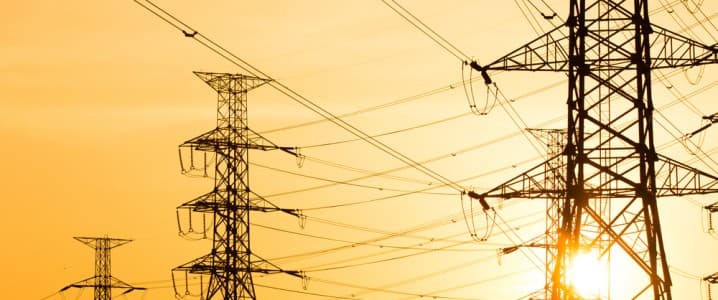
Europe’s ambitious energy transition, a cornerstone of global climate efforts, faces a significant and underappreciated hurdle: its aging electricity grid infrastructure. A recent assessment highlights a staggering €250 billion ($293 billion) investment shortfall required to upgrade grids in line with green energy goals. This isn’t just a technical challenge; it represents a profound shift in the demand horizon for traditional fossil fuels. For oil and gas investors, this grid gap isn’t merely a European problem; it signals a potentially prolonged reliance on conventional energy sources, extending their relevance and investment appeal far longer than many current transition narratives suggest. Our analysis at OilMarketCap.com delves into how this bottleneck in Europe’s green ambitions directly impacts global energy markets and investor strategies.
The Bottleneck in Europe’s Green Ambitions
The scale of the challenge for European transmission system operators (TSOs) is immense. Over the next three years alone, these operators need to funnel an unprecedented €345 billion ($405 billion) into their networks – an amount three times greater than investments made in the preceding five years. However, TSOs are struggling to generate the necessary capital. This isn’t due to a lack of intent, but rather a confluence of structural issues. Firstly, their capacity to raise funds via traditional debt or equity is constrained. Secondly, there’s an inherent tension between governmental mandates to keep electricity costs low for consumers and the need to offer attractive returns to investors. Lastly, governments view TSOs as growth vehicles, pushing for aggressive investment, while investors often perceive them as stable, low-risk entities primarily valued for their consistent dividends. This clash of expectations, particularly the €25-€30 billion ($29-$35 billion) estimated dividend payouts between 2025 and 2030, diverts crucial capital from much-needed infrastructure upgrades. The stark reality, as one expert noted, is the risk of having “world-class renewable generation that can’t reach consumers because the grid hasn’t kept pace.” This fundamental disconnect severely hampers the effective integration of new renewable capacity, creating a persistent reliance on existing, often fossil-fuel-based, power generation.
Prolonged Reliance: The Fossil Fuel Implication
The European grid investment gap has direct and undeniable consequences for the global fossil fuel demand trajectory. When renewable energy projects – be they vast offshore wind farms or expansive solar arrays – cannot connect efficiently to the grid or transmit power reliably across regions, the energy system inevitably defaults to dispatchable, often fossil-fuel-fired, generation. This translates directly into sustained demand for natural gas, and in some cases, even coal, to ensure grid stability and meet baseload requirements. For oil and gas investors, this structural impediment to electrification means a longer runway for demand. As of today, April 15th, Brent crude trades at $94.94, showing a slight uptick of 0.16% within a day range of $91 to $96.89. WTI crude mirrors this resilience, currently at $91.42, also up 0.15% with a daily range of $86.96 to $93.3. Even gasoline prices, holding steady at $3 with a 0.67% gain, reflect underlying demand strength. While Brent has seen a notable dip of nearly 9% over the past 14 days, falling from $102.22 on March 25th to $93.22 on April 14th, this broader market resilience, against a backdrop of potential economic headwinds, is partly underpinned by these lingering structural demand elements, including Europe’s grid challenges. The inability to fully transition away from fossil fuels as rapidly as anticipated provides a tangible floor for crude prices and extends the profitability horizon for well-positioned energy companies.
Investor Perspective: Navigating the Extended Horizon
Oil & Gas MarketCap’s proprietary reader intent data reveals that investors are keenly focused on understanding the market’s trajectory, actively seeking a clear base-case Brent price forecast for the next quarter and the broader consensus for 2026. This European grid dilemma adds a critical, often overlooked, layer of complexity to these forecasts. While short-term supply-demand dynamics driven by geopolitical events or inventory reports often dominate headlines, the structural limitations in Europe present a powerful counter-narrative to rapid demand destruction for fossil fuels. Investors are also asking about the operational status of Chinese “tea-pot” refineries and the drivers behind Asian LNG spot prices. These questions highlight a global perspective, and when viewed through the lens of European grid constraints, they paint a picture of a world where energy demand remains robust, even as the transition nominally progresses. The extended reliance on fossil fuels in Europe could free up LNG cargoes for Asia, influencing spot prices, or conversely, increase global competition for gas supplies. For investors, this implies that companies with strong natural gas portfolios, robust refining capacities, or diversified energy plays are likely to exhibit greater stability and potentially stronger returns in the medium term, as the green transition faces practical, infrastructural hurdles.
Upcoming Catalysts and the Supply Side Response
The interplay between Europe’s grid challenges and the immediate market catalysts demands close attention from investors. The upcoming OPEC+ Joint Ministerial Monitoring Committee (JMMC) on April 18th, followed by the full Ministerial Meeting on April 20th, takes on heightened significance in this context. Any decisions on production quotas will directly influence global supply at a time when underlying demand, partly bolstered by Europe’s grid issues, remains resilient. Investors will be dissecting these meetings for signals on how major producers perceive the long-term demand outlook. Closer to home, the weekly API Crude Inventory report on April 21st and the EIA Weekly Petroleum Status Report on April 22nd will provide crucial insights into current demand trends and inventory levels, which could reflect or contradict the longer-term implications of the European grid gap. Furthermore, the Baker Hughes Rig Count reports on April 17th and April 24th will indicate the industry’s willingness to increase drilling activity and future production, signaling how supply is responding to sustained price levels. If these reports show a muted supply response despite elevated prices and extended demand horizons, it could reinforce a bullish outlook for crude, indicating that producers are still exercising capital discipline rather than rushing to flood the market, a strategy that aligns with the longer-term view of sustained fossil fuel relevance.
Investment Strategies for a Transitional Market with Persistent Demand
The enduring grid investment gap in Europe compels a re-evaluation of conventional energy investment strategies. Instead of a rapid decline, investors should consider a scenario of prolonged, albeit evolving, demand for fossil fuels. This environment favors oil and gas companies with strong balance sheets, efficient operations, and a strategic focus on natural gas, which acts as a critical bridge fuel, especially for power generation where grid limitations are most acutely felt. Exploration and Production (E&P) companies with low-cost production bases and proven reserves stand to benefit from sustained higher prices. Midstream operators, providing essential infrastructure for transport and storage, will continue to play a vital role. Furthermore, refiners and petrochemical companies may find a stable market for their products, as electrification in sectors like heavy industry and transportation lags behind power generation. Investors should look for companies demonstrating adaptability, potentially those investing in carbon capture technologies or diversifying into lower-carbon solutions while still capitalizing on their core fossil fuel assets. The current market dynamics, influenced by Europe’s infrastructural reality, suggest that a balanced portfolio approach, acknowledging the extended demand horizon for traditional energy, will be key to navigating the complexities of the global energy transition successfully.


