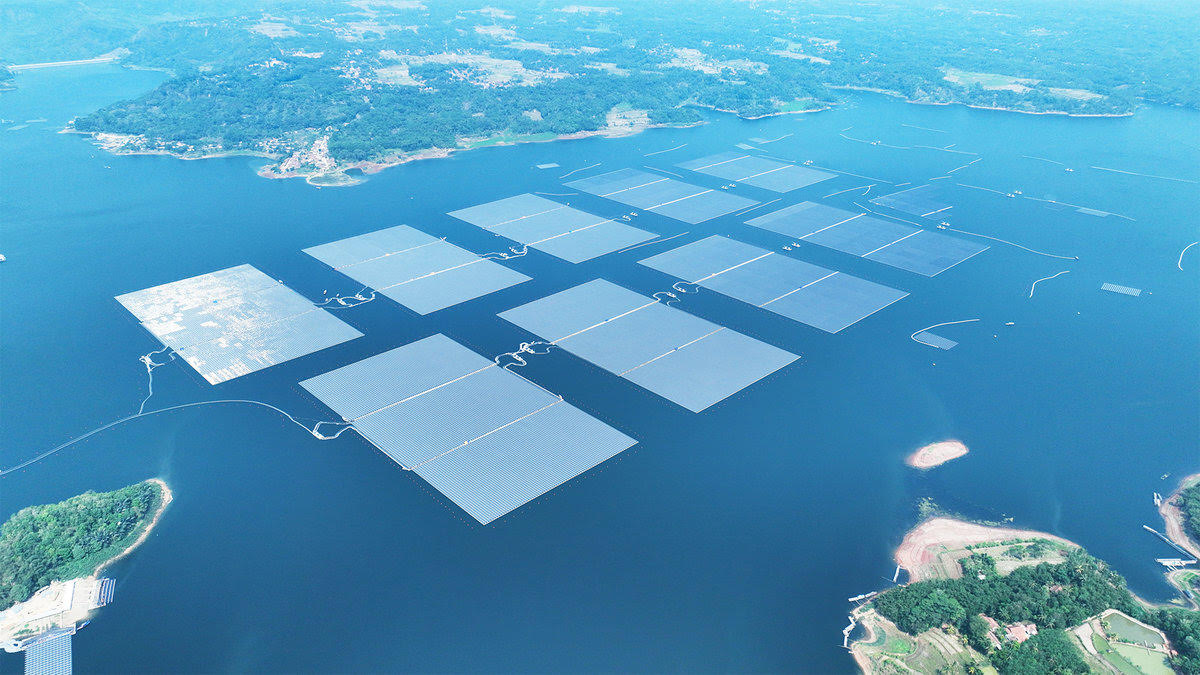
Indonesia, the vast archipelago nation, is rapidly emerging as a critical case study for the global energy transition. While often viewed through the lens of its significant coal and oil & gas resources, recent developments underscore a determined pivot towards a sustainable energy future. This shift is not merely aspirational; it is being cemented by tangible, large-scale projects that promise to reshape the nation’s energy mix and, by extension, impact regional and global energy dynamics. For savvy oil & gas investors, understanding these foundational changes in key emerging economies is paramount to navigating the evolving investment landscape.
Indonesia’s Strategic Renewable Power Play
At the forefront of Indonesia’s renewable energy push stands the Cirata Floating Solar Farm in West Java. This monumental project, Southeast Asia’s largest floating photovoltaic (PV) installation, boasts a generating capacity of 192 megawatts (MW). This capacity is sufficient to power approximately 50,000 homes, marking a substantial stride towards Indonesia’s ambitious goal of achieving net-zero emissions by 2060. Developed through a collaboration between the Indonesian government and Masdar, the Abu Dhabi-based renewable energy company, the Cirata array represents an investment of roughly $100 million. Its 340,000 solar panels, spread across 250 hectares of the Cirata Reservoir, ingeniously circumvent the challenge of land scarcity, a common impediment in densely populated island nations. The nation’s average solar potential of 4.8 kWh/m²/day provides a robust foundation for such initiatives. This strategic deployment is a key component of Indonesia’s broader target to generate 100 gigawatts (GW) of clean power by 2040, an undertaking estimated to require a staggering $235 billion in investments across solar, wind, and geothermal sectors. President Prabowo Subianto’s inauguration of 15 clean energy projects on June 26, 2025, including the Cirata array and other solar and geothermal plants totaling 379.7 MW under a $1.56 billion investment, further solidifies this national commitment.
Navigating Crude Volatility Amidst Energy Transition Signals
The long-term trajectory set by nations like Indonesia provides a crucial backdrop for the more immediate volatility experienced in traditional energy markets. As of today, Brent crude trades at $94.77 per barrel, reflecting a marginal daily dip of 0.02%, within a trading range of $91 to $96.89. Similarly, WTI crude stands at $90.93, down 0.38%, oscillating between $86.96 and $93.3. While these daily movements appear modest, they mask a more significant shift: Brent has shed nearly 8.8% over the past fortnight, dropping from $102.22 on March 25th to $93.22 on April 14th. This downward trend, even as global demand outlooks remain complex, underscores the precarious balance in crude markets. Investors are increasingly evaluating how the accelerating energy transition in key demand centers, even if years away from full impact, influences supply-demand fundamentals and geopolitical calculations. The continued investment in large-scale renewable projects, like Cirata, begins to chip away at the long-term growth assumptions for fossil fuel demand, creating a subtle but persistent undercurrent of pressure on crude prices that traditional market drivers alone might not capture.
Upcoming Catalysts and Forward-Looking Implications for Energy Investors
The immediate horizon presents several critical events that will undoubtedly shape short-term energy market sentiment, even as the longer-term transition unfolds. This Friday, April 17th, and again on April 24th, we anticipate the release of the Baker Hughes Rig Count, providing a pulse check on North American drilling activity and potential future supply. More significantly, the OPEC+ Joint Ministerial Monitoring Committee (JMMC) convenes on Saturday, April 18th, followed by the full OPEC+ Ministerial Meeting on Monday, April 20th. These meetings are pivotal; any shifts in production quotas or compliance could send ripples through the global crude market. Furthermore, the API Weekly Crude Inventory reports on April 21st and 28th, alongside the EIA Weekly Petroleum Status Reports on April 22nd and 29th, will offer crucial insights into U.S. supply and demand dynamics. While these events are focused on traditional oil & gas, their outcomes will be viewed through the lens of a world increasingly committed to decarbonization. Decisions made by OPEC+ members, for instance, might be influenced not just by immediate market conditions but also by the long-term demand erosion projected by the kind of renewable expansion Indonesia is undertaking. Investors must analyze these near-term catalysts with an eye on their broader implications for capital allocation across the entire energy spectrum.
Addressing Investor Concerns: Deciphering the Future Price Deck
Our proprietary investor intent data highlights a clear focus this week on forward-looking crude price scenarios. Many investors are actively seeking a base-case Brent price forecast for the next quarter and consensus 2026 Brent forecasts. This acute interest reflects the ongoing uncertainty in the market, where geopolitical risks, supply management, and the pace of the energy transition all exert influence. Indonesia’s commitment to generating 100 GW of clean power by 2040, exemplified by projects like Cirata which will prevent an estimated 214,000 tons of carbon dioxide emissions annually, is a tangible signal that contributes to the long-term demand narrative for fossil fuels. While Indonesia is a significant energy consumer and producer, its substantial shift towards domestic renewables will, over time, reduce its reliance on imported fossil fuels, including LNG, which has recently seen volatile spot prices in Asia. This gradual but significant reduction in demand pressure from a major emerging economy creates a structural headwind for long-term crude price forecasts. Investors asking about 2026 Brent forecasts are implicitly grappling with how quickly these transition signals, from Indonesia and beyond, will translate into measurable impacts on global supply-demand balances, influencing the risk premium associated with traditional oil & gas assets versus the burgeoning opportunities in the green energy sector.


